Culinary Explorer
A cooking platform built around craft, culture, and the stories behind what we eat.
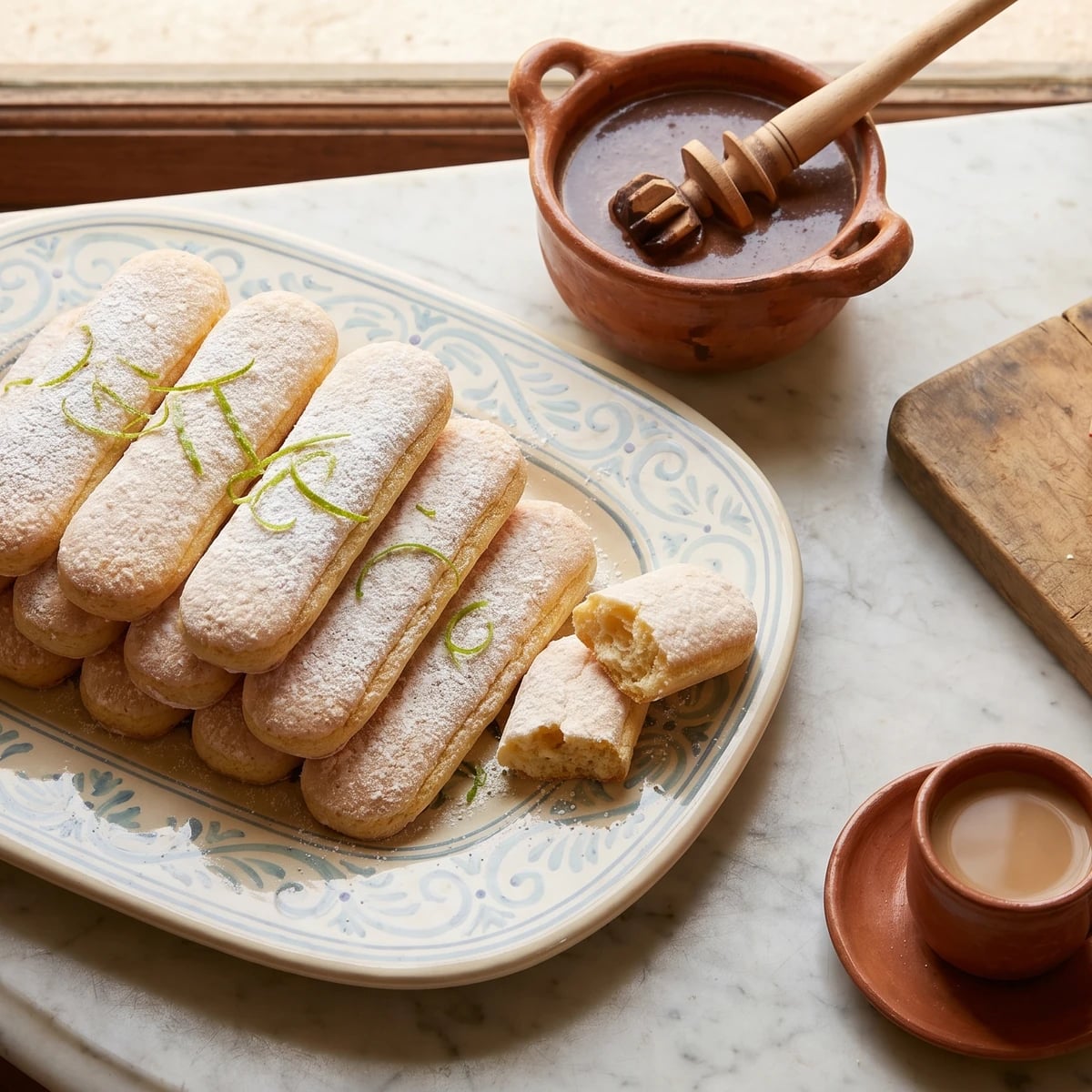
Bizcotelas Yucatecas de las Concepcionistas
Created by Chef Lupita
Merida's convent biscuit, beaten by hand for four centuries by the Concepcionistas, baked twice into a crackling sponge made for dipping into cafe con leche or thick Yucatecan chocolate.
This is a Yucatecan dulce. Specifically meridano, from the convent kitchens of the Concepcionistas in the centro historico of Merida, where the order has been baking since 1596. Bizcotelas are not pan dulce. They are not galletas. They are sponge fingers baked twice, once to set and once to dry, until they are light enough to crack between your fingers and dry enough to survive a long dip without collapsing into the cup.
The Yucatan has a sugar tradition unlike anywhere else in Mexico. The peninsula's colonial wealth came from henequen and sugar, and the convents that served the Spanish elite developed a repertoire of cookies, marzipans, and almibares that owes as much to Andalusia as it does to the Maya kitchens around them. Bizcotelas sit at the center of that tradition. Four ingredients, technique that takes patience, and a result that has not needed to change in four hundred years.
I spent a week with a senora in the Lucas de Galvez market in Merida who sells these by the kilo from a tin lined with wax paper. She showed me how she beats the yolks until they ribbon, how she folds the whites in three additions and not one more, how she double-dusts the sugar so the tops pearl in the oven. She told me her recipe came from her tia, who got it from a sister at La Mejorada convent in the 1940s. Cada estado, su propia cocina, and this one belongs to the dulcerias of Merida.
Ingredients
large eggs
Quantity
6
separated, at room temperature
granulated sugar
Quantity
1 cup
divided
finely grated lime zest from a Yucatecan lima dulce
Quantity
1 teaspoon
or substitute Persian lime
| Ingredient | Quantity |
|---|---|
| large eggsseparated, at room temperature | 6 |
| granulated sugardivided | 1 cup |
| finely grated lime zest from a Yucatecan lima dulceor substitute Persian lime | 1 teaspoon |
Where cooking meets culture.
Culinary guides, cultural storytelling, and the editorial depth that makes cooking meaningful.
Discover Culinary Explorer