
Chef Lupita
Acitrón de Cidra Conventual
Puebla's convent-style acitrón, made from cidra peel instead of endangered biznaga, built through repeated syrup soakings until the cubes turn firm, translucent, and ready for rosca or chiles en nogada.
A cooking platform built around craft, culture, and the stories behind what we eat.
Created by
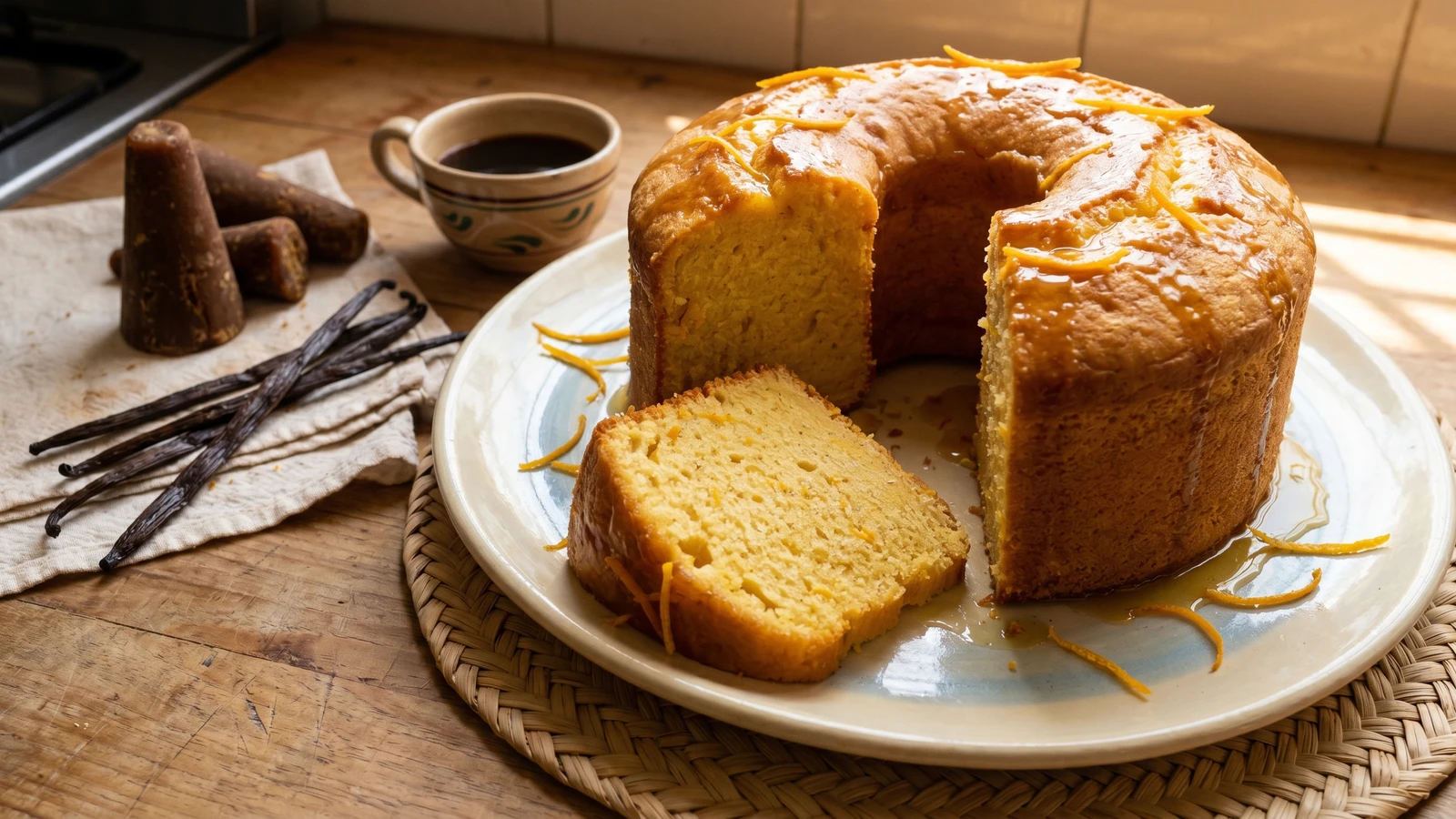
Veracruz's Gulf Coast orange sponge, built on tall-whipped eggs, cítricos jarochos, vainilla de Papantla, and a piloncillo glaze that soaks into the crumb without making it heavy.
Veracruz, the humid Gulf coast, is where this bizcocho belongs. The orange groves around Martinez de la Torre and Alamo Temapache give the fruit its place on the table, and Papantla gives the vanilla. This is not a chocolate cake hiding under frosting. This is a sponge that smells like citrus peel rubbed between your fingers in a mercado.
Bizcochos entered Mexican home baking through Spanish and convent pastry traditions, then changed as regional ingredients took over the work. Veracruz, with its long colonial port history and its citrus-growing north, made orange a natural flavor for home cakes served with coffee, chocolate, or atole. Vainilla de Papantla, cultivated by Totonac communities before Spanish contact, remains one of Veracruz's defining ingredients and is still protected as a denomination of origin in Mexico.
Quantity
6
at room temperature, separated
Quantity
1 cup
Quantity
1 cup
sifted twice
Quantity
1/4 teaspoon
Quantity
2 tablespoons
Quantity
1/3 cup
Quantity
1
split and seeds scraped
Quantity
1/4 cup
Quantity
1/2 teaspoon
Quantity
1 cone, about 7 ounces
chopped
Quantity
3/4 cup
Quantity
1
white pith removed
Quantity
1 small pinch
| Ingredient | Quantity |
|---|---|
| large eggsat room temperature, separated | 6 |
| granulated sugar | 1 cup |
| cake floursifted twice | 1 cup |
| fine sea salt | 1/4 teaspoon |
| fresh Veracruz orange zest | 2 tablespoons |
| fresh orange juice | 1/3 cup |
| whole vainilla de Papantla podsplit and seeds scraped | 1 |
| neutral oil | 1/4 cup |
| cream of tartar | 1/2 teaspoon |
| piloncillo conechopped | 1 cone, about 7 ounces |
| fresh orange juice for glaze | 3/4 cup |
| orange peel stripwhite pith removed | 1 |
| fine sea salt for glaze | 1 small pinch |
Heat the oven to 350F. Use a 10-inch ungreased tube pan or angel food pan. Do not grease it. The batter needs to climb the sides as it bakes. Grease the pan and you steal its ladder.
Sift the cake flour with the salt twice. Set it aside. Sponge cake is not hard, but it is not forgiving. If the flour is lumpy or heavy, the crumb will tell on you.
In a large bowl, beat the egg yolks with 1/2 cup of the sugar until thick, pale, and falling from the whisk in a ribbon. Rub the orange zest into the remaining sugar with your fingers before adding it to the whites later. That releases the oil in the peel. The perfume is in the zest, not in a bottle.
Beat the orange juice, neutral oil, and scraped seeds from the vainilla de Papantla pod into the yolk mixture. Save the empty vanilla pod for the glaze. Use the pod. Extract is useful in other kitchens, but Veracruz has Papantla. Cada estado, su propia cocina.
In a clean bowl, beat the egg whites with the cream of tartar until foamy. Add the remaining 1/2 cup sugar mixed with the orange zest, one spoonful at a time, and beat until glossy medium peaks form. The peaks should bend at the tip. Stiff, dry whites make a cake that bakes tall and eats tough. No me vengas con atajos.
Sprinkle one third of the sifted flour over the yolk mixture and fold with a wide spatula. Fold in one third of the whites to loosen the batter, then alternate flour and whites until everything is combined. Work from the bottom of the bowl up through the center. Turn the bowl as you fold. You are preserving air, not stirring pancake batter.
Pour the batter into the ungreased tube pan and smooth the top lightly. Bake for 32 to 38 minutes, until the cake springs back when touched and a skewer comes out clean. The top should be golden and slightly cracked. Those cracks are fine. This is home baking, not a beauty contest.
Invert the pan immediately over a bottle neck or the pan's feet and let the cake cool completely, about 1 hour. Cooling upside down keeps the sponge from collapsing. If you rush this, you worked for height and then threw it away.
While the cake cools, combine the chopped piloncillo, 3/4 cup orange juice, orange peel strip, saved vanilla pod, and a pinch of salt in a small saucepan. Simmer gently for 8 to 10 minutes, until the piloncillo dissolves and the syrup lightly coats a spoon. Strain and cool until warm, not hot.
Run a thin knife around the pan and release the cake. Set it on a Tlacotalpan-style glazed earthenware plate. Brush the warm piloncillo-orange glaze over the top and sides in thin layers, letting each pass sink in before adding the next. Slice with a serrated knife and serve with cafe de olla or a small cup of chocolate. Saber cocinar es saber vivir.
1 serving (about 100g)
Culinary guides, cultural storytelling, and the editorial depth that makes cooking meaningful.
Discover Culinary ExplorerChef Lupita
Puebla's convent-style acitrón, made from cidra peel instead of endangered biznaga, built through repeated syrup soakings until the cubes turn firm, translucent, and ready for rosca or chiles en nogada.

Chef Lupita
Ciudad de México's Tulyehualco alegría is popped huautli folded into piloncillo honey, pressed with peanuts, pepitas, and raisins, then cut into the rectangular bars that built a pueblo's identity.

Chef Lupita
Oaxaca's pre-Columbian amaranth bar, popped on a hot comal and bound with piloncillo, honey, and the sacred Zapotec grain that the Spanish tried, and failed, to outlaw.

Chef Lupita
Querétaro's mercado candy of popped amaranto pressed with dark piloncillo syrup, pepitas, pecans, and cacahuate, a Bajío sweet that respects the seed before it decorates the table.