
Chef Graziella
Marocchino
The little glass of layered espresso, cocoa, and foam that proves Piedmont understands coffee as well as it understands hazelnuts and chocolate. This is not a mocha. This is something far more refined.
A cooking platform built around craft, culture, and the stories behind what we eat.
Created by
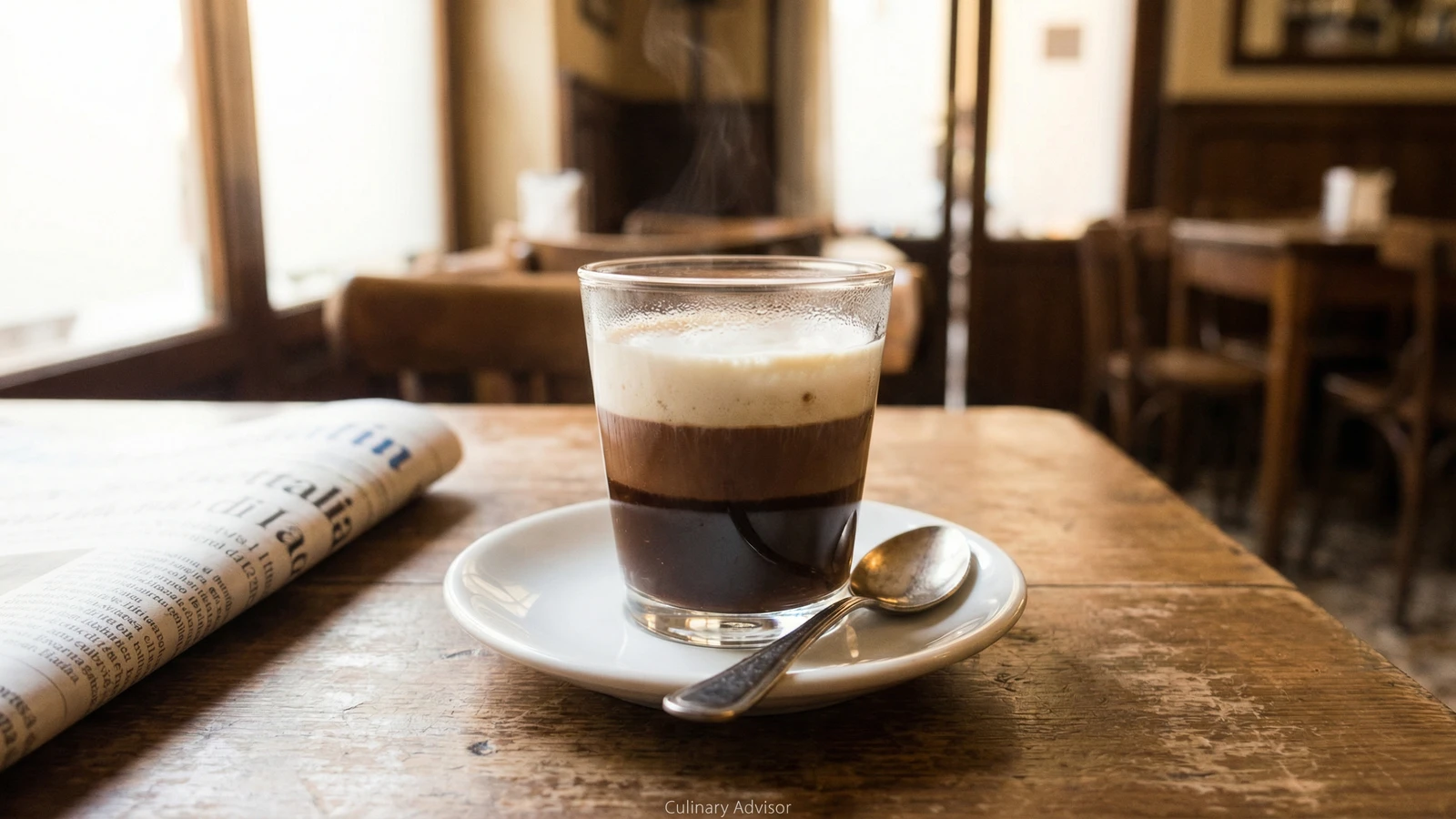
The legendary three-layered drink of Turin, where bitter espresso, silken hot chocolate, and cold cream meet but never mix. You experience each layer separately as you drink.
Bicerin is not a mocha. It is not coffee with chocolate syrup. It is three distinct elements, layered with intention, served in a small rounded glass that has not changed since the 18th century. The bottom layer is espresso, bitter and bold. The middle layer is cioccolata calda, the thick drinking chocolate of Piedmont, nothing like the watery cocoa Americans know. The top layer is cold heavy cream, poured gently so it floats.
You do not stir a bicerin. This is not a suggestion. The genius of the drink lies in how each layer reaches your lips at a different moment, the bitter espresso cutting through the sweet chocolate, the cream softening everything. Stirring destroys this architecture. You might as well order something else.
The glass matters. A proper bicerin glass is small and rounded, designed to concentrate the aroma and maintain the layers. It holds perhaps six ounces total. This is not a drink you gulp. You cradle it in your hands on a cold Turin morning and let the warmth seep through the glass while you watch the city wake.
In Turin, people have been doing exactly this since 1763. The ritual has not changed because it does not need to change. Some things are correct from the beginning.
Bicerin was born at Caffè al Bicerin in Turin's Piazza della Consolata around 1763, evolving from an earlier drink called bavareisa that mixed coffee, chocolate, milk, and syrup together. By the 19th century, the layered version had triumphed, and the café where it was invented still serves it today, unchanged. Alexandre Dumas and Camillo Benso, Count of Cavour, were devoted patrons.
Quantity
100g (70% cacao)
finely chopped
Quantity
150ml
Quantity
2 tablespoons
Quantity
1 tablespoon
Quantity
60ml (2 shots)
Quantity
100ml
| Ingredient | Quantity |
|---|---|
| dark chocolatefinely chopped | 100g (70% cacao) |
| whole milk | 150ml |
| sugar | 2 tablespoons |
| unsweetened cocoa powder | 1 tablespoon |
| freshly brewed espresso | 60ml (2 shots) |
| cold heavy cream | 100ml |
In a small heavy saucepan, combine the chopped chocolate, milk, sugar, and cocoa powder. Warm over low heat, whisking constantly, until the chocolate melts completely and the mixture is smooth and thick. This should take 8 to 10 minutes. Do not rush it. The chocolate must be silken, not grainy. It should coat a spoon heavily when you lift it.
While the chocolate warms, brew two shots of espresso using a moka pot or espresso machine. The espresso should be fresh and hot. If you do not have espresso equipment, brew very strong coffee using a ratio of two tablespoons coffee to four tablespoons water. This is a compromise, not an improvement.
Fill two small rounded glasses or heatproof cups with hot water to warm them. Let them sit for one minute, then pour out the water and dry quickly. Cold glasses will cause the layers to mix prematurely and the espresso to lose its heat.
Pour 30ml of hot espresso into each warmed glass. This is your foundation. The espresso should be very hot so it stays warm beneath the chocolate.
Holding a small spoon just above the espresso, pour the hot chocolate gently over the back of the spoon. This breaks the fall and prevents the chocolate from plunging through the espresso. The chocolate is denser, so it will sink slightly and mingle at the boundary, but a distinct layer should remain visible. Fill to about two-thirds of the glass.
The cream must be cold. Using the same spoon technique, pour the cold heavy cream very slowly over the back of a spoon held at the surface of the chocolate. The cold cream floats because it is lighter and cooler than the hot layers beneath. Pour gently until you have a layer about one centimeter thick.
Place the glasses on small saucers and serve at once. There is no spoon. There is no straw. You drink directly from the glass, tilting it so that each sip brings all three layers to your lips in different proportions. Do not stir. Do not apologize for these instructions. This is how it is done.
1 serving (about 220g)
Culinary guides, cultural storytelling, and the editorial depth that makes cooking meaningful.
Discover Culinary ExplorerChef Graziella
The little glass of layered espresso, cocoa, and foam that proves Piedmont understands coffee as well as it understands hazelnuts and chocolate. This is not a mocha. This is something far more refined.

Chef Juliette
Bavaroise turns the ribbon stage into a drink: yolks and sugar, boiling tea and milk, and Kirsch whisked into a light crown of foam. Keep the whisk moving, and the café comes home.

Chef Juliette
Bischoff turns Champagne, tilleul, citrus, and brandy into pale-gold granité, coarse enough to sparkle under the spoon. The scraping makes the texture, and the timer becomes your smallest member of the brigade.

Chef Juliette
Café glacé is coffee taught by texture: dark, sweet, vanilla-softened, and churned only until it moves like loose snow. Stop before ice cream, pour into cold cups, and take it outside.