Culinary Explorer
A cooking platform built around craft, culture, and the stories behind what we eat.
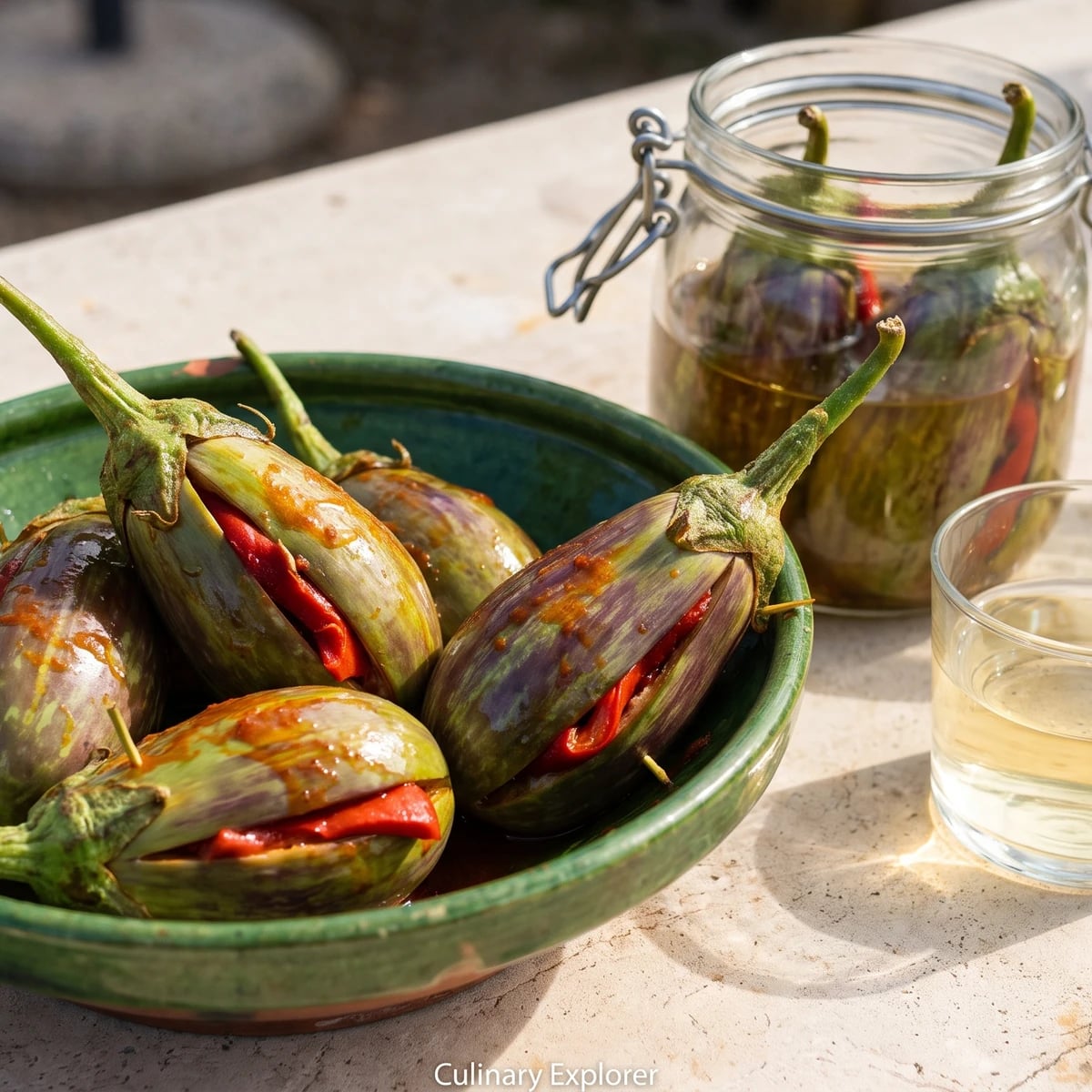
Berenjenas de Almagro
Created by Chef Isabel
Campo de Calatrava's tiny aubergines stay firm beneath their leafy caps, filled with roasted pepper and sharpened by wine vinegar, garlic, cumin, fennel and sweet pimentón.
Berenjenas de Almagro are the pickle of Castilla-La Mancha's Campo de Calatrava. The baby aubergine keeps its stem and leafy crown, then goes into the jar slit, filled with red pepper and seasoned with garlic, cumin, fennel, sweet pimentón and wine vinegar. That crowned shape and earthy aliño, the seasoned vinegar dressing, make it unlike a neighbouring encurtido. It belongs on the family table at aperitivo, sharp enough to wake the appetite and substantial enough to eat by the stem.
The blanching decides it. Cook the aubergines only until a small knife enters with a little resistance, then lift them out at once. Too little cooking leaves the flesh cottony; too much turns it soft and thirsty, and it drinks the dressing instead of keeping its bite. Let both aubergines and cooking liquid cool before you pack the jars. That stops the cooking exactly where it should stop.
Away from La Mancha, use the smallest firm purple or purple-striped baby aubergines you can find, preferably 5 to 8cm long. Their calyxes may be smaller and the flesh a little softer, but the method still holds. Don't replace them with full-sized aubergine wedges; that's another pickle. My Margin says simply: keep them small, keep them submerged, and wait the four days. Siempre sale, si lo sigues, it turns out if you follow it.
Ingredients
very small Almagro aubergines
Quantity
1kg
5 to 8cm long, rinsed, with stems and leafy calyxes attached
water
Quantity
2 litres
white wine vinegar, 6% acidity
Quantity
400ml
100ml for blanching and 300ml for the dressing
| Ingredient | Quantity |
|---|---|
| very small Almagro aubergines5 to 8cm long, rinsed, with stems and leafy calyxes attached | 1kg |
| water | 2 litres |
| white wine vinegar, 6% acidity100ml for blanching and 300ml for the dressing | 400ml |
Where cooking meets culture.
Culinary guides, cultural storytelling, and the editorial depth that makes cooking meaningful.
Discover Culinary Explorer