Culinary Explorer
A cooking platform built around craft, culture, and the stories behind what we eat.
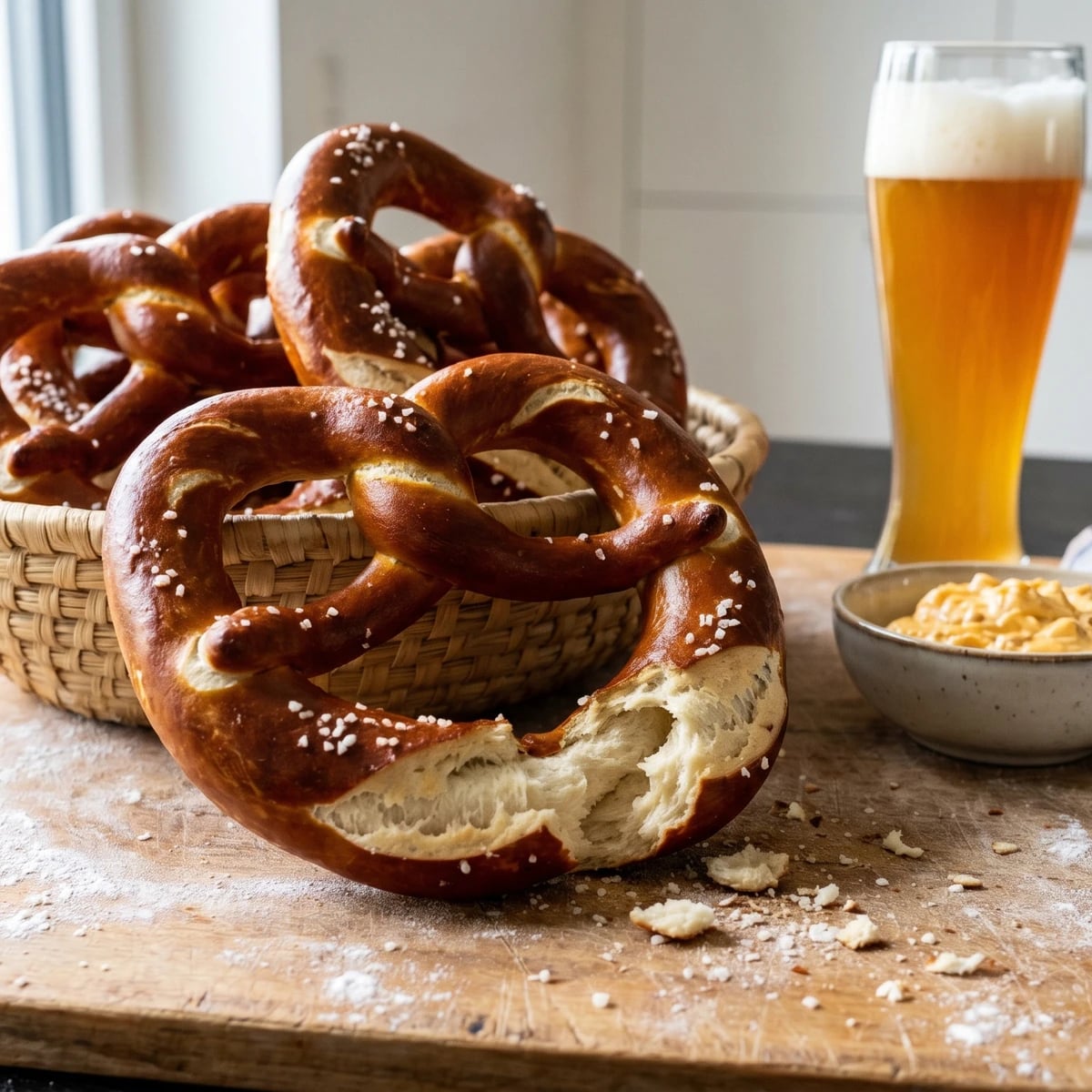
Bayerische Breze
Created by Chef Klaus
The Bavarian pretzel lives by its lye bath: a pale dough goes in, a dark glossy Breze comes out, with thin arms, a proud belly, and salt that bites clean.
Bayerische Breze belongs to the Bavarian table first: breakfast with Weisswurst before noon, Brotzeit, the beer garden, the basket on a family table when soup or sausage needs bread beside it. That doesn't make it beer-tent theatre. A Breze is daily bread with a better suit on. In Swabia the arms are often skinny and crisp with a fat belly to tear open; in Bavaria the shape runs fuller and even, still with that pale belly split by the bake. Im Norden anders, im Süden anders, and here we are firmly in the south.
The single technique is the lye. Not baking soda, not a sweet brown wash, not a packet pretending. Food-grade lye raises the surface alkalinity so the crust browns fast, turns glossy, and takes on the clean bitter edge that makes Laugengebäck, lye bread, what it is. Handle it with respect and it behaves. Skip it and you've made a nice salted roll in a pretzel shape.
I keep the dough lean, with a little butter for tenderness and barley malt for colour. The dough must be cool and firm before it meets the lye, because a soft warm rope swells, sticks, and loses its shoulders. Chill the shaped Brezen uncovered so the surface dries; that dry skin takes the lye evenly and opens cleanly where you slash the belly.
Then bake hot. The belly tears, the arms crisp, the salt stays proud on the crust. Das braucht seine Zeit, but not much fuss. Erst verstehen, dann kochen.
Ingredients
German Type 550 flour or bread flour
Quantity
500g
plus more for shaping
cool water
Quantity
285ml
fine sea salt
Quantity
10g
| Ingredient | Quantity |
|---|---|
| German Type 550 flour or bread flourplus more for shaping | 500g |
| cool water | 285ml |
| fine sea salt | 10g |
Where cooking meets culture.
Culinary guides, cultural storytelling, and the editorial depth that makes cooking meaningful.
Discover Culinary Explorer