Chef Graziella
Cicchetti di Baccalà Mantecato
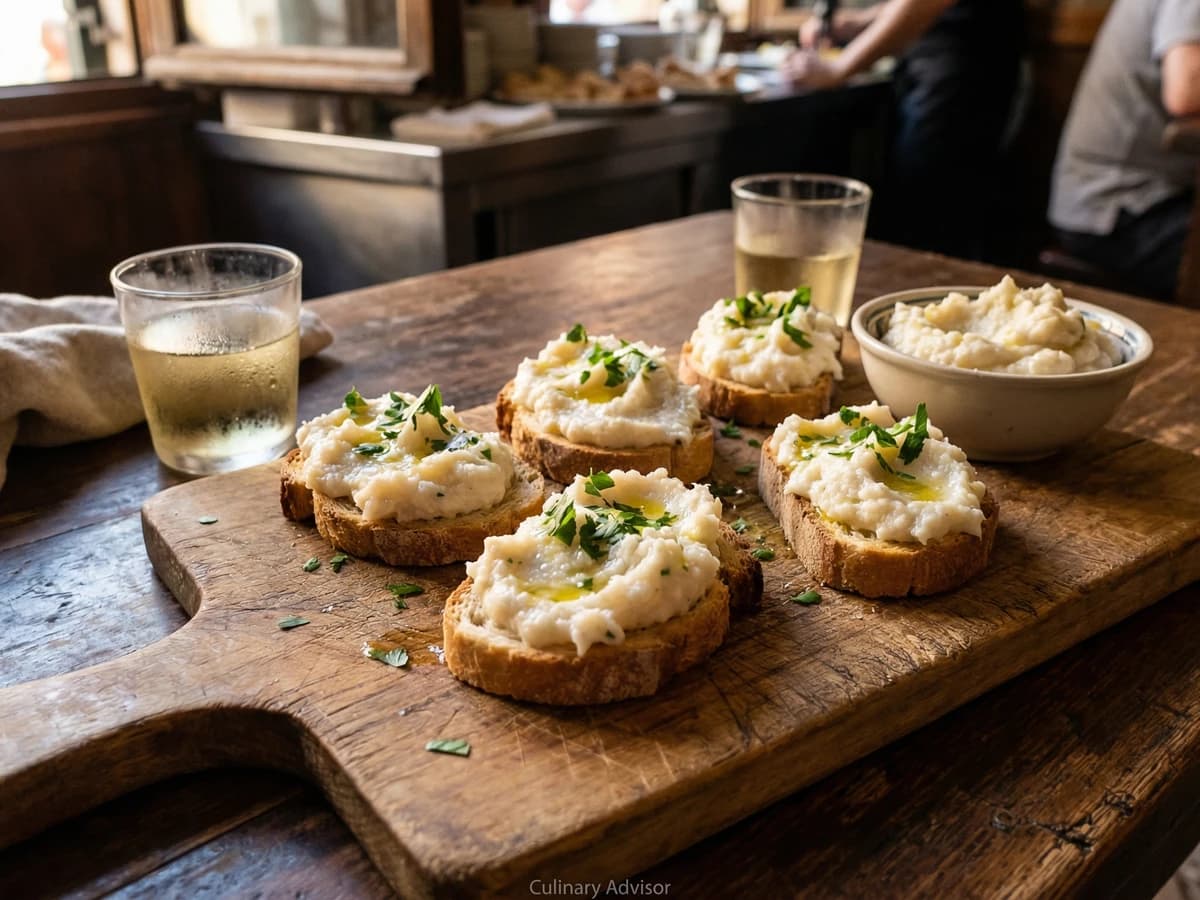
The whipped salt cod of Venice, made creamy through patience and olive oil alone. Served on small toasts in every bacaro worth its shadow, this is cicchetti at its most refined.
A cooking platform built around craft, culture, and the stories behind what we eat.
Created by
The silken salt cod spread of Venice, beaten to cloud-like cream through patience and proper technique. No cream touches this dish. The emulsion of fish and olive oil creates all the richness you need.
Baccalà mantecato requires you to understand what cream is, and what it is not. Americans assume cream means dairy. In Italian cooking, cream means texture. The word mantecato comes from mantecare, to beat until creamy. Here, cold-preserved cod, once the food of Lenten fast and maritime trade routes, transforms through sheer physical effort into something that rivals any French mousse.
The technique is not negotiable. You beat the fish while it is warm. You add the oil in a thread. You do not stop until the texture is pale and billowing. Those who add cream to this dish betray both Venice and the fish. The natural gelatin in the cod, combined with the gradual emulsification of oil, creates all the body and silkiness the dish requires.
I have watched tourists in Venice eat baccalà mantecato spread on grilled polenta at backstreet bacari, and I have watched their faces change. This is not what they expected from dried fish. That surprise is the point. Venetian cooking has always taken humble ingredients and elevated them through technique and patience.
Venice's baccalà tradition began when Venetian merchant Pietro Querini shipwrecked near Norway's Lofoten Islands in 1432. He returned with knowledge of stoccafisso, air-dried cod that could survive long voyages. The Venetians embraced it, though they eventually preferred the salt-cured baccalà that Portuguese and Basque traders brought through their ports. By the Renaissance, baccalà mantecato had become a fixture of the cicchetti tradition.
Quantity
1 pound
soaked 48-72 hours with water changed every 8 hours
Quantity
1 cup
Quantity
1
Quantity
1 cup
mild and fruity
Quantity
1 small clove
minced to paste
Quantity
to taste
freshly ground
Quantity
1 tablespoon
minced fine
Quantity
for serving
| Ingredient | Quantity |
|---|---|
| salt cod (baccalà)soaked 48-72 hours with water changed every 8 hours | 1 pound |
| whole milk | 1 cup |
| bay leaf | 1 |
| extra virgin olive oilmild and fruity | 1 cup |
| garlic (optional)minced to paste | 1 small clove |
| white pepperfreshly ground | to taste |
| flat-leaf parsleyminced fine | 1 tablespoon |
| grilled polenta or crostini | for serving |
Place the salt cod in a large bowl and cover with abundant cold water. Refrigerate for 48 to 72 hours, changing the water every 8 hours. The fish is ready when it has lost most of its salt but retains a pleasant savory quality. Taste a small piece after 48 hours. If it still bites sharply of salt, continue soaking.
Drain the soaked cod and place it in a wide saucepan. Add the milk, the bay leaf, and enough cold water to cover the fish by one inch. Bring slowly to a bare simmer over medium-low heat. The liquid should tremble, never boil. Poach for 20 to 25 minutes, until the fish flakes easily and is cooked through. The gentleness matters: boiling toughens the flesh.
Remove the cod from the poaching liquid and let it cool until you can handle it. Discard the liquid, bay leaf, and any scum. While the fish is still warm, remove all skin and bones. Be thorough. Run your fingers over every piece. Even small bones will ruin the texture of the finished dish. Flake the flesh into a large bowl.
Using a wooden spoon or, preferably, the paddle attachment of a stand mixer, begin beating the warm fish. Work vigorously. The fish will start to break down into fibers. After 2 to 3 minutes of constant beating, begin adding the olive oil in the thinnest possible stream, as you would for mayonnaise. Do not rush this. The fish must absorb each addition before you add more.
Continue beating and adding oil until the mixture becomes pale, fluffy, and creamy. This takes 10 to 15 minutes by hand, 5 to 7 minutes in a stand mixer. The consistency should resemble thick, airy whipped cream. If it seems too dense, add a tablespoon of warm water and continue beating. If using garlic, add the minced paste now and beat to incorporate.
Season with freshly ground white pepper. Taste carefully. The fish should need no salt if it was properly soaked, but correct if necessary. Fold in the parsley. Transfer to a serving bowl, cover, and let rest at room temperature for 30 minutes before serving. The flavors settle and unify during this time.
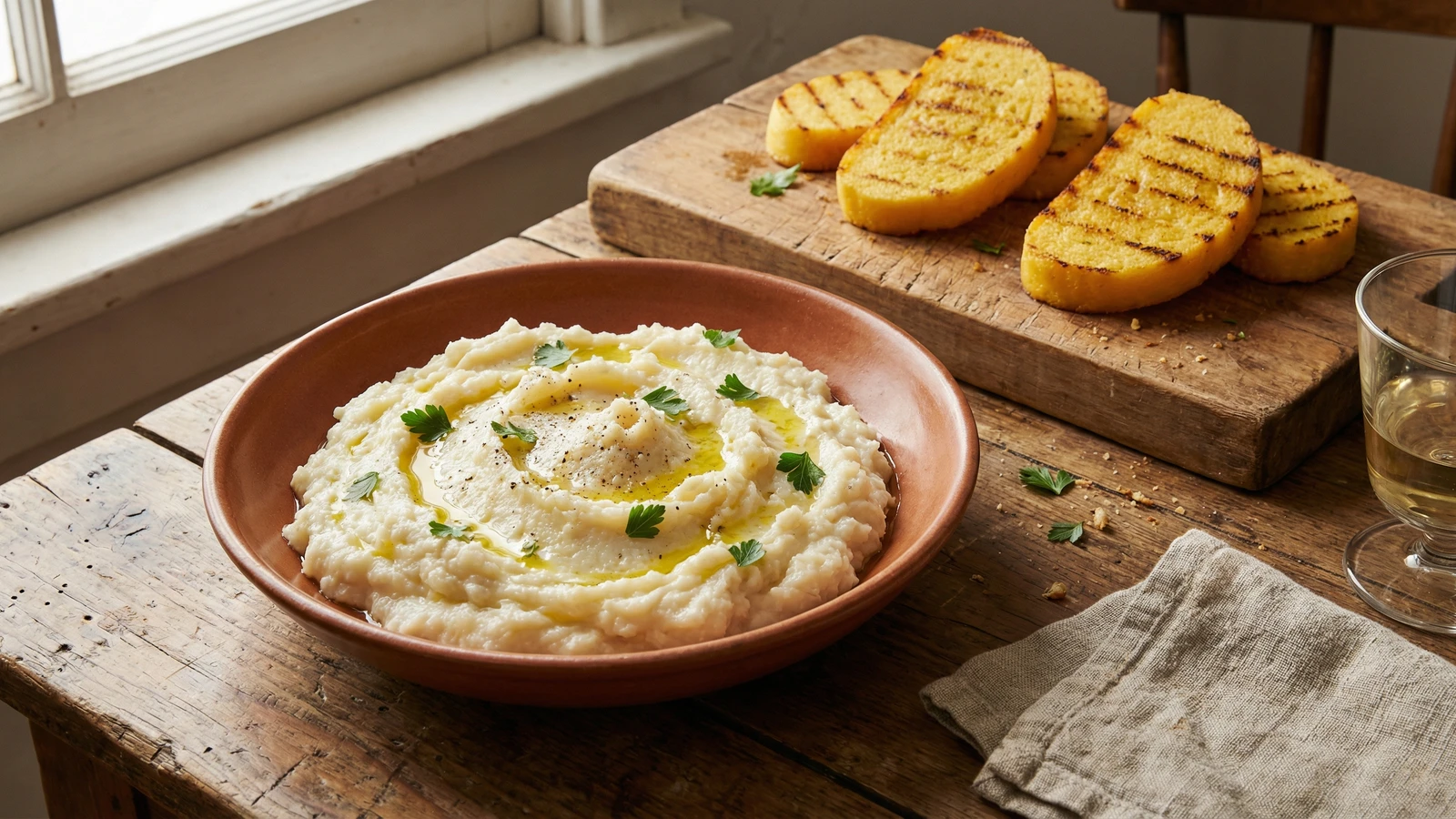
Serve at room temperature, never cold. Refrigeration dulls the flavor and hardens the texture. Spread generously on slices of grilled polenta or crusty bread. In Venice, this is served as part of the cicchetti tradition, small bites taken standing at a bacaro with a glass of wine. The polenta should be warm. The contrast matters.
1 serving (about 95g)
Culinary guides, cultural storytelling, and the editorial depth that makes cooking meaningful.
Discover Culinary ExplorerChef Graziella
The whipped salt cod of Venice, made creamy through patience and olive oil alone. Served on small toasts in every bacaro worth its shadow, this is cicchetti at its most refined.

Chef Juliette
Tiny éperlans, lightly floured and fried until their tails stand crisp, arrive in a generous heap on a napkin with fried parsley and grooved lemon, a weeknight lesson in heat and restraint.

Chef Juliette
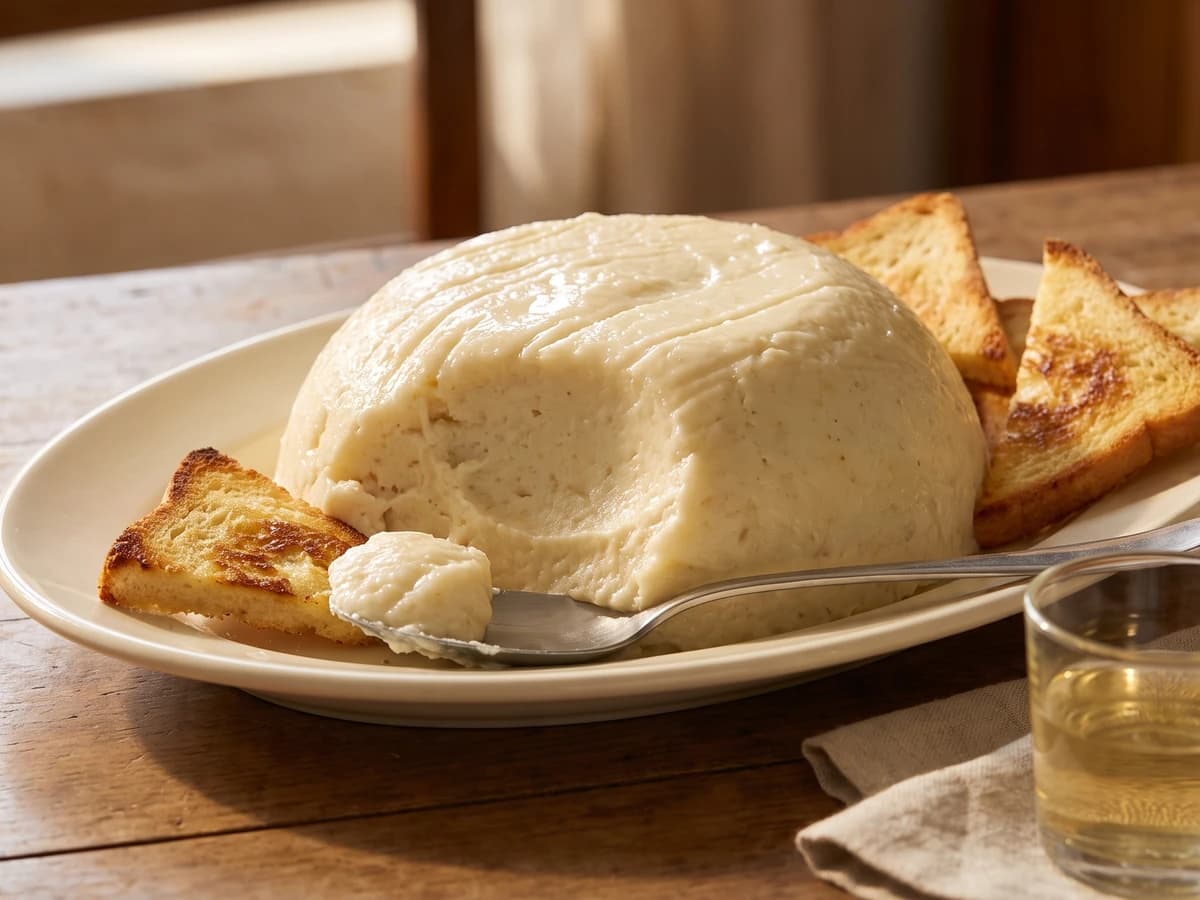
Brandade de Morue turns salt cod, warm olive oil, and milk into a pale, silky emulsion: keep everything warm and add the oil slowly, then crown the generous dome with butter-fried bread.
Chef Juliette
Salt cod worked warm with cream, one patient spoonful at a time, until the rough flakes become a glossy Nîmes paste, domed generously and ringed with butter-fried croutons for the table.