
Chef Lupita
Agua de Alfalfa
Ciudad de México's highland market agua fresca, fresh alfalfa blended with pineapple and lime until bright green, strained clean, and poured cold from the vitrolero.
A cooking platform built around craft, culture, and the stories behind what we eat.
Created by
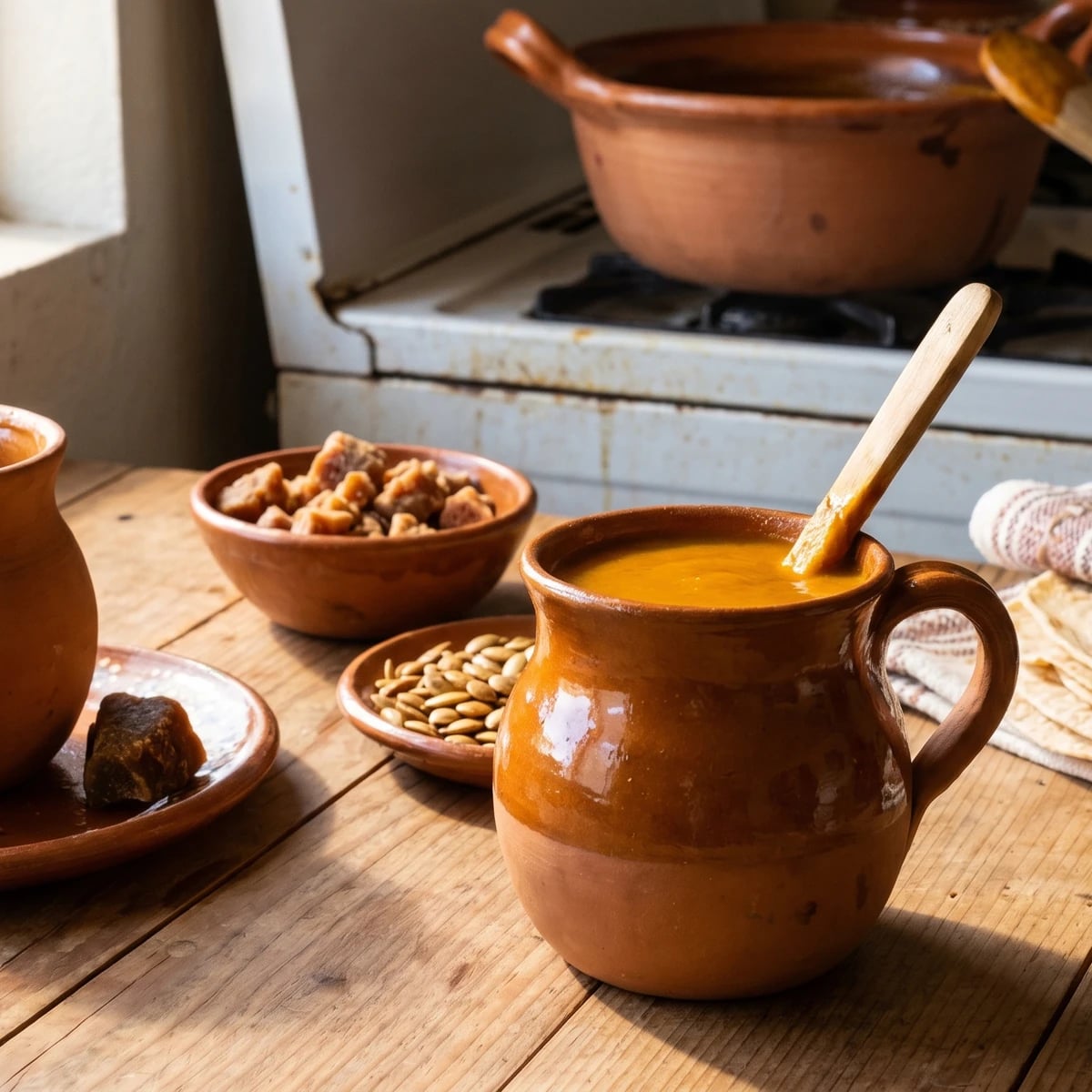
Sonora's Valle del Yaqui atole, built on cooked criolla pumpkin, nixtamalized masa, piloncillo, and canela. The hot, earthy drink that anchors a Yaqui harvest morning.
This is from Sonora. Specifically from the Valle del Yaqui, the river valley in the south of the state where the Yaqui people, the Yoeme, have farmed corn, beans, squash, and wheat for centuries. Atole de calabaza is one of their harvest drinks, made when the criolla pumpkins are pulled from the milpa and the families gather to eat together. This is northwest Mexico, where the desert pours into the bowl and where wheat tortillas live alongside corn ones, but the atole stays loyal to nixtamalized corn. Cada estado, su propia cocina.
The drink is built on three things: the pumpkin, the masa, and the piloncillo. Use calabaza de Castilla or the criolla pumpkins that show up in the mercados of Ciudad Obregon and Navojoa in late autumn. The deep orange flesh is what gives the atole its color and its body. The masa is what makes this an atole and not a soup. Nixtamalized corn, slaked in cold water and tempered in slowly. Slake it wrong and you get lumps that will not leave. Piloncillo, not refined sugar. The molasses in the piloncillo is the third flavor in the cup.
The Yaqui drink tesguino, made from sprouted corn and fermented, is sacred. That is not what you are making here. This is the everyday atole, the cold-morning drink, the one that fills the jarrito at a harvest gathering or a wake or a Sunday breakfast. My mother did not make this one. I learned it from a senora in Bacum, in the south of Sonora, who poured it from a clay olla into pottery cups still warm from the wood stove and told me the trick was to keep stirring with a wooden spoon until the spoon leaves a clean trail. Recetas probadas y garantizadas.
Atole derives from the Nahuatl 'atolli,' meaning watered, and the word covers a broad category of corn-based drinks that predate the conquest by millennia across Mesoamerica and the greater Mexican north. The Yaqui (Yoeme) and Mayo peoples of southern Sonora cultivated the three sisters, corn, beans, and squash, in the Yaqui and Mayo river valleys long before Jesuit missionaries arrived in the 17th century, and pumpkin-based atoles were part of the harvest cycle tied to the squash crop. The introduction of piloncillo, derived from sugar cane brought by the Spanish and processed in trapiches throughout colonial Mexico, replaced earlier sweeteners such as wild agave honey and mesquite syrup in atole recipes by the 18th century, though some Yoeme cooks still finish the drink with bee honey from the Sonoran sierra.
Quantity
2 pounds
peeled, seeded, and cut into 2-inch chunks
Quantity
8 cups, divided
Quantity
1 (about 8 ounces)
chopped, plus more to taste
Quantity
1 (about 3 inches)
Quantity
3/4 cup
Quantity
1 cup
Quantity
1/2 teaspoon
Quantity
1 teaspoon
| Ingredient | Quantity |
|---|---|
| calabaza de Castilla or criolla pumpkinpeeled, seeded, and cut into 2-inch chunks | 2 pounds |
| water | 8 cups, divided |
| piloncillo conechopped, plus more to taste | 1 (about 8 ounces) |
| Mexican canela stick | 1 (about 3 inches) |
| masa harina nixtamalizada (Maseca or Minsa) | 3/4 cup |
| cold water, for slaking the masa | 1 cup |
| fine sea salt | 1/2 teaspoon |
| Mexican vanilla extract (optional) | 1 teaspoon |
Place the pumpkin chunks in a heavy pot with 4 cups of water, the piloncillo, and the canela stick. Bring to a low simmer over medium heat. Cook uncovered for 25 to 30 minutes, until the pumpkin is completely soft and the piloncillo has melted into the cooking water. The liquid will be the color of wet earth. That is what you want.
Remove the canela stick. Transfer the pumpkin and its cooking liquid to a blender in batches and blend until completely smooth. Return the puree to the pot. Add the remaining 4 cups of water and the salt. Bring back to a low simmer over medium-low heat. The base should be the color of a Sonoran sunset and loose enough to move easily in the pot.
In a separate bowl, whisk the masa harina with the cold water until you have a smooth slurry with no lumps. Cold water, not hot. Hot water cooks the masa on contact and you end up with raw clumps suspended in the atole. The slurry should pour like cream.
Pour the masa slurry into the simmering pumpkin base in a thin stream, whisking constantly. Do not dump it in. Lumps that form here will not blend out later. Keep whisking for the first minute until the slurry is fully incorporated.
Reduce the heat to low. Cook for 15 to 20 minutes, stirring often with a wooden spoon, scraping the bottom and the corners of the pot. The atole will thicken slowly and the raw taste of the masa will cook out. You know it is ready when the spoon leaves a clean trail across the bottom of the pot for a moment before the atole closes back over it. That is the texture the Yaqui women look for.
Taste. Add more piloncillo if the pumpkin was not sweet enough. Stir in the vanilla if using. The atole should be earthy first, sweet second, with the canela in the background. Ladle into clay jarritos and serve at the start of a cold morning or at the end of a long table. Saber cocinar es saber vivir.
1 serving (about 400g)
Culinary guides, cultural storytelling, and the editorial depth that makes cooking meaningful.
Discover Culinary Explorer
Chef Lupita
Ciudad de México's highland market agua fresca, fresh alfalfa blended with pineapple and lime until bright green, strained clean, and poured cold from the vitrolero.

Chef Lupita
Aguascalientes' Lenten agua fresca, jewel-red from cooked beet and full of apple, banana, orange, lettuce, and ground peanuts, served cold when Holy Week meets the Feria de San Marcos.

Chef Lupita
Sonora and Sinaloa's creamy malted barley water, built on toasted cebada perla, Mexican canela, vanilla from Papantla, and evaporated milk. Pink-beige, rich, and served cold over heavy ice in a heavy glass tumbler. Liquid cookie comfort the northwest way.

Chef Lupita
Yucatán's everyday tonic of boiled chaya leaves blended with lima agria, sugar, and ice. The bright green jarra that sits on every Peninsula table from Mérida to Valladolid.