Culinary Explorer
A cooking platform built around craft, culture, and the stories behind what we eat.
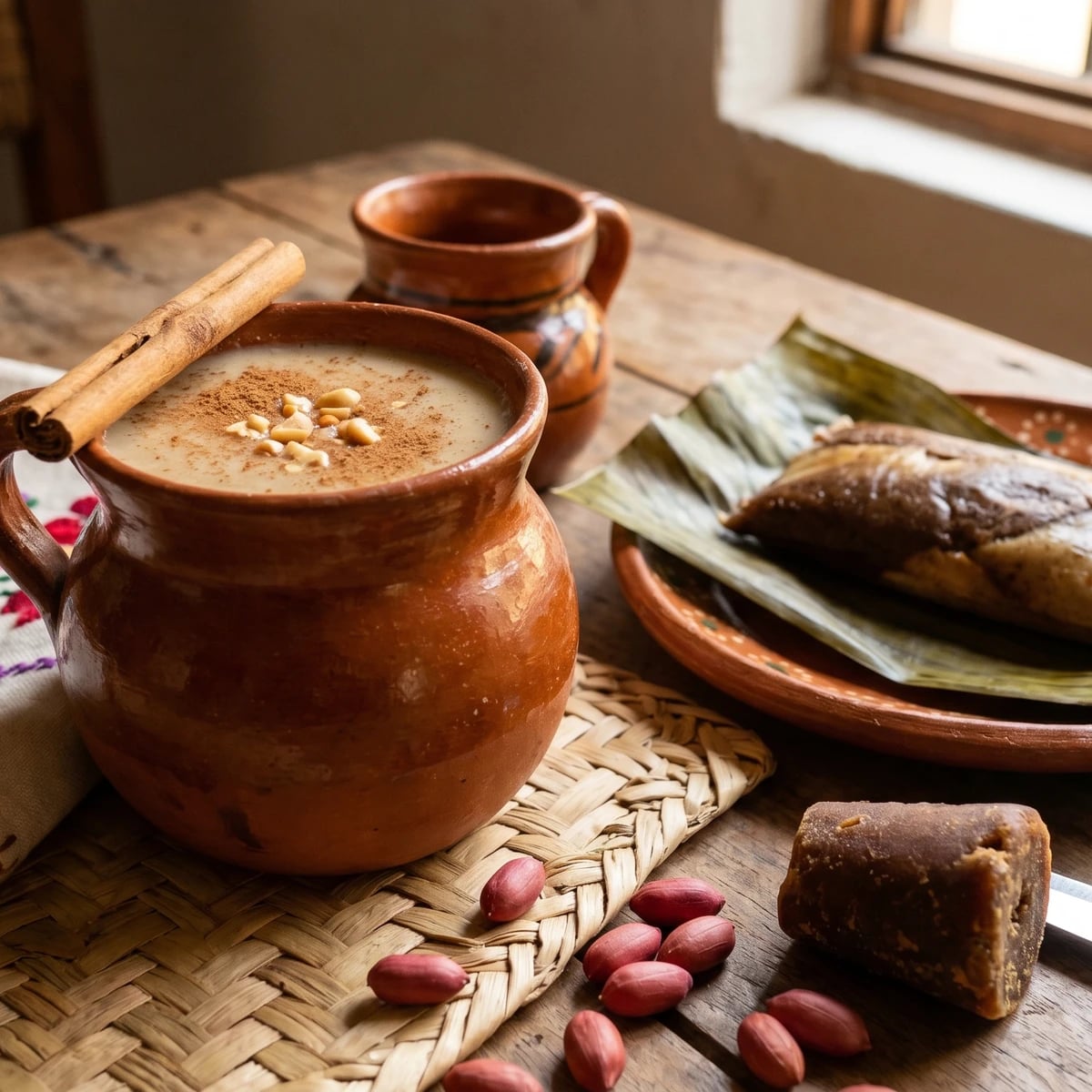
Atole de Cacahuate Oaxaqueño
Created by Chef Lupita
A Oaxacan breakfast atole from the Mixteca, built on comal-toasted peanuts ground silky with masa and sweetened with piloncillo and canela. The cup that warms a cold morning in the sierra.
This atole is from Oaxaca. Specifically from the Mixteca and the Sierra Norte, where the mornings are cold, the markets open before sunrise, and the women set up their cazos of atole next to the tamal sellers before the first bus pulls in.
Atole de cacahuate is not as famous as champurrado or atole de elote, and that is exactly the problem. Oaxaca has a dozen atoles, almost none of them known outside the state, and this one belongs in any honest accounting of the cuisine. The peanut is toasted on a comal until the skins flake and the oils release. Then it is ground fine with masa. The masa is what makes it atole and not horchata. No me vengas con atajos. If you skip the masa and just blend peanuts with milk, you have made a peanut drink. You have not made atole.
The sweetener is piloncillo, the unrefined cane sugar pressed into dark cones, sold in every mercado in Mexico. White sugar will work and it will taste like nothing. Piloncillo gives you the smoky molasses depth that ties the peanut to the canela and makes the cup taste like an Oaxacan morning. My mother kept piloncillo in a clay jar on the counter and she would shave it with a knife when she needed it. I do the same. Cada estado, su propia cocina, and this cup belongs to Oaxaca.
Ingredients
raw shelled peanuts, skins on
Quantity
1 cup
masa harina
Quantity
1/2 cup
preferably nixtamalized, like Maseca for tortillas
water
Quantity
6 cups
divided
| Ingredient | Quantity |
|---|---|
| raw shelled peanuts, skins on | 1 cup |
| masa harinapreferably nixtamalized, like Maseca for tortillas | 1/2 cup |
| waterdivided | 6 cups |
Where cooking meets culture.
Culinary guides, cultural storytelling, and the editorial depth that makes cooking meaningful.
Discover Culinary Explorer