
Chef Lupita
Agua de Alfalfa
Ciudad de México's highland market agua fresca, fresh alfalfa blended with pineapple and lime until bright green, strained clean, and poured cold from the vitrolero.
A cooking platform built around craft, culture, and the stories behind what we eat.
Created by
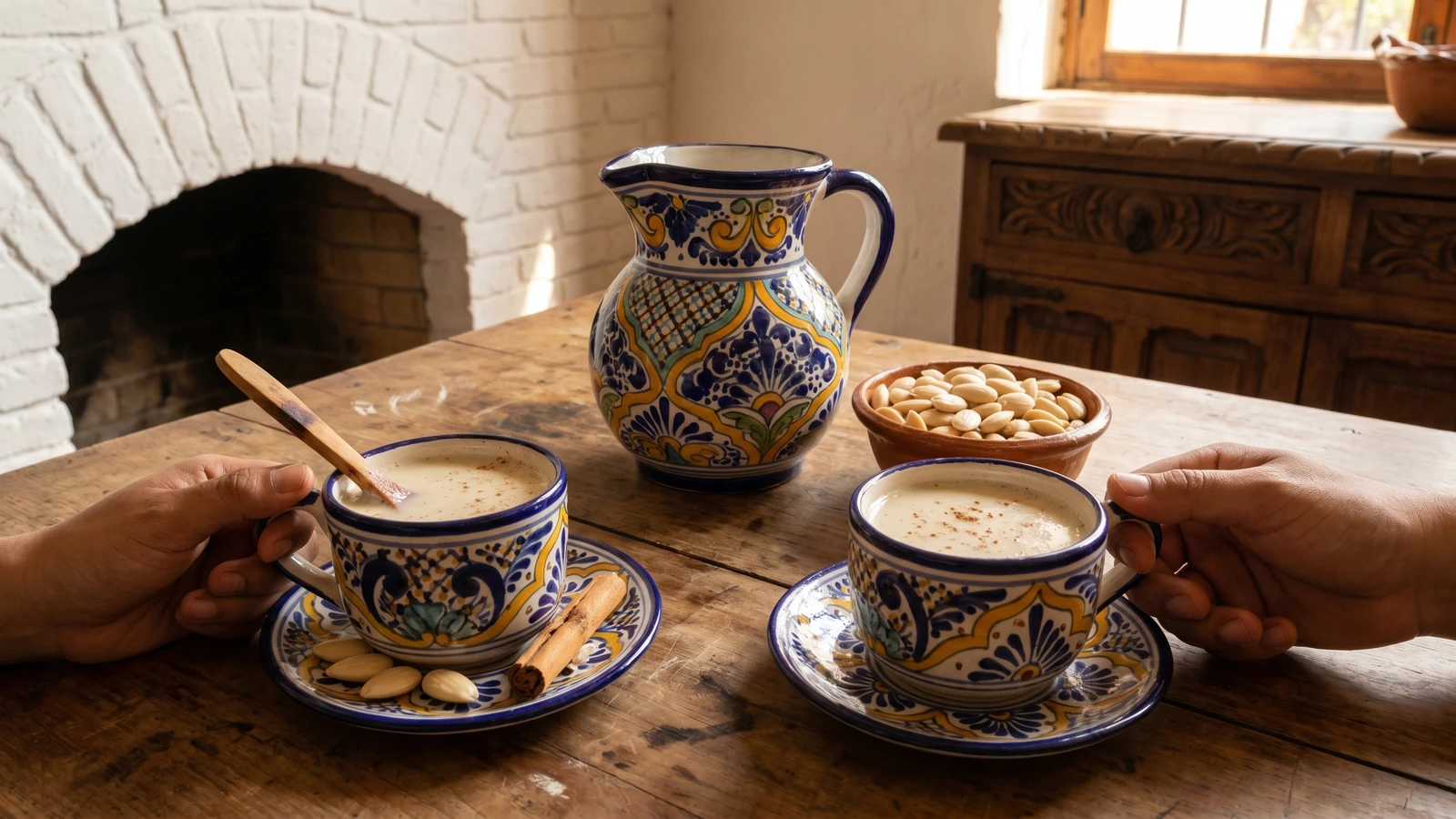
Puebla's convent almond atole, ground from blanched almendras, milk, canela, and a pinch of arroz, belongs to the quiet winter kitchens of the Clarisas.
Puebla, the convent city of the central highlands, owns this atole. Not because almonds were born there, they were not, but because the women in Puebla's convent kitchens knew how to take Spanish ingredients and teach them to behave inside Mexican technique. This is the atole de almendra tied to the Clarisas and to the poblano convent table, the kind served in Talavera cups when December makes the stone walls cold.
The defining ingredient is almendra blanqueada, peeled almond, ground until it gives the milk body and a clean perfume. The arroz is only a little. Do not turn this into rice pudding. The rice thickens, the almond speaks, the canela frames it. That is the order. Atole is not just any hot sweet drink. It is a thickened drink with discipline.
I learned a version from a woman in Puebla who kept her grandmother's convent recipe folded inside a cookbook with the pages browned at the edges. She told me, "no lo batas como licuado," do not beat it like a milkshake. She was right. Blend enough to grind. Cook slowly enough to thicken. Stir like you mean to stay there. La cocina no es decoracion, es trabajo.
Puebla's convent kitchens, especially Santa Clara and Santa Rosa, became centers of sweet and spiced drink making during the 17th and 18th centuries, when Spanish almonds, sugar, cinnamon, and dairy entered kitchens already fluent in maize-based atoles. Atole de almendra appears in the conventual tradition as a refined holiday drink, often associated with Clarisas because the Poor Clares were famous in Puebla for sweets, preserves, and milk preparations. The technique remains Mexican: a thickened drink cooked slowly, not a European almond milk served thin.
Quantity
1 cup
blanched and peeled
Quantity
4 cups
divided
Quantity
1/4 cup
rinsed
Quantity
1 cup
for soaking the rice
Quantity
1
Quantity
1/2 cup
Quantity
1/8 teaspoon
Quantity
1 teaspoon
| Ingredient | Quantity |
|---|---|
| whole raw almondsblanched and peeled | 1 cup |
| whole milkdivided | 4 cups |
| white ricerinsed | 1/4 cup |
| waterfor soaking the rice | 1 cup |
| Mexican cinnamon stick (canela) | 1 |
| piloncillo grated, or granulated sugar | 1/2 cup |
| fine sea salt | 1/8 teaspoon |
| pure vanilla extract (optional) | 1 teaspoon |
Bring a small pot of water to a boil. Add the almonds for 60 seconds, drain them, and slip off the skins while they are still warm. The skin brings bitterness and a dusty color. The convent version is pale, smooth, and careful. Do the work.
Rinse the rice until the water runs mostly clear, then soak it in 1 cup water for 20 minutes. Drain it well. The rice is not here to dominate. It gives the atole body so the almond can carry through the milk without turning thin.
Put the peeled almonds, soaked drained rice, and 1 cup of the milk in a blender. Blend until the mixture is as smooth as your machine can make it, 1 to 2 minutes. If you have a metate and patience, use it. If not, a blender is honest work here. No me vengas con atajos that change the dish, but a blender that grinds well earns its place.
Pass the almond mixture through a fine-mesh strainer into a heavy saucepan, pressing with a spoon to extract as much milk as possible. Rinse the blender with another 1/2 cup milk and strain that too. This is how you keep the drink smooth instead of gritty. Atole should coat the tongue, not scratch it.
Add the remaining 2 1/2 cups milk, the canela stick, piloncillo or sugar, and salt to the saucepan. Set over medium-low heat and stir constantly with a wooden spoon. Keep the spoon touching the bottom because milk catches fast. After 15 to 20 minutes, the atole should thicken lightly and leave a clean line on the spoon when you run your finger through it.
Remove the canela stick. Stir in the vanilla only if using it, and taste for sweetness. Serve immediately in Talavera poblana cups or thick clay mugs. It should be pourable, creamy, and fragrant with almond first, canela second. Así se hace y punto.
1 serving (about 225g)
Culinary guides, cultural storytelling, and the editorial depth that makes cooking meaningful.
Discover Culinary ExplorerChef Lupita
Ciudad de México's highland market agua fresca, fresh alfalfa blended with pineapple and lime until bright green, strained clean, and poured cold from the vitrolero.
Chef Lupita
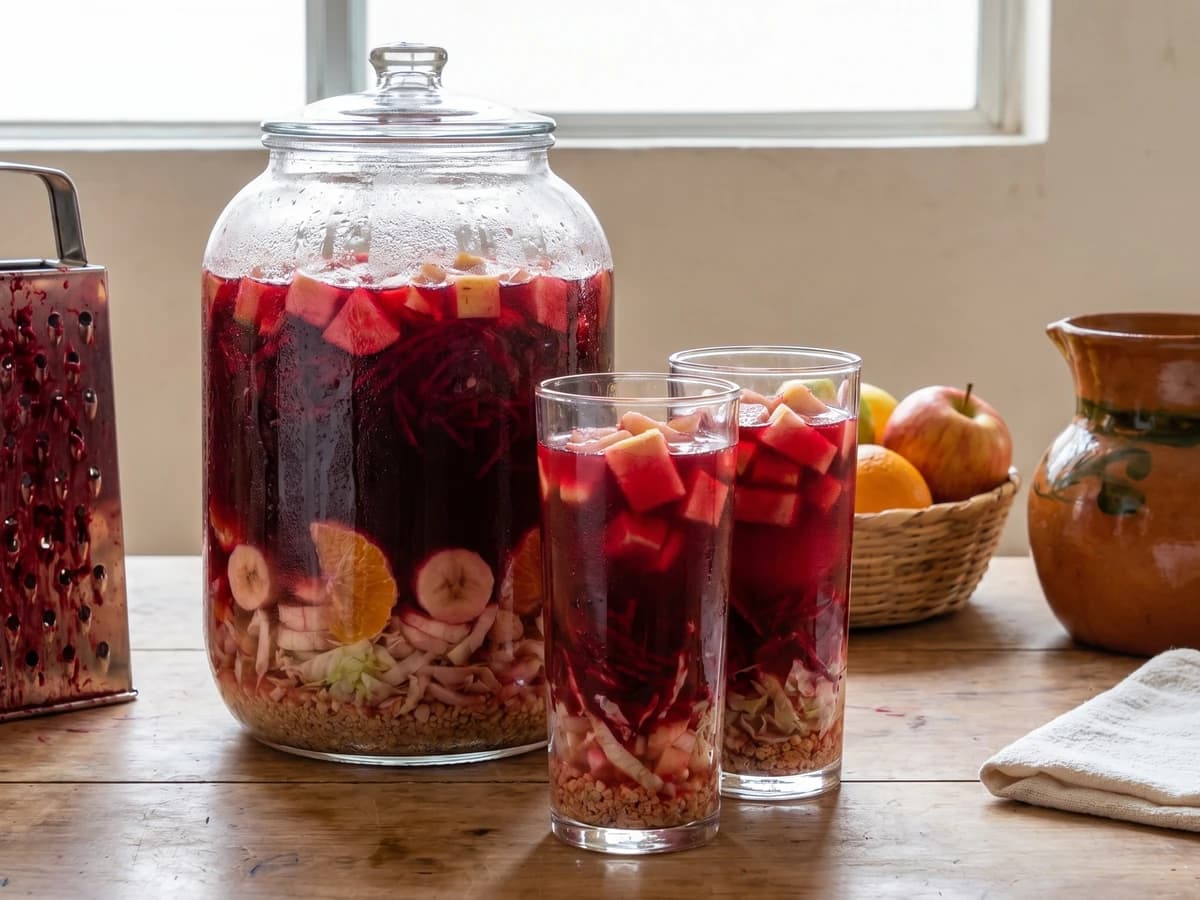
Aguascalientes' Lenten agua fresca, jewel-red from cooked beet and full of apple, banana, orange, lettuce, and ground peanuts, served cold when Holy Week meets the Feria de San Marcos.

Chef Lupita
Sonora and Sinaloa's creamy malted barley water, built on toasted cebada perla, Mexican canela, vanilla from Papantla, and evaporated milk. Pink-beige, rich, and served cold over heavy ice in a heavy glass tumbler. Liquid cookie comfort the northwest way.

Chef Lupita
Yucatán's everyday tonic of boiled chaya leaves blended with lima agria, sugar, and ice. The bright green jarra that sits on every Peninsula table from Mérida to Valladolid.