Chef Lupita
Aceite de Chiltepin Bajacaliforniano
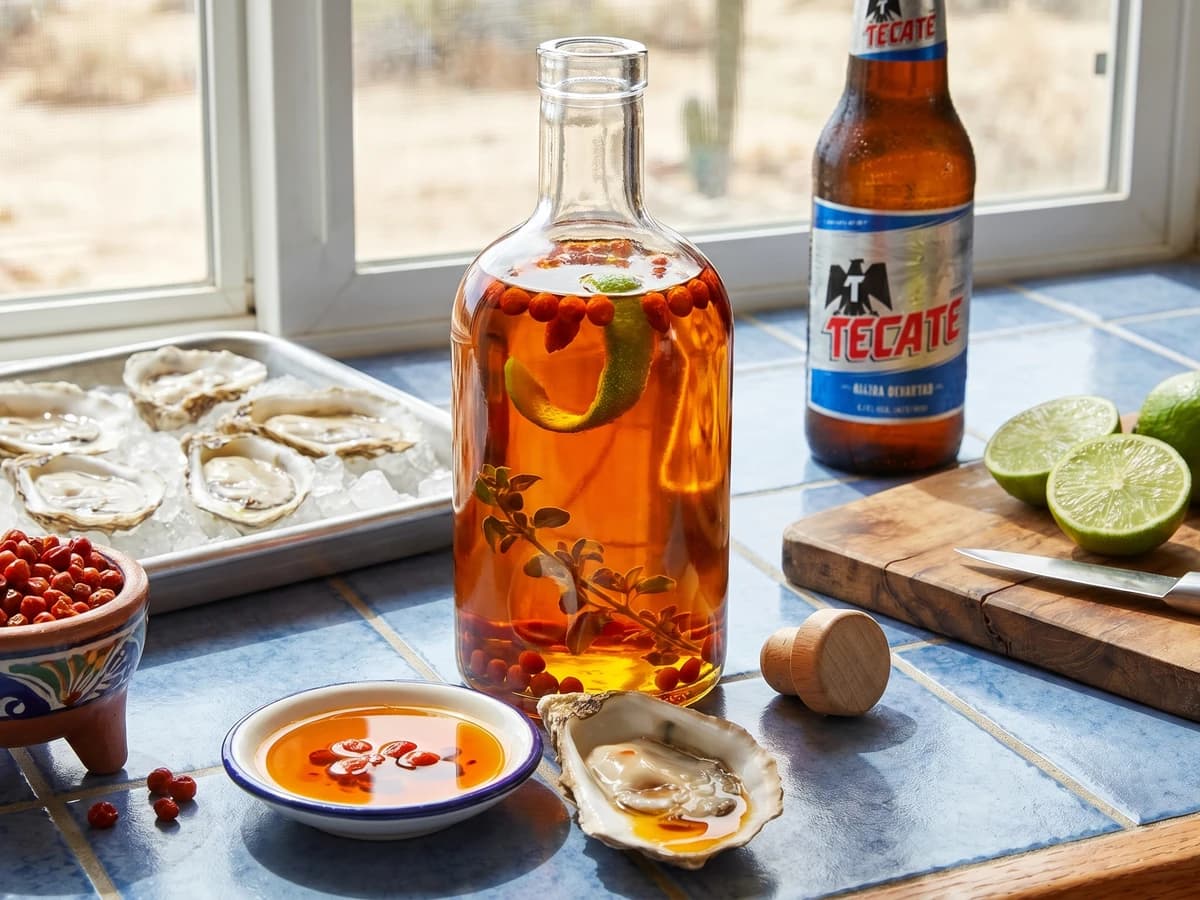
Baja California's wild chiltepin steeped in olive oil with garlic, orejon, and lime peel, until the oil turns ruby-amber and carries the slow, sneaky burn of the desert coast.
A cooking platform built around craft, culture, and the stories behind what we eat.

Created by
Michoacán's green atápakua is a P'urhépecha masa-thickened sauce of tomate verde, cilantro, hierbabuena, and serrano, martajada in a molcajete and ladled over chicken in a Cocucho cazuela.
Michoacán, the Meseta P'urhépecha and the Lake Pátzcuaro towns, that is where this atápakua lives. Not in a restaurant bottle. Not under the word mole. Atápakua is its own thing: a green sauce thickened with fresh masa de maíz, cooked until it can hold onto chicken, vegetables, or whatever the family pot is feeding that day.
The green here comes from tomate verde, cilantro, hierbabuena, and chile serrano. In the Meseta, if the market has chile perón, the yellow-orange Capsicum pubescens grown around Uruapan and Pátzcuaro, use it and be grateful. Serrano gives a clean green bite, but it does not have the floral citrus perfume or the thick skin of perón. A substitution is a compromise, not an upgrade.
I learned this style from P'urhépecha women who cooked over leña and did not separate technique from daily life. The molcajete stayed on the table. The masa came from corn that had been nixtamalized, not from a bag of shortcuts. The sauce thickened slowly in a cazuela de barro, and nobody called it mole because nobody needed to borrow another region's name. Cada estado, su propia cocina.
Understand the principle before you start: the masa is the architecture. It binds the tomatillo, softens the chile, carries the herbs, and gives the sauce its body. If you thicken this with nuts or seeds, you made another sauce. Maybe a good one. Not atápakua.
Atápakua is a P'urhépecha preparation from Michoacán whose defining technique, thickening a chile and vegetable sauce with nixtamalized corn masa, belongs to the pre-Hispanic corn kitchen. In 2010, UNESCO recognized Traditional Mexican Cuisine using the Michoacán and P'urhépecha cooking system as a central paradigm, citing milpa agriculture, nixtamalization, communal cooking, and wood-fire kitchens. Green atápakuas use tomate verde and fresh herbs, while other regional versions may be red with chile guajillo or built around local greens, but the shared body is masa, not mole paste.
Quantity
1 1/2 pounds
husked and rinsed
Quantity
4
stemmed
Quantity
1
quartered
Quantity
3
unpeeled
Quantity
1 1/2 cups, packed
Quantity
1/2 cup, packed
Quantity
1/2 cup
Quantity
3 cups
preferably homemade from bone-in chicken
Quantity
1 1/2 teaspoons, plus more to taste
Quantity
6 pieces
for serving
Quantity
for serving
warmed
| Ingredient | Quantity |
|---|---|
| tomate verde (tomatillos)husked and rinsed | 1 1/2 pounds |
| fresh chile serranostemmed | 4 |
| small white onionquartered | 1 |
| garlic clovesunpeeled | 3 |
| fresh cilantro leaves and tender stems | 1 1/2 cups, packed |
| fresh hierbabuena leaves | 1/2 cup, packed |
| fresh masa de maíz nixtamalizado | 1/2 cup |
| warm chicken brothpreferably homemade from bone-in chicken | 3 cups |
| kosher salt | 1 1/2 teaspoons, plus more to taste |
| warm cooked bone-in chicken pieces (optional)for serving | 6 pieces |
| hand-pressed corn tortillas (optional)warmed | for serving |
Heat a comal over medium heat. Roast the tomate verde, serranos, onion, and unpeeled garlic, turning them as they soften. The tomatillos should turn from sharp green to olive and leak a little juice. The serrano skins should blister in patches. The garlic is ready when it feels soft inside its skin. Do not blacken everything. Char is seasoning, not the whole dish.
Peel the garlic. In a volcanic stone molcajete, grind the garlic with the salt until it becomes a paste. Add the serranos, then the onion, then the roasted tomate verde with all its juices. Grind until martajada, rough enough that you still see bits of chile skin and tomatillo seed. Add the cilantro and hierbabuena last and work them into the green base. A blender works for a large batch, but pulse it. If you make it perfectly smooth, the sauce loses the hand of the cook.
Put the fresh masa in a bowl and whisk in 1 cup of the warm chicken broth a little at a time until smooth. Rub it between your fingers. If you feel hard lumps, keep whisking or pass it through a fine strainer. This is the binder. Not almonds. Not pepitas. Not bread. Masa de maíz. Así se hace y punto.
Pour the ground green salsa into a clay cazuela or heavy saucepan. Add the remaining 2 cups warm chicken broth and bring it to a gentle bubble over medium heat. Cook for 5 minutes, stirring with a wooden spoon, until the raw edge of the tomatillo calms down and the herbs smell cooked but still green.
Lower the heat and stream in the masa slurry while stirring constantly. The sauce will look thin at first. Give it time. Simmer gently for 15 to 20 minutes, scraping the bottom of the cazuela so the masa does not catch. It is ready when the atápakua coats the spoon in a soft green layer and the smell of raw corn is gone. If it gets too thick, add broth by the tablespoon.
Taste for salt. If serving with pollo, nestle the warm cooked chicken pieces into the cazuela and spoon the atápakua over them. Let them sit in the sauce for 5 minutes over low heat so the chicken takes the flavor. Bring the cazuela to the table with warm corn tortillas. This is not mole. It is atápakua, and Michoacán knows the difference.
1 serving (about 320g)
Culinary guides, cultural storytelling, and the editorial depth that makes cooking meaningful.
Discover Culinary ExplorerChef Lupita
Baja California's wild chiltepin steeped in olive oil with garlic, orejon, and lime peel, until the oil turns ruby-amber and carries the slow, sneaky burn of the desert coast.

Chef Lupita
Puebla's Lenten convent adobo, a brick-red vinegar chile paste of ancho, guajillo, garlic, oregano, and comino made to dress fish for the meatless calendar.
Chef Lupita
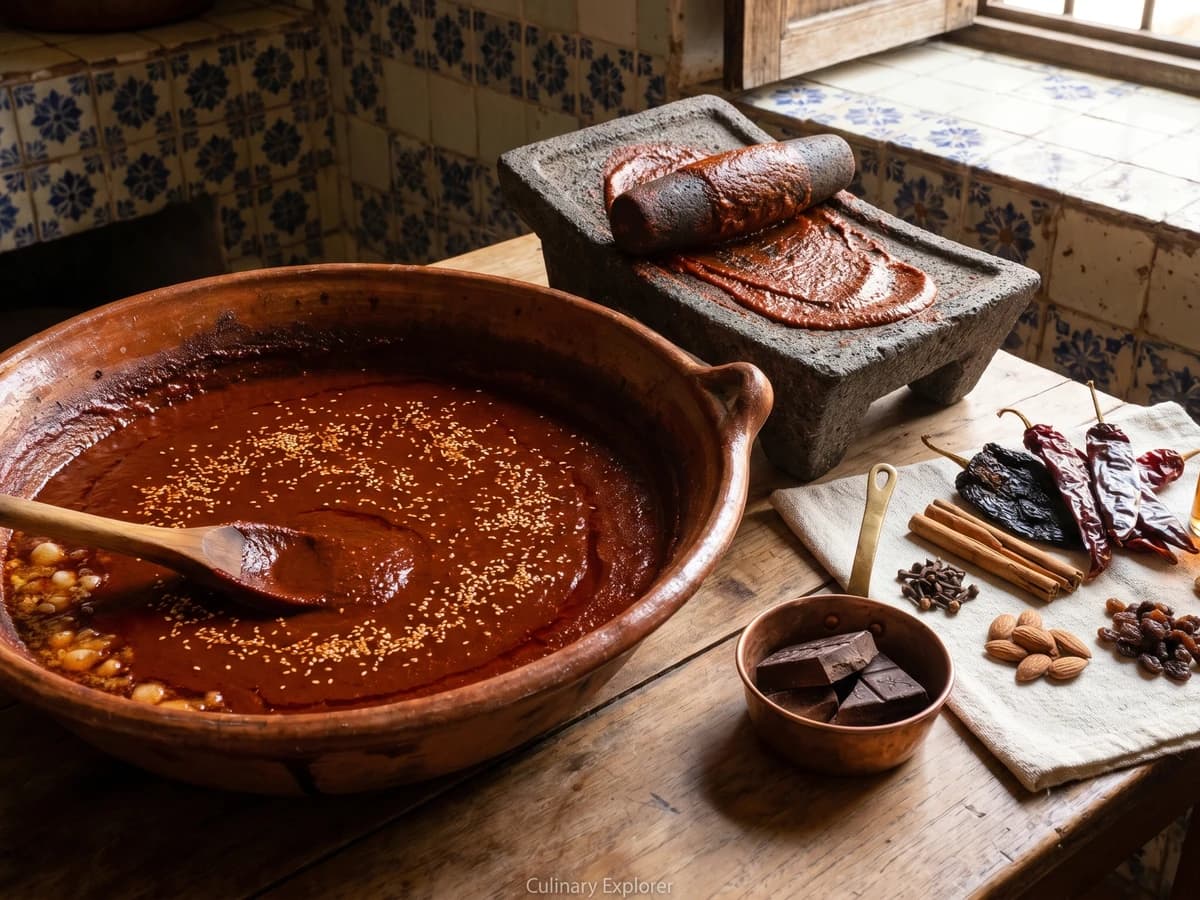
Zacatecas' wedding-table adobo, built from toasted guajillo and ancho, piloncillo, sour orange, chocolate, canela, clavo, almonds, sesame, and lard.

Chef Lupita
Puebla's convent kitchens built this adobo with ancho, guajillo, jerez, almonds, raisins, clove, and lard, a baroque marinade that stains pork loin and finishes as the sauce.