Chef Lupita
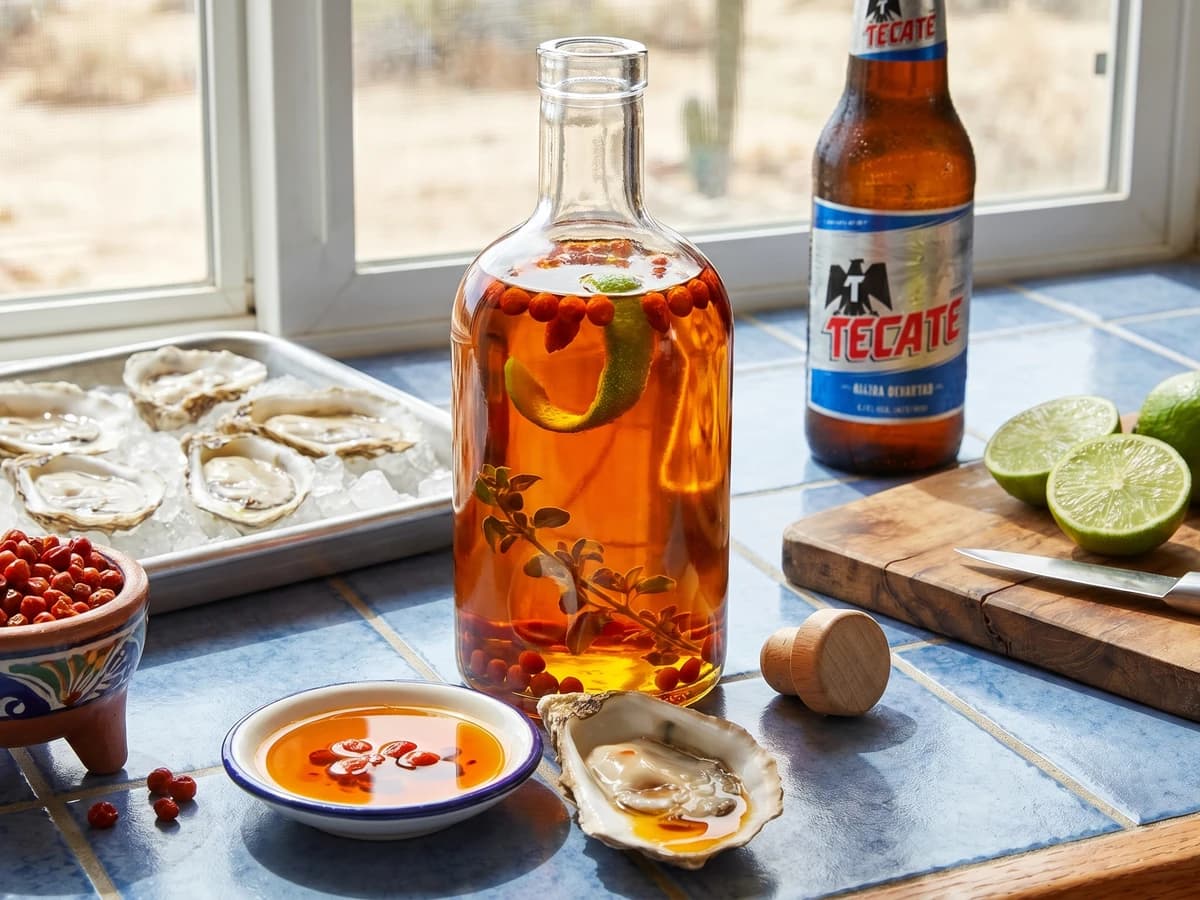
Aceite de Chiltepin Bajacaliforniano
Baja California's wild chiltepin steeped in olive oil with garlic, orejon, and lime peel, until the oil turns ruby-amber and carries the slow, sneaky burn of the desert coast.
A cooking platform built around craft, culture, and the stories behind what we eat.

Created by
Michoacán's P'urhépecha red atápakua, built with toasted guajillo and ancho, charred jitomate, and fresh masa de maíz, is a thick mother sauce for vegetables, poultry, pork, or tortillas.
Michoacán, the Meseta P'urhépecha and the villages around Lago de Pátzcuaro, is where this atápakua lives. This is not a mole wearing another name. It is a P'urhépecha red mother sauce, thickened with masa de maíz until it moves like soft atole and holds to a tortilla, a spoon, a piece of calabacita, a shredded chicken leg. Cada estado, su propia cocina.
Guajillo gives clean red color. Ancho gives raisin depth. Jitomate, onion, and garlic are charred on the comal. The women who taught me around Pátzcuaro and Tzintzuntzan did not reach for almonds, sesame, peanuts, or pepita to make it thick. They pinched fresh masa from the tortilla dough, loosened it with caldo, and stirred it into the chile until the sauce had body. The corn is not decoration here. The corn is the structure.
Over leña, the sauce picks up a quiet smoke from the comal and the clay cazuela. In an apartment, use a heavy comal and a good pot, but understand what you are trying to imitate: dried chiles woken by fire, nixtamalized corn carrying the sauce, and a texture that is martajada if made in the molcajete. A blender works for a batch. The molcajete tells the truth.
If chile perón is in the market, especially the yellow-orange piles near Uruapan or Pátzcuaro, roast one and add it for that floral citrus heat of the Meseta. If it is not there, leave it out. A serrano can give bite, but it cannot pretend to be perón. Si no conoces el mercado, no conoces la cocina.
Atápakua belongs to the P'urhépecha cooking of Michoacán, especially the Meseta P'urhépecha and the Lake Pátzcuaro basin, where thick sauces and stews are bound with nixtamalized masa rather than nut or seed pastes. The 2010 UNESCO inscription of Traditional Mexican Cuisine was built around the Michoacán paradigm, naming milpa agriculture, nixtamalization, markets, ritual cooking, and women cooking over leña as a living system. Calling atápakua a mole erases a P'urhépecha category: mole is a broad sauce family, but atápakua is defined by corn as the body of the sauce.
Quantity
8
wiped clean, stemmed and seeded
Quantity
3
wiped clean, stemmed and seeded
Quantity
5, about 1 1/2 pounds
Quantity
1/2 medium
cut into 2 wedges
Quantity
4
unpeeled
Quantity
1
roasted, peeled, and seeded
Quantity
2 tablespoons
Quantity
4 cups, divided, plus more as needed
Quantity
1/2 cup
or 1/2 cup masa harina mixed with 1/3 cup warm water and rested 10 minutes
Quantity
2 sprigs
or 1 small sprig nurite if you can get it in Michoacán
Quantity
1 1/2 teaspoons, plus more to taste
Quantity
for serving
| Ingredient | Quantity |
|---|---|
| dried chile guajillowiped clean, stemmed and seeded | 8 |
| dried chile anchowiped clean, stemmed and seeded | 3 |
| ripe jitomates or Roma tomatoes | 5, about 1 1/2 pounds |
| white onioncut into 2 wedges | 1/2 medium |
| garlic clovesunpeeled | 4 |
| fresh chile perón from Michoacán (optional)roasted, peeled, and seeded | 1 |
| manteca de cerdo | 2 tablespoons |
| caldo de pollo casero, caldo de verduras, or bean cooking liquid | 4 cups, divided, plus more as needed |
| fresh nixtamalized masa de maízor 1/2 cup masa harina mixed with 1/3 cup warm water and rested 10 minutes | 1/2 cup |
| fresh epazoteor 1 small sprig nurite if you can get it in Michoacán | 2 sprigs |
| sal de grano or kosher salt | 1 1/2 teaspoons, plus more to taste |
| hand-pressed corn tortillas, cooked calabacitas, mushrooms, beans, chicken, pork, or charales (optional) | for serving |
Wipe the guajillo and ancho chiles with a dry cloth. Pull off the stems, open the chiles, and shake out the seeds. Do not rinse dried chiles under water. You wash away aroma and leave yourself with wet leather.
Heat a dry comal over medium. Toast the guajillos first, 15 to 20 seconds per side, just until the skins turn glossy and smell fruity. Toast the anchos separately, 25 to 30 seconds per side, because they are thicker and sweeter. They should puff in spots, never blacken. Burned chile makes bitter atápakua, and no amount of masa will hide it.
Place the toasted chiles in a bowl and cover with hot water, not boiling water. Put a small plate on top to keep them submerged and let them soften for 15 minutes. Drain them. Taste the soaking water with a spoon. If it tastes clean and sweet, keep 1/2 cup for blending. If it tastes bitter, discard it and use caldo instead.
On the same comal, roast the jitomates, onion wedges, and unpeeled garlic until the skins blister and dark spots appear. Turn them with tongs so they soften evenly. If using chile perón, roast it now until the skin blisters, then peel and seed it. Peel the garlic. The char gives the sauce the taste of a Michoacán kitchen, especially when the comal sits over leña.
For a molcajete, grind the salt and peeled garlic first until they become a paste, then work in the chiles piece by piece, followed by the onion, chile perón if using, and jitomates. For a blender, combine the softened chiles, charred vegetables, salt, and 1 cup caldo or clean soaking liquid. Blend until the sauce is smooth but still red and alive, not whipped pale. The molcajete gives martajada texture. The blender gives speed for a larger batch. Both can work, but they are not the same thing.
Crumble the fresh masa de maíz into a bowl. Whisk in 1 1/2 cups of the caldo until smooth, pressing with your fingers if you feel lumps. If using masa harina dough, treat it the same way. This is the thickener. Not almonds. Not peanuts. Not sesame. Not pepita. Pepita belongs to pipián for flavor, not to thicken this atápakua.
Set a 4-quart clay cazuela or heavy pot over medium heat. Melt the manteca de cerdo. Add the chile and jitomate base carefully, because it will sputter. Stir with a wooden spoon for 7 to 9 minutes, until the color deepens to brick red and the fat begins to mark the edges of the sauce. La manteca es el sabor. This step cooks out the raw chile and makes the sauce settle into itself.
Add the remaining 1 1/2 cups caldo and bring the sauce to a low simmer. Pour in the loosened masa in a thin stream while stirring constantly. Lower the heat and cook 18 to 22 minutes, scraping the bottom often. The sauce should thicken like a loose atole, glossy and spoonable, thick enough to leave a path when you drag the spoon through the cazuela but not so stiff that it sits like paste. Add more caldo by the spoonful if it tightens too much.
Add the epazote or nurite for the last 5 minutes of cooking, then remove the sprigs. Taste for salt. Let the atápakua rest 10 minutes before serving so the masa finishes hydrating. Spoon it over cooked calabacitas, mushrooms, beans, chicken, pork, charales, or warm tortillas. Refrigerate leftovers within 2 hours. Recetas probadas y garantizadas.
1 serving (about 185g)
Culinary guides, cultural storytelling, and the editorial depth that makes cooking meaningful.
Discover Culinary ExplorerChef Lupita
Baja California's wild chiltepin steeped in olive oil with garlic, orejon, and lime peel, until the oil turns ruby-amber and carries the slow, sneaky burn of the desert coast.

Chef Lupita
Puebla's Lenten convent adobo, a brick-red vinegar chile paste of ancho, guajillo, garlic, oregano, and comino made to dress fish for the meatless calendar.
Chef Lupita
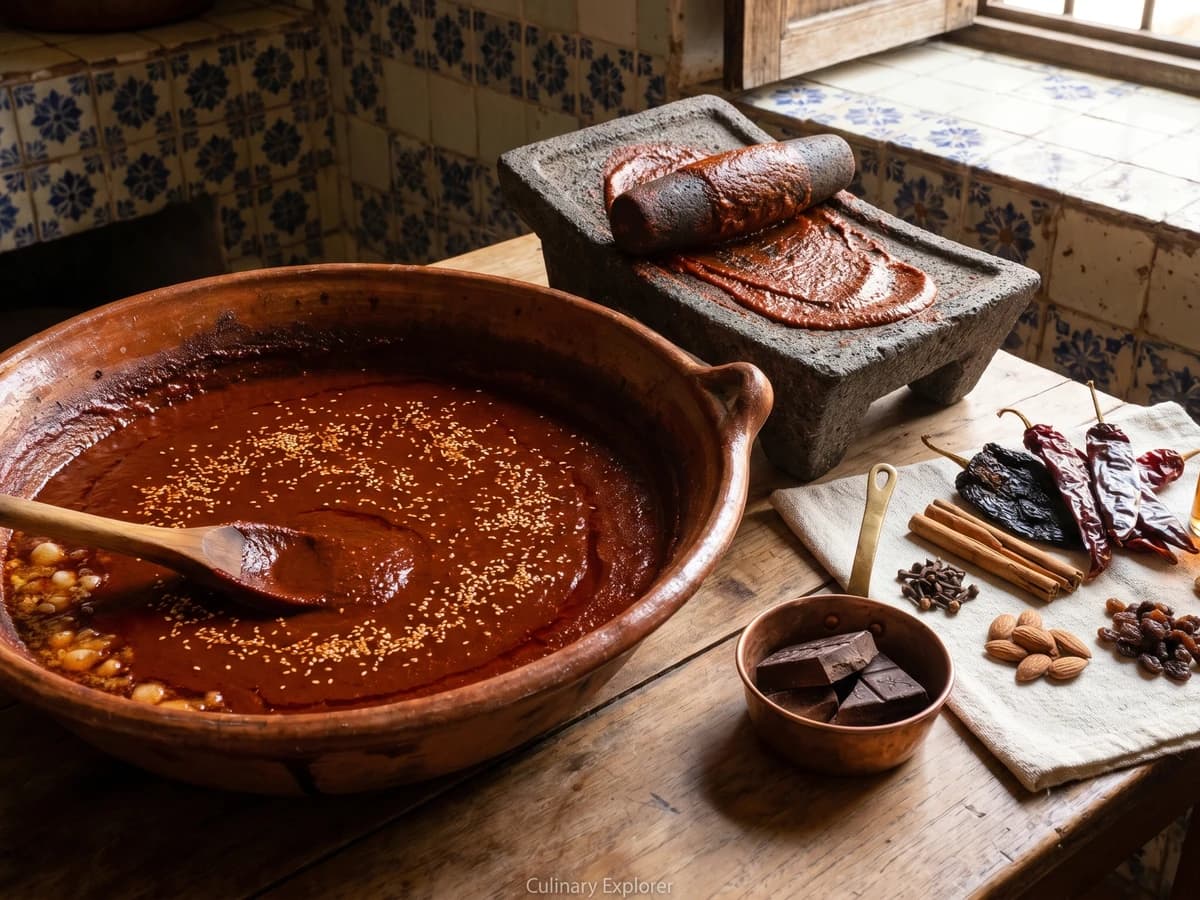
Zacatecas' wedding-table adobo, built from toasted guajillo and ancho, piloncillo, sour orange, chocolate, canela, clavo, almonds, sesame, and lard.

Chef Lupita
Puebla's convent kitchens built this adobo with ancho, guajillo, jerez, almonds, raisins, clove, and lard, a baroque marinade that stains pork loin and finishes as the sauce.