Chef Lupita
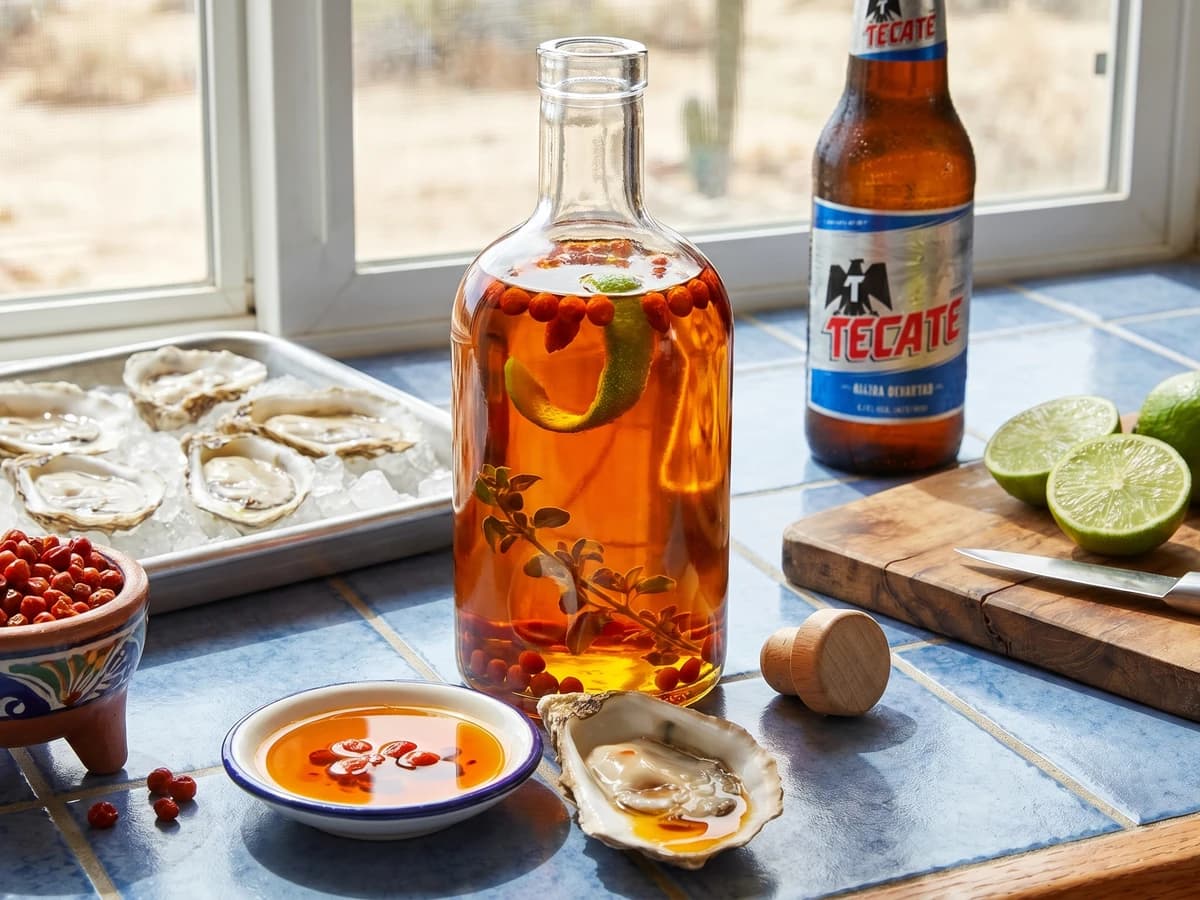
Aceite de Chiltepin Bajacaliforniano
Baja California's wild chiltepin steeped in olive oil with garlic, orejon, and lime peel, until the oil turns ruby-amber and carries the slow, sneaky burn of the desert coast.
A cooking platform built around craft, culture, and the stories behind what we eat.
Created by
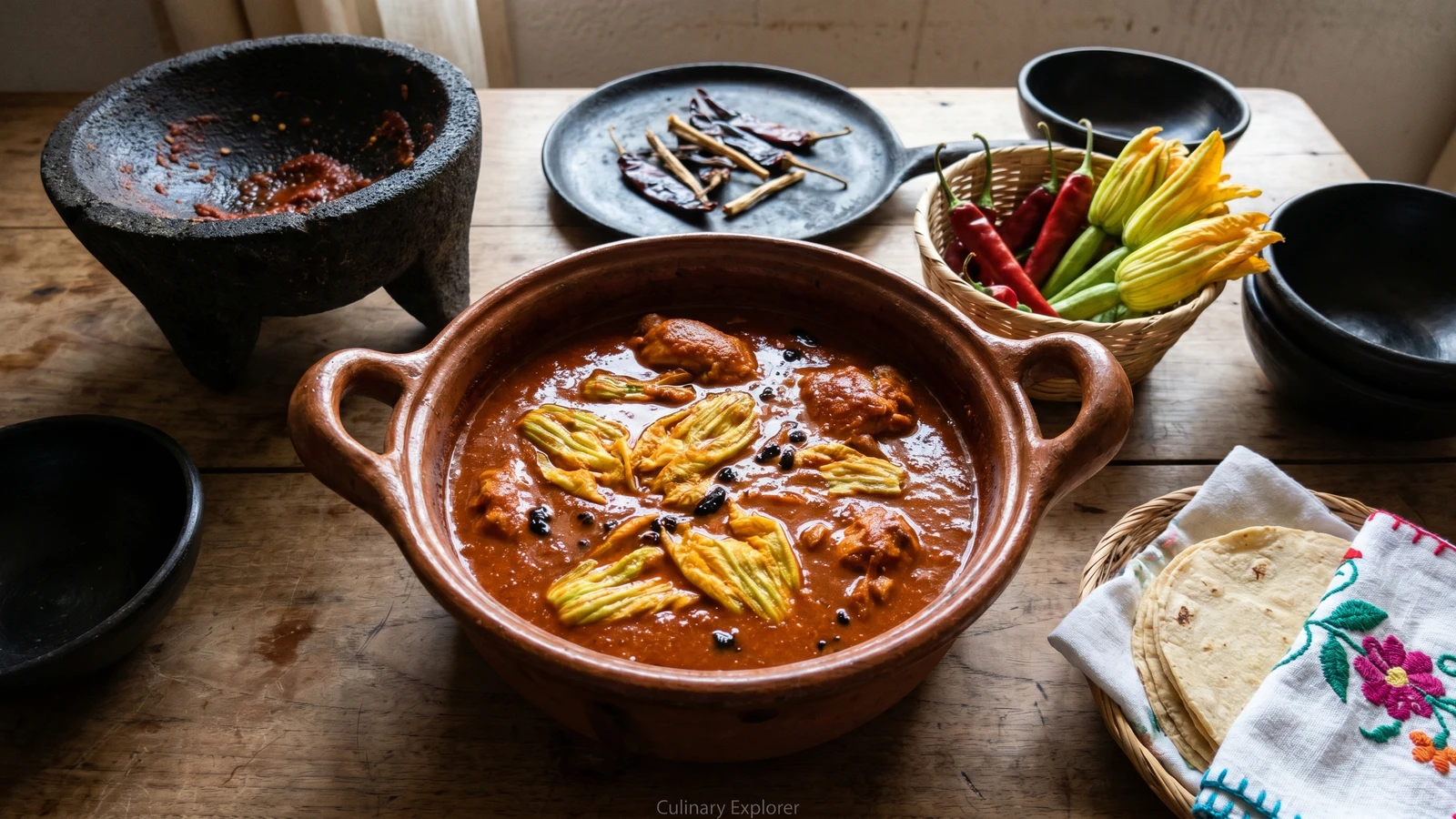
Michoacán's P'urhépecha atápakua folds squash blossoms into guajillo, chile perón, epazote, and masa de maíz, a thick sauce for chicken or pescado blanco from the lake table.
Michoacán, especially the P'urhépecha Meseta and the lake country around Pátzcuaro, is where this atápakua belongs. Not Puebla, not Oaxaca, not some invented national sauce. This is a thick sauce from the milpa, built with flor de calabaza, guajillo, chile perón, epazote, and masa de maíz. The corn is not decoration here. The corn holds the dish together.
I learned atápakua from women who cooked over leña while the comal stayed black from daily work. The chile perón is the clue that you are in Michoacán: yellow-orange, thick-fleshed, with black seeds and a floral citrus smell that grows in the same landscape as the avocado orchards around Uruapan and Pátzcuaro. Do not replace it with serrano and pretend nothing happened. A substitution is a compromise, not an upgrade.
Atápakua is not mole. No me vengas con atajos. The thickener is masa de maíz, never nuts or seeds. The sauce should taste of toasted guajillo, sweet squash blossom, corn, and a little wild green edge from epazote. Serve it over pollo or pescado blanco in a clay cazuela, with tortillas close by, because the spoon will not be enough. Saber cocinar es saber vivir.
Atápakua is a P'urhépecha family of thick sauces and stews from Michoacán, documented in community recipe collections of the Dirección General de Culturas Populares as part of the region's living cocina tradicional. Its structure is older than the colonial kitchen: milpa vegetables, chile, and nixtamalized corn masa used as the binder, cooked in clay over leña. In 2010, UNESCO recognized Traditional Mexican Cuisine using the Michoacán paradigm, specifically the continuity of milpa, nixtamal, comal, and community cooks who preserved techniques like this one.
Quantity
6
wiped clean, stemmed, and seeded
Quantity
2
roasted, peeled, stemmed, and seeded
Quantity
2 medium
roasted until blistered
Quantity
1/2 medium
roasted
Quantity
3
unpeeled and roasted, then peeled
Quantity
4 cups
stems and stamens removed, gently torn
Quantity
3 tablespoons
Quantity
3 cups
hot, divided
Quantity
1/3 cup
or 1/4 cup masa harina mixed with 1/4 cup warm water
Quantity
1 small sprig
Quantity
1 1/2 teaspoons, plus more to taste
Quantity
for serving
Quantity
for serving
| Ingredient | Quantity |
|---|---|
| dried chile guajillowiped clean, stemmed, and seeded | 6 |
| fresh chile perón amarillo or anaranjadoroasted, peeled, stemmed, and seeded | 2 |
| ripe jitomatesroasted until blistered | 2 medium |
| white onionroasted | 1/2 medium |
| garlic clovesunpeeled and roasted, then peeled | 3 |
| fresh squash blossomsstems and stamens removed, gently torn | 4 cups |
| manteca de cerdo | 3 tablespoons |
| light chicken broth or fish brothhot, divided | 3 cups |
| fresh masa de maízor 1/4 cup masa harina mixed with 1/4 cup warm water | 1/3 cup |
| fresh epazote | 1 small sprig |
| fine sea salt | 1 1/2 teaspoons, plus more to taste |
| cooked chicken pieces or poached pescado blanco (optional) | for serving |
| hand-pressed corn tortillas or corundas (optional) | for serving |
Open each squash blossom gently and remove the stem end and stamen. Shake out any grit. If they need rinsing, rinse quickly and dry them well on a clean towel. Do not soak them. Flor de calabaza is delicate, and if you waterlog it, the sauce tastes tired before it reaches the cazuela.
Heat a dry comal over medium. Toast the chile guajillo one at a time, about 20 seconds per side, pressing them lightly with tongs until the skin darkens and smells fruity. They should not blacken. Put the toasted chiles in a bowl and cover with hot water for 15 minutes, then drain. Toasting wakes the chile oils. Skip it and the atápakua tastes flat.
On the same comal, roast the chile perón, jitomates, onion, and unpeeled garlic. Turn them until the skins blister and the onion gets browned edges. Peel the garlic. Peel the chile perón, then remove the stem and most of the black seeds. Leave a few seeds only if you want the heat. Chile perón is floral and citrusy, not just hot. Jalapeño or serrano will give you sharp green heat, but you lose the Meseta flavor.
In a volcanic stone molcajete, grind the roasted garlic with the salt until it becomes a paste. Add the onion, then the jitomates, then the soaked guajillo and chile perón. Work in batches if needed. The texture should be martajada, crushed and alive, not perfectly smooth. A blender works when you are feeding a crowd, but the texture changes. Si no conoces el molcajete, no conoces esta salsa.
Whisk the fresh masa de maíz with 1 cup of the hot broth until smooth. If using masa harina, let the paste rest for 10 minutes after mixing with warm water, then whisk it into the broth. This is the thickener. Not almonds. Not peanuts. Not pepita. Atápakua is not mole, and it is not pipián. The body comes from nixtamalized corn. Así se hace y punto.
Set a clay cazuela or heavy pot over medium heat and melt the manteca de cerdo. Add the ground chile mixture carefully. It will sputter. Cook, stirring with a wooden spoon, for 6 to 8 minutes, until the red deepens and the fat begins to catch at the edges. La manteca es el sabor, and this frying step gives the guajillo its depth.
Stir in the remaining 2 cups of hot broth, then pour in the masa mixture in a thin stream while stirring. Lower the heat and simmer for 12 to 15 minutes, scraping the bottom often. The atápakua should coat the spoon like a loose porridge and fall back into the pot in thick ribbons. If it tightens too much, add more hot broth by the spoonful.
Fold in the squash blossoms and the epazote sprig. Simmer 4 to 5 minutes, just until the blossoms soften into the sauce but still show their yellow color. Taste for salt. Remove the epazote before serving if the stem is woody. The blossom flavor is gentle, so do not bury it under extra chile.
Spoon the atápakua over cooked chicken pieces or poached pescado blanco. Set it in a Michoacán clay cazuela at the table with hand-pressed corn tortillas or corundas. This is food from the P'urhépecha kitchen, not a generic red sauce. Cada estado, su propia cocina.
1 serving (about 250g)
Culinary guides, cultural storytelling, and the editorial depth that makes cooking meaningful.
Discover Culinary ExplorerChef Lupita
Baja California's wild chiltepin steeped in olive oil with garlic, orejon, and lime peel, until the oil turns ruby-amber and carries the slow, sneaky burn of the desert coast.

Chef Lupita
Puebla's Lenten convent adobo, a brick-red vinegar chile paste of ancho, guajillo, garlic, oregano, and comino made to dress fish for the meatless calendar.
Chef Lupita
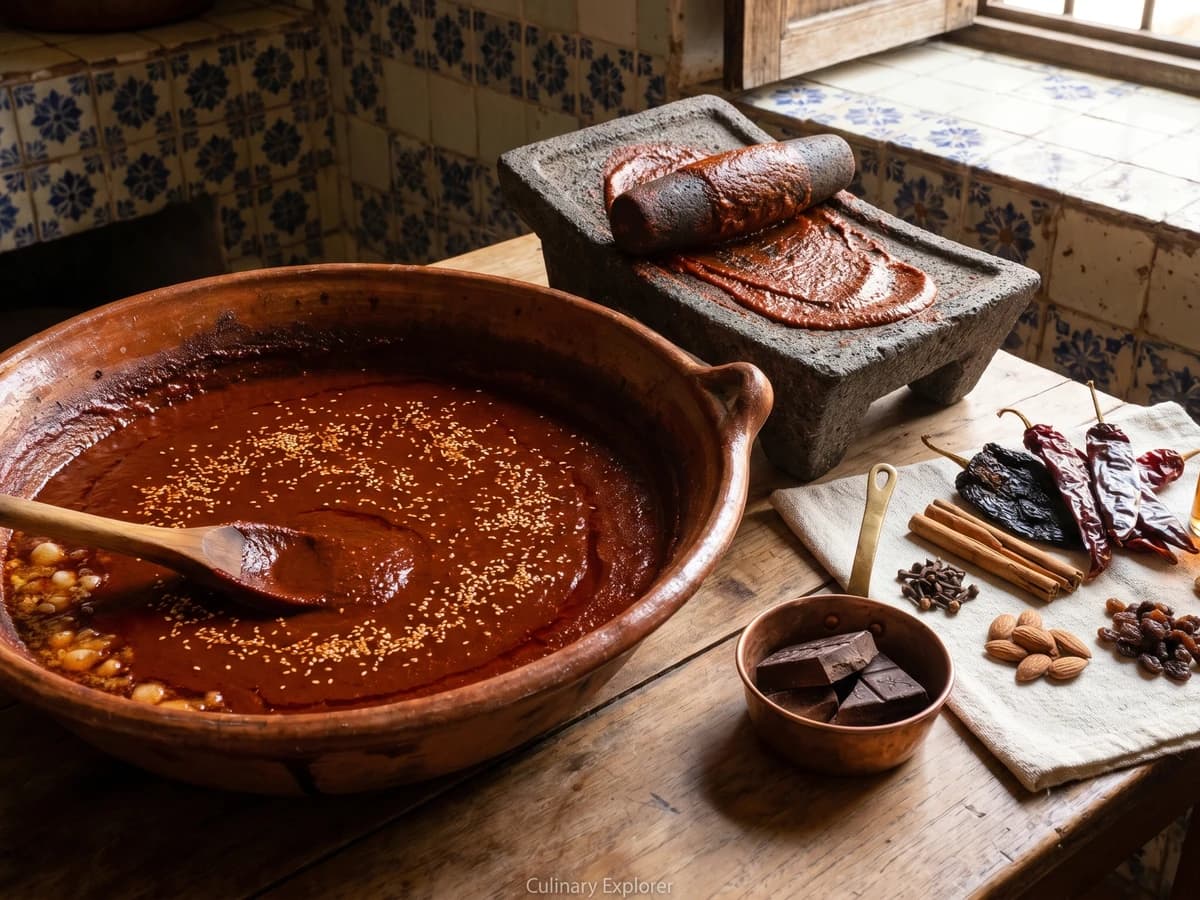
Zacatecas' wedding-table adobo, built from toasted guajillo and ancho, piloncillo, sour orange, chocolate, canela, clavo, almonds, sesame, and lard.

Chef Lupita
Puebla's convent kitchens built this adobo with ancho, guajillo, jerez, almonds, raisins, clove, and lard, a baroque marinade that stains pork loin and finishes as the sauce.