
Chef Lupita
Acitrón de Cidra Conventual
Puebla's convent-style acitrón, made from cidra peel instead of endangered biznaga, built through repeated syrup soakings until the cubes turn firm, translucent, and ready for rosca or chiles en nogada.
A cooking platform built around craft, culture, and the stories behind what we eat.
Created by
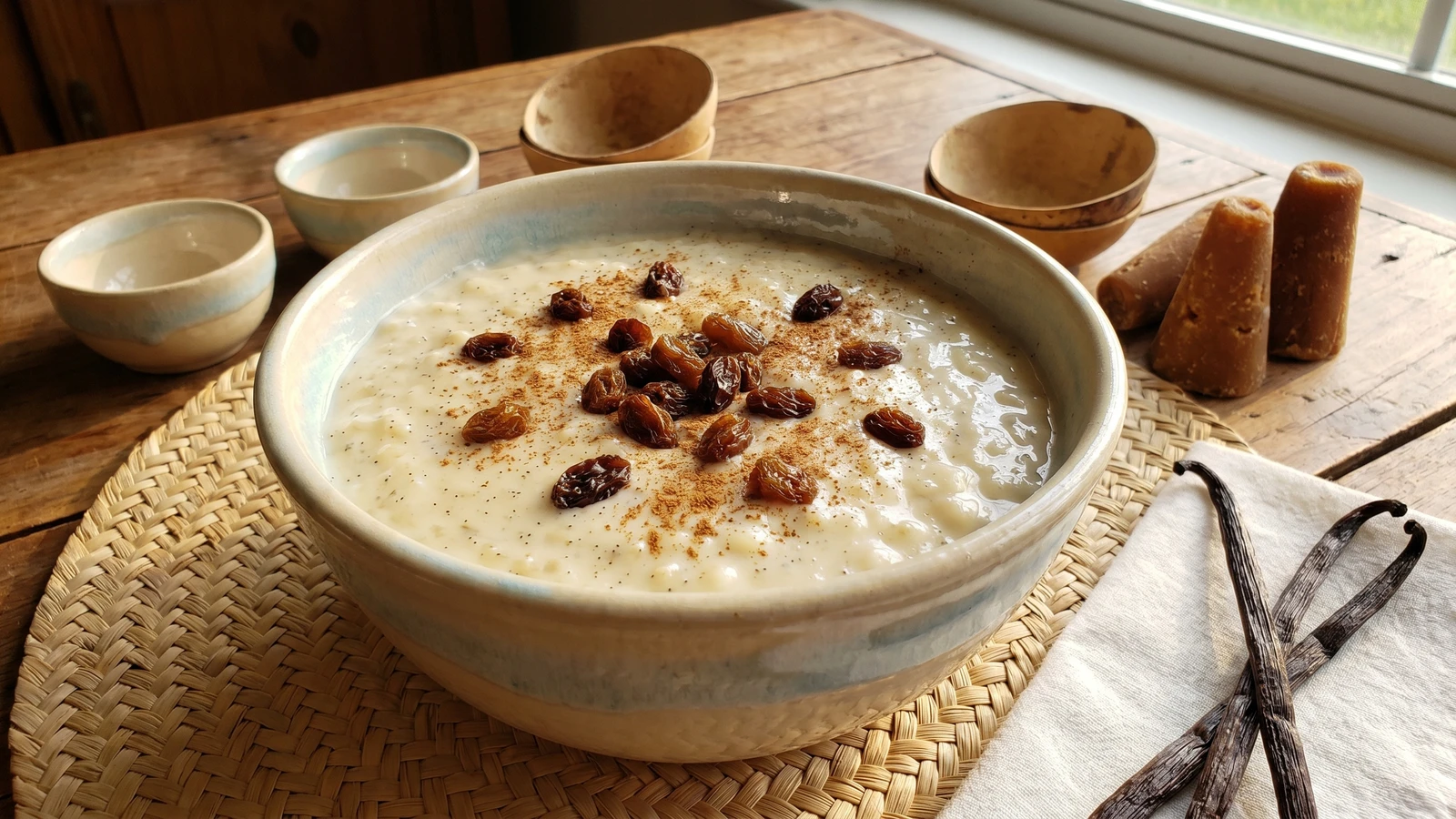
Veracruz's arroz con leche perfumes whole milk with vainilla de Papantla, canela, and piloncillo, then simmers slowly until the rice turns tender, glossy, and worthy of the family table.
Veracruz, specifically the Totonacapan around Papantla, is where this arroz con leche belongs when vanilla is the center of the dish. Rice pudding exists all over Mexico, yes. But when a whole vainilla de Papantla pod stains the milk with black seeds and perfume, the dish points to northern Veracruz and nowhere else.
The technique is quiet work: cook the rice first in water with canela, then finish it slowly in whole milk. Add the piloncillo only after the grains soften. If you add sweetness too early, the rice stays stubborn. This is the kind of thing market women and grandmothers teach without drama, because they have ruined a pot before and they remember.
I have bought vanilla in Papantla from women who keep the pods wrapped in cloth, dark and flexible, not dry sticks from a supermarket jar. That is what you want. Extract is a compromise, not the dish. No me vengas con atajos. Split the pod, scrape the seeds, simmer it with patience.
There are no chiles here. Good. Not every Mexican dish needs to prove itself with heat. This one proves itself with milk, rice, canela, piloncillo, and the perfume the Totonac gave the world. Saber cocinar es saber vivir.
Vanilla planifolia is native to Mesoamerica, and the Totonac people of northern Veracruz cultivated and cured vanilla around Papantla before Spanish contact; the Mexica received vanilla as tribute and used it with cacao. Arroz con leche entered Mexico through Spanish colonial kitchens, where rice, cow's milk, and canela met New Spain's local ingredients. In Veracruz, whole vainilla de Papantla tied an Iberian rice pudding to the Gulf lowlands, even after the 19th-century discovery of hand pollination by Edmond Albius allowed vanilla to spread beyond Mexico.
Quantity
1 cup
Quantity
2 cups
Quantity
1
Quantity
1/4 teaspoon
Quantity
1 whole
split lengthwise and seeds scraped
Quantity
4 cups
Quantity
3/4 cup, packed
Quantity
1/2 cup
Quantity
for serving
| Ingredient | Quantity |
|---|---|
| medium-grain white rice | 1 cup |
| water | 2 cups |
| Mexican canela stick | 1 |
| fine sea salt | 1/4 teaspoon |
| vainilla de Papantla podsplit lengthwise and seeds scraped | 1 whole |
| whole milk | 4 cups |
| grated piloncillo | 3/4 cup, packed |
| raisins (optional) | 1/2 cup |
| ground Mexican canela (optional) | for serving |
Lay the vainilla de Papantla pod flat and split it lengthwise with a small knife. Scrape out the black seeds. Keep both the seeds and the pod. Do not use extract for this dish. The pod is the point.
Combine the rice, water, canela stick, and salt in a heavy saucepan or lead-free glazed cazuela. Bring to a gentle simmer over medium heat, then lower the flame and cook uncovered for 15 to 18 minutes, until the grains have opened and most of the water is absorbed. You start with water because milk scorches before the rice is ready. The señoras who know this dish do not argue with the pot.
Stir in the whole milk, the scraped vanilla seeds, and the empty vanilla pod. Keep the heat low. The surface should move gently, never boil hard. Stir every few minutes, scraping the bottom and corners with a wooden spoon so the milk does not catch and turn bitter.
When the rice is tender, after about 25 minutes in the milk, add the grated piloncillo. Stir until it dissolves completely and the pudding turns a soft cafe con leche color. Add the raisins if you use them. Sugar added too early slows the rice from softening. Add it now, not before. Asi se hace y punto.
Cook 8 to 10 minutes more, stirring often, until the arroz con leche is creamy but still loose enough to fall from the spoon. It thickens as it rests, so do not cook it into paste. Remove the canela stick and vanilla pod. Taste for sweetness, but do not drown the vanilla. Papantla gave the world perfume, not candy.
Let the pudding rest 10 minutes before serving warm, or cool it completely and refrigerate it for a firmer make-ahead dessert. Spoon into copitas, jicaras, or small clay bowls and dust with ground canela. Cada estado, su propia cocina, and Veracruz knows exactly what vanilla is worth.
1 serving (about 260g)
Culinary guides, cultural storytelling, and the editorial depth that makes cooking meaningful.
Discover Culinary ExplorerChef Lupita
Puebla's convent-style acitrón, made from cidra peel instead of endangered biznaga, built through repeated syrup soakings until the cubes turn firm, translucent, and ready for rosca or chiles en nogada.

Chef Lupita
Ciudad de México's Tulyehualco alegría is popped huautli folded into piloncillo honey, pressed with peanuts, pepitas, and raisins, then cut into the rectangular bars that built a pueblo's identity.

Chef Lupita
Oaxaca's pre-Columbian amaranth bar, popped on a hot comal and bound with piloncillo, honey, and the sacred Zapotec grain that the Spanish tried, and failed, to outlaw.

Chef Lupita
Querétaro's mercado candy of popped amaranto pressed with dark piloncillo syrup, pepitas, pecans, and cacahuate, a Bajío sweet that respects the seed before it decorates the table.