Culinary Explorer
A cooking platform built around craft, culture, and the stories behind what we eat.
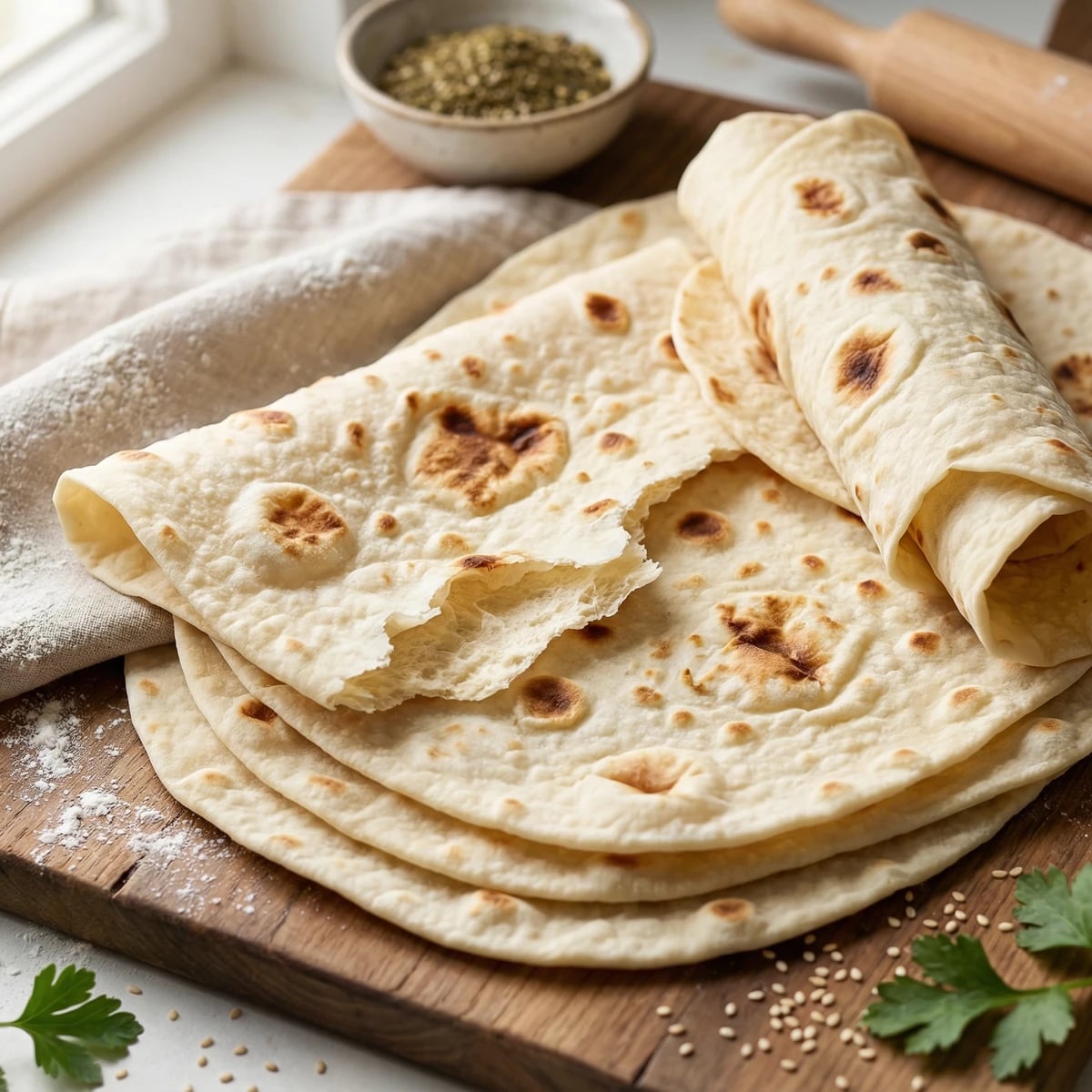
Armenian Lavash
Created by Chef Dean
Ancient Armenian flatbread rolled impossibly thin and baked until blistered, yielding sheets of pliable bread perfect for wrapping, tearing, and gathering around with people you love.
Lavash predates written history. Armenian women have been rolling this bread for thousands of years, passing the technique from grandmother to daughter in an unbroken chain of flour-dusted hands. UNESCO recognizes it as intangible cultural heritage. That's a fancy way of saying this bread matters.
The ingredient list will make you suspicious. Flour, water, salt. That's it. No yeast, no oil, no enrichments. The magic lives entirely in technique: how thin you roll, how hot you bake, how quickly you work. Your first batch will be imperfect. Your third will be good. By your tenth, you'll understand why this bread survived millennia.
I learned lavash from an Armenian baker in Glendale who laughed at my first attempts. Too thick, she said, showing me how to coax the dough until I could nearly see through it. The thinness isn't fussiness. It's function. Paper-thin lavash bakes in minutes, blisters beautifully, and stays pliable when wrapped in cloth. Thick lavash turns into roof shingles.
This bread rewards patience and forgives everything else. No precise hydration ratios. No temperature-controlled proofing. Just your hands, a rolling pin, and the willingness to keep going until you get it right.
Ingredients
all-purpose flour
Quantity
300g (2 1/3 cups)
plus more for rolling
fine sea salt
Quantity
1 teaspoon (6g)
warm water
Quantity
180ml (3/4 cup)
about 100°F
| Ingredient | Quantity |
|---|---|
| all-purpose flourplus more for rolling | 300g (2 1/3 cups) |
| fine sea salt | 1 teaspoon (6g) |
| warm waterabout 100°F | 180ml (3/4 cup) |
Where cooking meets culture.
Culinary guides, cultural storytelling, and the editorial depth that makes cooking meaningful.
Discover Culinary Explorer