Culinary Explorer
A cooking platform built around craft, culture, and the stories behind what we eat.
Apfelmus
Created by Chef Klaus
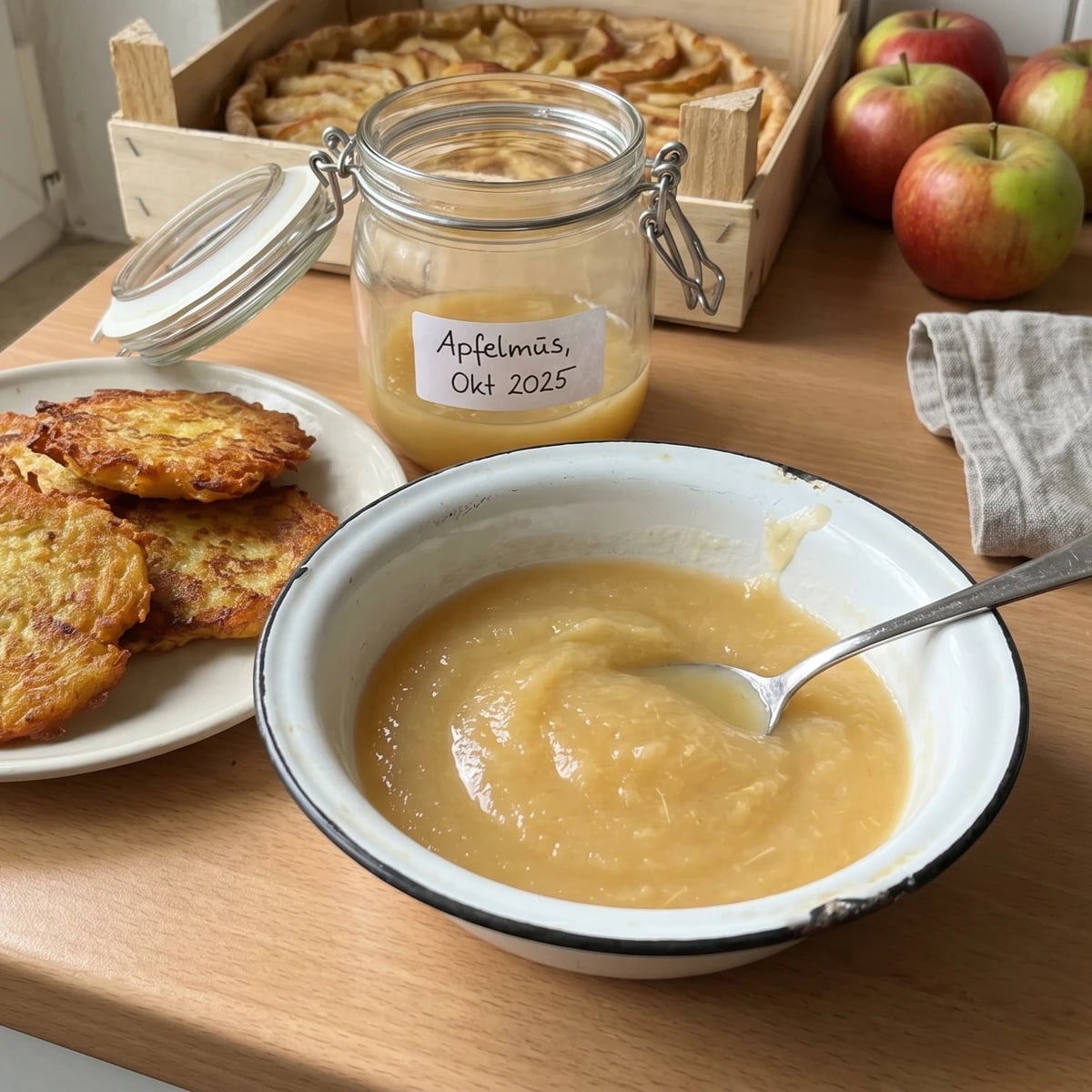
The apple-harvest preserve of the German kitchen, cooked low until the fruit collapses, then kept smooth, tart, and ready for potato pancakes or warm Mehlspeisen.
Apfelmus belongs to apple season first, then to the larder. In autumn I cook the tart apples down before they wrinkle in the cellar, jar them, and put them beside Kartoffelpuffer, potato pancakes, or warm Mehlspeisen, sweet flour dishes like Kaiserschmarrn. This is weekday food and Sunday food both. A bowl of it on the table does more work than it pretends.
Im Norden anders, im Süden anders. In the north and the Rhineland, it is often kept plain and sharp, made to cut through fried potato pancakes. In Swabia and Bavaria it sits with sweet pan dishes and may take cinnamon or vanilla, but it should still taste of apple, not spice cupboard. Some families want it passed through a sieve until smooth; others leave a little body and call that the right way. I won't settle that fight. I cook it soft, then decide with the apples in front of me.
The technique is simple: start the apples with only a small splash of water and cook them covered over low heat until they give up their own juice. Too much water at the start makes thin Apfelmus, and then you chase it with sugar like a cook who has lost the plot. Lemon goes in early enough to hold the colour pale and clean, but the final sugar waits until the apples have collapsed, because every apple brings its own sourness.
Weggeworfen wird nichts. Peels and cores can simmer first into a little apple stock if the fruit is good and unwaxed; that gives you pectin and apple smell without buying anything. Nicht aus dem Glas, unless it is your own glass from your own pot.
Ingredients
tart cooking apples
Quantity
1.5kg
peeled, cored, and cut into chunks
water or unsweetened apple juice
Quantity
100ml
sugar
Quantity
60g
plus more to taste
| Ingredient | Quantity |
|---|---|
| tart cooking applespeeled, cored, and cut into chunks | 1.5kg |
| water or unsweetened apple juice | 100ml |
| sugarplus more to taste | 60g |
Where cooking meets culture.
Culinary guides, cultural storytelling, and the editorial depth that makes cooking meaningful.
Discover Culinary Explorer