
Chef Elsa
Bratensaft (Austrian Roast Pork Jus)
The clear, caraway-scented pan jus you pour over Schweinsbraten and Knödel, built from nothing but good pork drippings, honest stock, and the patience to let a roasting pan tell you everything it knows.
A cooking platform built around craft, culture, and the stories behind what we eat.
Created by
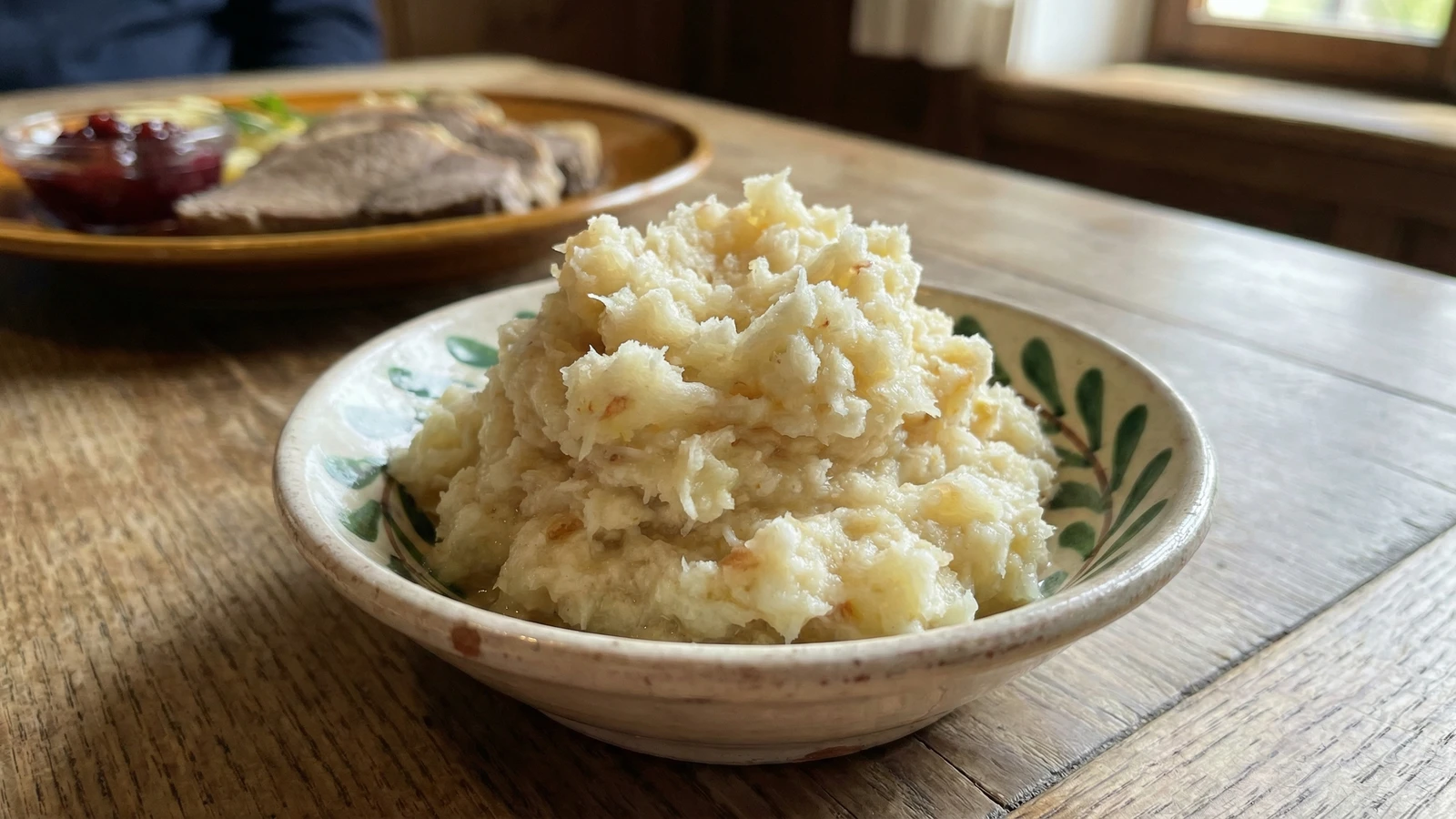
Freshly grated horseradish folded with tart apple and lemon, the cold, sharp sauce that belongs beside every plate of Tafelspitz in Vienna and has done for as long as anyone can remember.
Gretel always said you could judge a Viennese cook by three things: their broth, their Schnitzel, and their Apfelkren. The first two take time and technique. The third takes five ingredients and fifteen minutes. But get it wrong and the whole Tafelspitz falls apart.
Apfelkren is the cold horseradish sauce that sits beside boiled beef in every Gasthaus and every home kitchen in Austria. Kren is what Austrians call horseradish, and it grows wild across lower Austria and Styria, pulled from the ground in autumn when the roots are thick and fierce. You grate it fresh, fold it through tart grated apple and lemon juice, and serve it cold against warm, tender beef. The heat of the Kren hits your nose first. Then the apple comes through, cool and sharp and clean, and the two of them together do something to a slice of Tafelspitz that no other sauce can touch.
I watched my grandmother Eva make this dozens of times in her kitchen in Deal. She'd grate the horseradish with the window open because it made her eyes stream, and she'd say it was proof the root was worth using. If it doesn't make you cry, it's too old. She learned that from Gretel, who learned it from her mother's kitchen in Vienna before everything changed. Five ingredients. Fifteen minutes. A good Apfelkren is honest cooking at its most distilled.
Kren (horseradish) has been cultivated in Austria since the Middle Ages, with Styria's southeastern region still producing some of the country's finest roots. Apfelkren became inseparable from Tafelspitz during the 19th century, when boiled beef was the centerpiece of Viennese Bürgerlich cooking and Emperor Franz Josef reportedly ate it nearly every day. The traditional Tafelspitz service always includes three cold sauces on the table: Apfelkren, Schnittlauchsauce (chive sauce), and a dish of Preiselbeeren (lingonberry preserves). Leaving any of the three off the table would be noticed.
Quantity
1 large, about 200g
peeled and cored
Quantity
80g
peeled
Quantity
2 tablespoons
Quantity
1 pinch
Quantity
1 pinch
| Ingredient | Quantity |
|---|---|
| tart apple (Granny Smith or Boskop)peeled and cored | 1 large, about 200g |
| fresh horseradish root (Kren)peeled | 80g |
| fresh lemon juice | 2 tablespoons |
| granulated sugar | 1 pinch |
| salt | 1 pinch |
Squeeze the lemon juice into a mixing bowl first, before you touch the apple or the horseradish. You need it ready and waiting. The moment grated apple hits air, it starts to brown. The moment grated horseradish hits air, it starts losing its fire. Lemon juice stops both. Having it in the bowl before you begin means you can toss each ingredient in the second it's grated.
Peel and core the apple. Grate it on the coarse side of a box grater directly into the bowl with the lemon juice. Toss it through the juice immediately. You want a tart, firm apple here, not a sweet one. The apple's job is to carry the horseradish and temper its heat with a clean, sharp fruitiness. A mealy apple or a sweet one will turn your Apfelkren into baby food.
Peel the horseradish root and grate it on the fine side of the box grater directly into the apple mixture. Work quickly. Fresh horseradish is volatile: the heat and sharpness start fading the moment it's exposed to air. Your eyes may water. That's normal and it means the root is good and fresh. If you grate it and feel nothing, the root is old and you should find a better one.
Add the pinch of sugar and the pinch of salt. Stir everything together. The sugar isn't there to make it sweet. It rounds off the raw edge of the horseradish without dulling it. The salt opens up the apple's flavor. Taste it. The balance should be sharp horseradish first, then tart apple, then a clean lemon finish. If the horseradish is too aggressive, add a little more grated apple. If it's too mild, grate in more Kren. Let it rest for five minutes before serving. The flavors need a moment to find each other.
Spoon the Apfelkren into a small serving dish and bring it to the table cold, alongside your Tafelspitz or boiled beef. It goes on the side of the plate, never on top of the meat. The cold sauce against the warm beef is the whole point. Let everyone help themselves. Mahlzeit!
1 serving (about 47g)
Culinary guides, cultural storytelling, and the editorial depth that makes cooking meaningful.
Discover Culinary ExplorerChef Elsa
The clear, caraway-scented pan jus you pour over Schweinsbraten and Knödel, built from nothing but good pork drippings, honest stock, and the patience to let a roasting pan tell you everything it knows.

Chef Elsa
A silky butter roux sauce finished with beef broth, cream, and handfuls of fresh dill, the way every Viennese grandmother serves it alongside Tafelspitz on Sunday.

Chef Elsa
Crisp cauliflower, sweet carrots, and bright peppers in a spiced sweet-sour brine with mustard seeds, the jar you open first when the Brettljause comes out and the last one you put away.

Chef Elsa
Austria's sharp, herbal tarragon mustard, the golden-green condiment that belongs next to every sausage, every Brettljause board, and every cold cut platter you'll ever serve.