Culinary Explorer
A cooking platform built around craft, culture, and the stories behind what we eat.
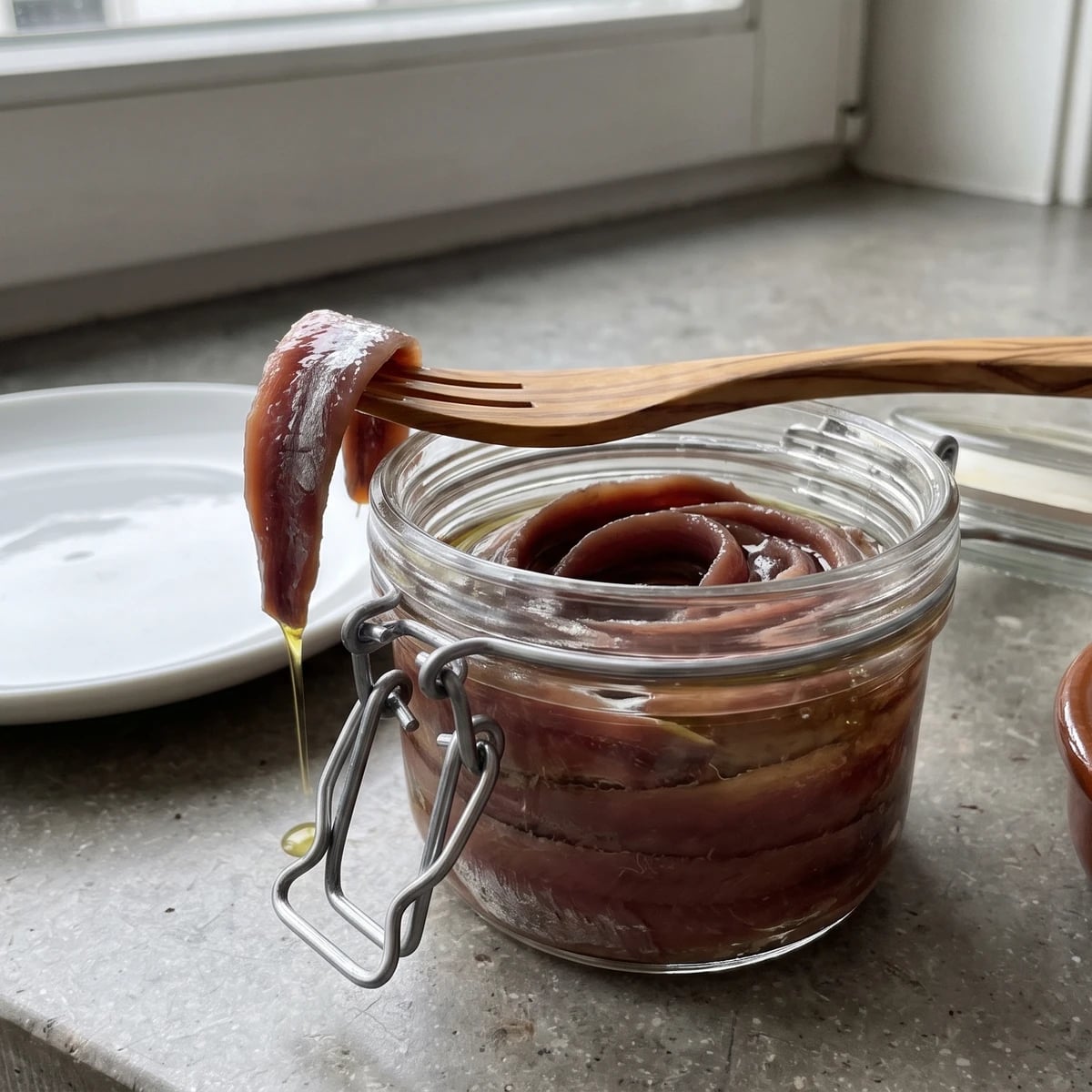
Anchoas del Cantábrico en Salazón
Created by Chef Isabel
Cantabria's spring bocarte becomes anchoa through salt, pressure, and eight quiet months: keep every fish beneath its brine, then clean each fillet by hand and cover it with olive oil.
Anchoas del Cantábrico en salazón are Cantabrian, with Santoña at the heart of the work. Spring bocarte, the fresh anchovy, is headed, gutted, layered under coarse sea salt, pressed, and left to mature for months. Only after curing is it rubbed clean, divided into fillets, and laid beneath olive oil. This isn't boquerón en vinagre. Vinegar has no work here.
The method that decides the cure is simple: every fish must remain pressed beneath salt and strong brine for the whole maturation. An exposed shoulder dries or spoils while the buried flesh cures unevenly. Keep the anchovies covered and cold, and time turns them from silver and soft into flexible mahogany fillets with a deep, clean savouriness.
No hace falta haber pisado España. If Cantabrian bocarte never reaches your market, use whole European anchovy, Engraulis encrasicolus, caught in the Mediterranean and frozen promptly. It is the same species, though the fillets are often smaller, leaner, and a little firmer. Don't replace it with sardines and keep these timings; their thicker flesh needs another cure entirely.
At home I give the fish eight quiet months in the refrigerator, then open one and look: the backbone should lift cleanly and the flesh should be reddish brown through its thickest part. My Margin says, "Keep it covered, then leave it alone." Siempre sale, si lo sigues, it turns out if you follow it.
Ingredients
whole European anchovies (Engraulis encrasicolus)
Quantity
1kg
12-15cm long, very fresh, parasite-frozen and thawed overnight in the refrigerator
coarse non-iodized sea salt
Quantity
1.2kg
for packing
coarse non-iodized sea salt
Quantity
180g
for reserve brine
| Ingredient | Quantity |
|---|---|
| whole European anchovies (Engraulis encrasicolus)12-15cm long, very fresh, parasite-frozen and thawed overnight in the refrigerator | 1kg |
| coarse non-iodized sea saltfor packing | 1.2kg |
| coarse non-iodized sea saltfor reserve brine | 180g |
Where cooking meets culture.
Culinary guides, cultural storytelling, and the editorial depth that makes cooking meaningful.
Discover Culinary Explorer