
Chef Margarida
Feijoada à Transmontana
The mountain feijoada of Trás-os-Montes, where every part of the pig goes into the pot with white beans and whatever the garden offers. Winter survival food that became a celebration.
A cooking platform built around craft, culture, and the stories behind what we eat.
Created by
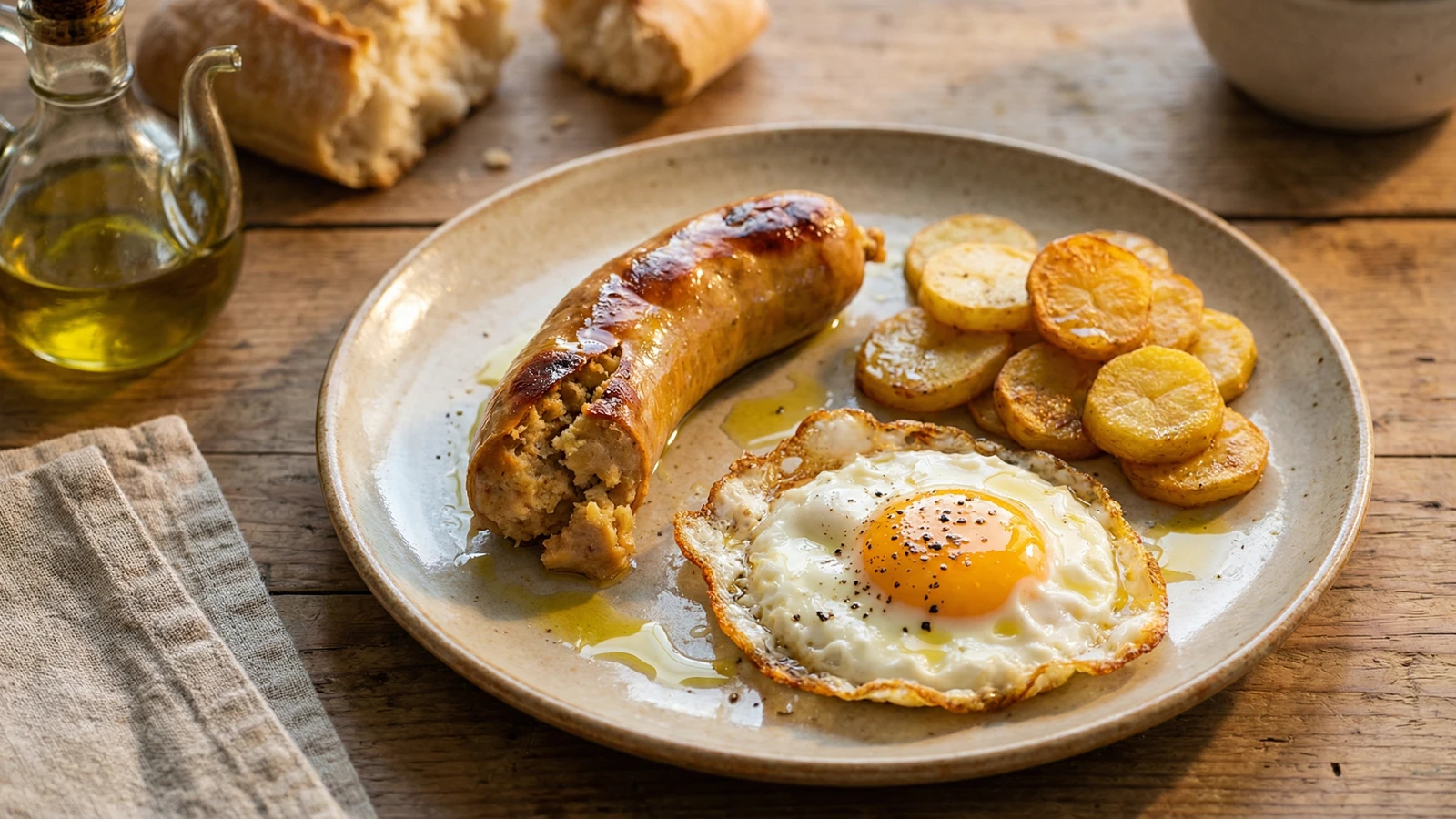
The sausage that saved lives during the Inquisition, grilled until the casing splits and served with a runny fried egg and golden potatoes. History you eat with your hands.
There's no other sausage in the world with a story like this one.
During the Portuguese Inquisition, Jews who had converted to Christianity (called cristãos-novos, new Christians) were watched constantly. If you didn't hang sausages in your chimney like your neighbors, you were suspect. If you didn't eat pork, you might burn. So the Jewish families of Mirandela, in the remote mountains of Trás-os-Montes, invented a sausage that looked like chouriço but contained no pork at all. Poultry, game birds, bread soaked in fat, garlic, paprika. Hung in the chimney like everyone else's. A disguise that tasted good enough to become tradition.
Five hundred years later, alheira is beloved across Portugal. The original families are gone, but their survival food remains. Now made with chicken and duck, sometimes rabbit, always that distinctive soft bread filling that surprises people who expect sausage texture. It's not like other sausages. It's better.
At Mesa da Avó, I serve alheira with the story. Because you can't separate this dish from its history. Every bite is an act of remembrance for families who cooked their way through persecution. When you break into that blistered casing and see the soft filling spill out, you're eating five centuries of Portuguese-Jewish survival. A cozinha é memória. The kitchen is memory. This dish proves it.
Alheira was created by Sephardic Jews in Mirandela during the Portuguese Inquisition (1536-1821) to disguise their avoidance of pork. The sausage mimicked the appearance of chouriço while containing only poultry and bread. In 1998, Alheira de Mirandela received IGP (Protected Geographical Indication) status from the European Union, formally recognizing both its origins and its enduring cultural significance.
Quantity
4 (about 150g each)
Quantity
4 large
Quantity
750g
peeled, cut into thick rounds or wedges
Quantity
for frying
Quantity
to taste
Quantity
freshly ground, to taste
Quantity
for garnish
chopped
| Ingredient | Quantity |
|---|---|
| alheiras | 4 (about 150g each) |
| eggs | 4 large |
| potatoespeeled, cut into thick rounds or wedges | 750g |
| extra virgin olive oil (azeite) | for frying |
| flaky sea salt | to taste |
| black pepper | freshly ground, to taste |
| flat-leaf parsley (optional)chopped | for garnish |
Remove the alheiras from the refrigerator 20 minutes before cooking. Prick each sausage two or three times with a fork. This prevents the casing from bursting violently, though some splitting is expected and welcome. The filling inside is soft, almost like a paste. This is correct. Alheira is not like other sausages.
In a large heavy skillet, heat enough olive oil to come 1cm up the sides over medium-high heat. When the oil shimmers, add the potato rounds in a single layer. Don't crowd them. Fry until golden and crispy on the bottom, about 5 minutes, then flip and cook the other side. Work in batches if needed. The potatoes should be deeply golden, almost caramelized at the edges. Drain on paper and season immediately with flaky salt. Keep warm.
In a clean skillet, heat a thin layer of olive oil over medium heat. Add the alheiras and cook slowly, turning occasionally with care, about 8 to 10 minutes total. The casing should turn golden brown and split open in places, revealing the soft bread-and-poultry filling inside. Don't rush this. Too hot and the outside burns while the center stays cold. You want the whole thing warmed through, the filling slightly puffed, the casing blistered and inviting.
In the same pan with the alheira drippings (add more oil if needed), crack the eggs one at a time. Fry over medium heat until the whites are set but the yolks are still completely runny, about 2 to 3 minutes. Spoon some of the hot oil over the whites to help them set without flipping. Season with salt. In Portugal, we call this ovo estrelado, star egg. The runny yolk is not optional. It becomes the sauce.
Arrange the fried potatoes on warm plates. Place one alheira on each plate, split side up to show the filling. Nestle the fried egg alongside. Grind black pepper over everything. Scatter parsley if you like, though tradition doesn't require it. Serve immediately. Break the yolk. Let it run into the potatoes. Cut into the alheira and let the soft filling spill out. This is how you eat it. This is how it's meant to be.
1 serving (about 400g)
Culinary guides, cultural storytelling, and the editorial depth that makes cooking meaningful.
Discover Culinary ExplorerChef Margarida
The mountain feijoada of Trás-os-Montes, where every part of the pig goes into the pot with white beans and whatever the garden offers. Winter survival food that became a celebration.

Chef Margarida
Mountain food from Trás-os-Montes, where chestnut forests blanket the hillsides and pork is king. A braise that turns autumn's harvest into a celebration worth gathering around.

Chef Margarida
The legendary steak of Trás-os-Montes, cut thick from cattle that graze the granite highlands, grilled over blazing coals and seasoned with nothing but coarse salt. This is beef that needs no help.

Chef Juliette
John Dory has the delicacy of sole and the firmness of turbot. A light flouring, a quick butter sauté, and nut-brown beurre noisette show exactly why looks never mattered.