
Chef Lupita
Agua de Alfalfa
Ciudad de México's highland market agua fresca, fresh alfalfa blended with pineapple and lime until bright green, strained clean, and poured cold from the vitrolero.
A cooking platform built around craft, culture, and the stories behind what we eat.
Created by
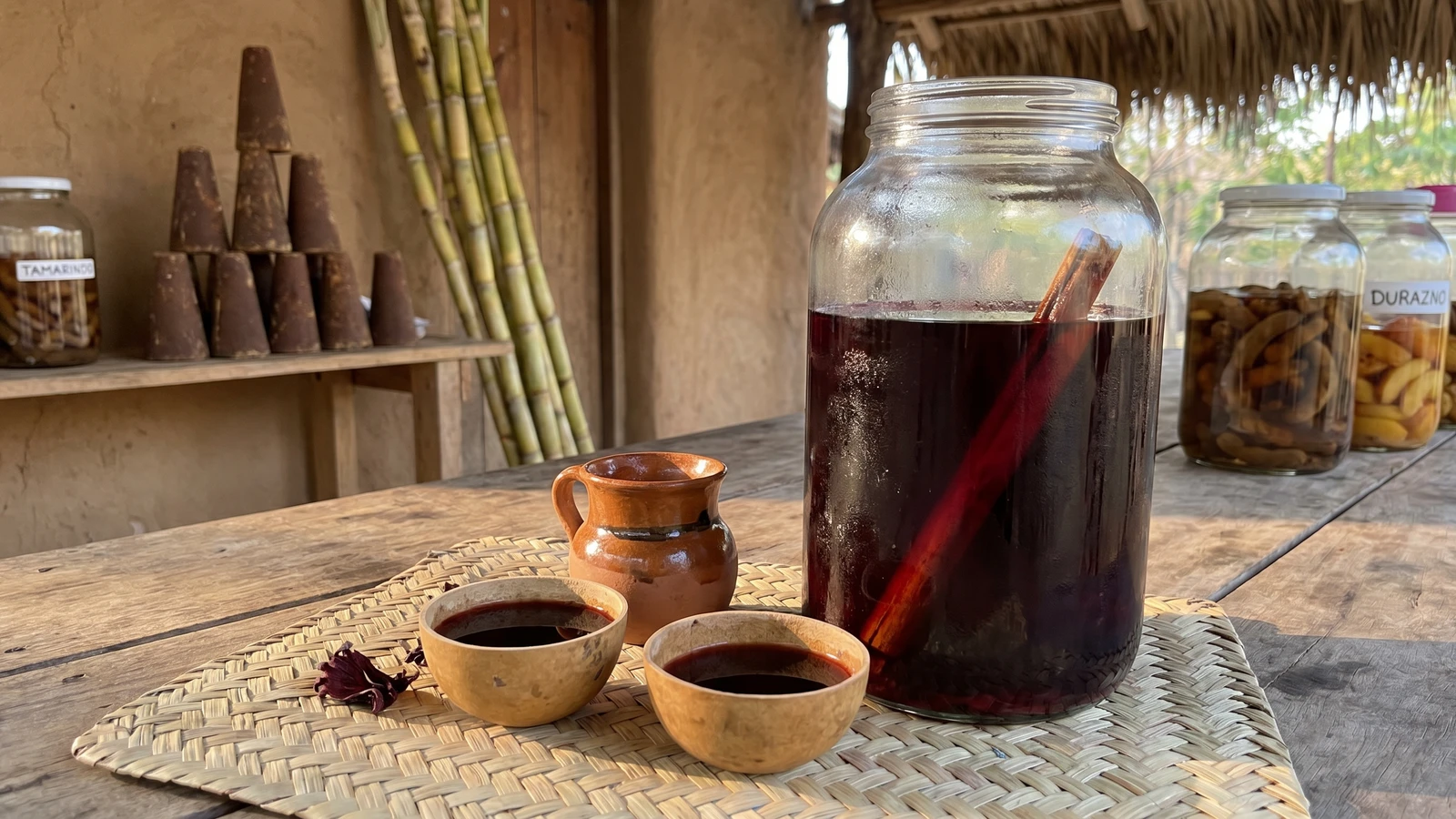
From Huajintepec in the Costa Chica de Guerrero, the Afro-Mexican curado: aguardiente de caña left to macerate for weeks with dried jamaica and piloncillo until it turns deep garnet, then poured neat at the fandango.
This is from the Costa Chica de Guerrero. From Huajintepec, in the municipio de Ometepec, where the pueblos negros, the Afro-Mexican towns strung along the coast, have kept this drink for four hundred years. Not Tex-Mex. Not a craft-bar trick with a clever name. A curado from the communities history tried to erase and the constitution finally recognized.
The spine of it is aguardiente de caña, the cane spirit that comes off the trapiche, the mill that presses and ferments and distills the sugarcane growing right outside town. Not rum. Aguardiente. Cousins, not twins. Into it goes jamaica, dried hibiscus the color of wine, and a cone of piloncillo for the dark sweetness that answers the flower's tartness. Then it sits. Two weeks, three, four. The color bleeds out of the flowers and stains the spirit garnet. That waiting is not a delay. It is the recipe. No me vengas con atajos.
I tasted this for the first time at a fandango in the Costa Chica. The music was chilena, somebody was dancing on the artesa, that carved wooden trough they beat with their heels like a drum, and a señora poured me a curado from a glass jar that had been sitting on her shelf since who knows when. Deep red. Sweet. Strong, with the funk of the cane underneath. Her mother made it the same way, and her mother before that. I wrote down what she told me, the proportions, the weeks of waiting, piloncillo and not sugar. Así se hace y punto.
You can make it with tamarindo when the pods come in, or with durazno when the peaches reach the highland markets in summer. But jamaica you can make any day of the year, and jamaica is the flower that crossed the ocean with the people who made this drink their own. Start there.
The Afro-Mexican communities of the Costa Chica descend from enslaved West and Central Africans brought to Mexico's Pacific coast during the colonial period, many to work the cattle ranches and sugarcane estates established from the 16th century onward. Aguardiente de caña followed that sugarcane, distilled in the small mills called trapiches that still run along the Guerrero and Oaxaca coast. The jamaica that colors this curado, Hibiscus sabdariffa, is itself of African origin, carried along the same trade routes as the people who would make the drink their own. A 2019 reform to Article 2 of the Mexican Constitution recognized Afro-Mexican peoples for the first time, and the 2020 census was the first to count them nationally, finding roughly two and a half million who identify as Afromexicano.
Quantity
1 liter
about 40% alcohol
Quantity
1 cup (about 50 grams)
rinsed
Quantity
1 large cone (about 225 grams)
chopped, plus more to taste
Quantity
1 stick
Quantity
3 whole
| Ingredient | Quantity |
|---|---|
| aguardiente de caña (sugarcane spirit)about 40% alcohol | 1 liter |
| dried jamaica (hibiscus flowers)rinsed | 1 cup (about 50 grams) |
| piloncillochopped, plus more to taste | 1 large cone (about 225 grams) |
| canela de Ceilán (Ceylon cinnamon) | 1 stick |
| pimienta gorda (allspice berries) (optional) | 3 whole |
Tip the jamaica into a colander and rinse it under cool running water, tossing it with your hand. The dried flowers come off the drying patios carrying dust and the odd bit of grit, and you want that gone. Rinse, don't soak. A soak starts pulling the color out before the aguardiente gets its turn, and the aguardiente should do that work.
Chop the piloncillo cone into small pieces. It is hard as a brick, so lay it on a cutting board and go at it with a heavy serrated knife, or wrap it in a towel and crack it with a mallet. The smaller the pieces, the faster they dissolve in the jar. Leave it whole and you will still find a lump of it sitting at the bottom three weeks from now.
Put the rinsed jamaica, the chopped piloncillo, the canela stick, and the allspice if you are using it into a clean 2-liter glass jar. Use glass, not plastic. The aguardiente is strong and it sits for weeks, and plastic gives the curado a taste you do not want anywhere near it.
Pour the aguardiente de caña over everything until the jar is full and the jamaica is well covered. The cane spirit is the spine of this drink, not a base to be drowned, so do not cut it with water and do not reach for rum thinking it is the same thing. It is not. Seal the jar tight and give it a good shake.
Set the jar somewhere cool and dark, a cabinet or a pantry shelf, off the counter and out of the sun. Leave it two to four weeks. Three is the sweet spot. Every couple of days, shake it or turn it over to move the piloncillo and the color around. Watch the spirit go from clear to pink to deep garnet as the flowers bleed out. That waiting is the recipe doing its work. No me vengas con atajos.
When the color and flavor are where you want them, set a fine-mesh strainer lined with manta de cielo over a bowl and pour the curado through. Press the jamaica gently with the back of a spoon to get the last of it, then let it drain. Discard the spent flowers and the canela. Funnel the strained curado into clean glass bottles and seal.
Pour it neat into jícaras or small caballitos, room temperature or just barely cool from the pantry. No ice, no mixer, no salt rim, none of that. This is a sipping spirit, the way it is poured in Huajintepec when the chilena is playing and somebody is up on the artesa. Recetas probadas y garantizadas.
1 serving (about 45g)
Culinary guides, cultural storytelling, and the editorial depth that makes cooking meaningful.
Discover Culinary ExplorerChef Lupita
Ciudad de México's highland market agua fresca, fresh alfalfa blended with pineapple and lime until bright green, strained clean, and poured cold from the vitrolero.
Chef Lupita
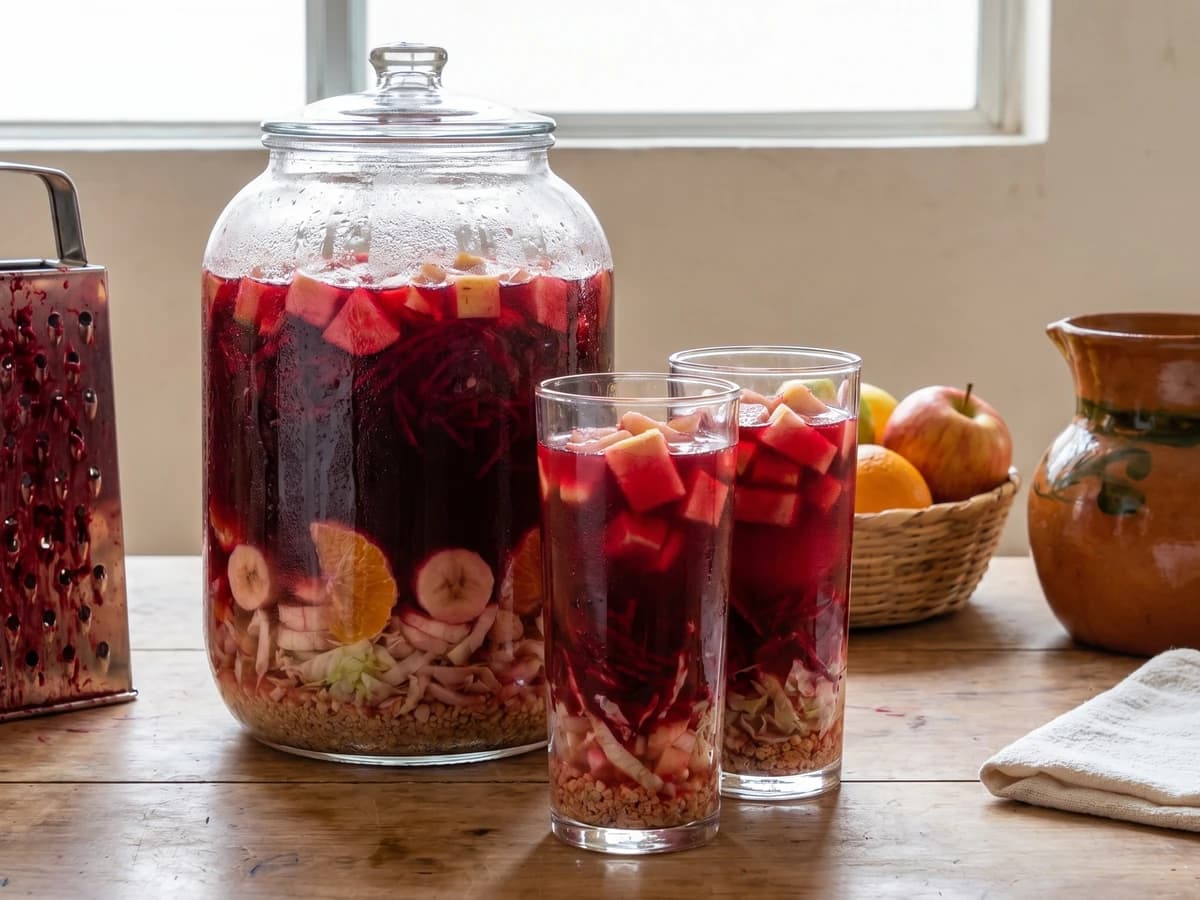
Aguascalientes' Lenten agua fresca, jewel-red from cooked beet and full of apple, banana, orange, lettuce, and ground peanuts, served cold when Holy Week meets the Feria de San Marcos.

Chef Lupita
Sonora and Sinaloa's creamy malted barley water, built on toasted cebada perla, Mexican canela, vanilla from Papantla, and evaporated milk. Pink-beige, rich, and served cold over heavy ice in a heavy glass tumbler. Liquid cookie comfort the northwest way.

Chef Lupita
Yucatán's everyday tonic of boiled chaya leaves blended with lima agria, sugar, and ice. The bright green jarra that sits on every Peninsula table from Mérida to Valladolid.