
Chef Lupita
Agua de Alfalfa
Ciudad de México's highland market agua fresca, fresh alfalfa blended with pineapple and lime until bright green, strained clean, and poured cold from the vitrolero.
A cooking platform built around craft, culture, and the stories behind what we eat.
Created by
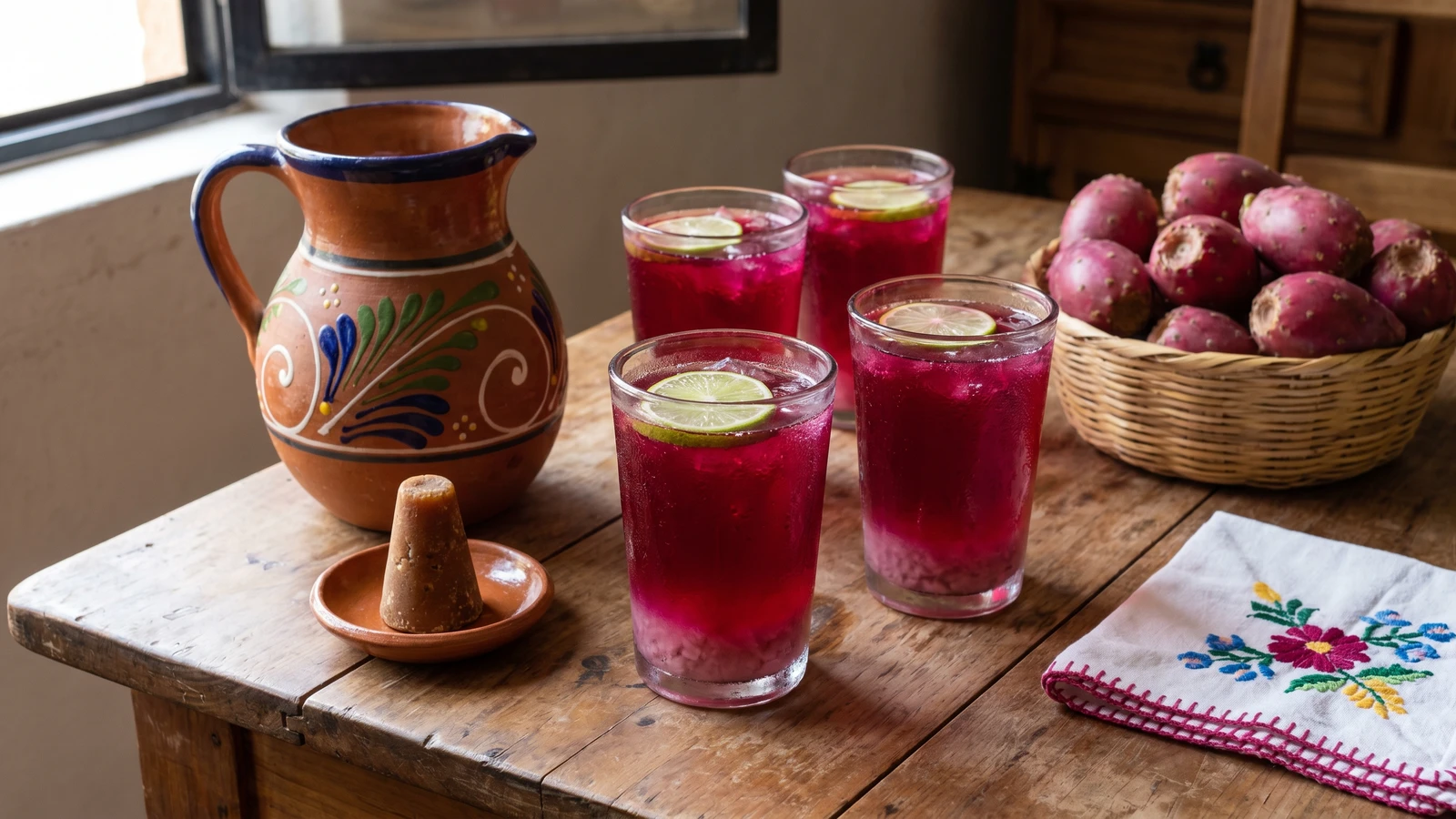
Guanajuato's late-summer agua fresca, made when the Bajío nopaleras are heavy with tuna roja, balanced with lime and piloncillo, and strained with restraint.
Guanajuato, in the Bajío, is where this agua belongs: dry hills, nopal fences, hot August afternoons, and tuna roja piled in market crates from Dolores Hidalgo to Irapuato. This is not a restaurant drink. This is what you make when the fruit is ripe enough to stain your fingers magenta and the house needs something cold on the table.
The tuna roja does the work. Not strawberry, not grenadine, not coloring. The fruit gives you that deep pink-red water, a soft floral sweetness, and those tiny hard seeds that remind you this came from a cactus, not a bottle. Do not strain it until it becomes empty. Press lightly, leave a little body, let the drink taste like the fruit it came from.
I learned this kind of agua from women in the Bajío who handled tunas faster than city cooks peel garlic. They know which fruit is ready by weight, by smell, by the way the skin gives under the thumb. If the market has pale, tired tunas, make agua de limón instead. If the tuna roja is ripe, buy a kilo and work quickly. Si no conoces el mercado, no conoces la cocina.
Serve it very cold in a jarra de barro or a painted ceramic pitcher from Dolores Hidalgo. Outside food, picnic food, quick meal food. Cada estado, su propia cocina, and in Guanajuato the summer fruit tells you what to drink.
Prickly pear fruit, called tuna in Mexico, comes from the nopal cactus and has been eaten in central Mexico since pre-Columbian times, long before sugarcane or citrus arrived with the Spanish. The Bajío, especially Guanajuato and neighboring Querétaro, became an important region for nopal and tuna cultivation because the semi-arid plateau favors cactus fruits that ripen heavily in late summer. Piloncillo entered Mexican household cooking after colonial sugar production expanded, and aguas frescas became a practical way to stretch seasonal fruit across the family table.
Quantity
2 pounds
peeled and roughly chopped
Quantity
5 cups
divided
Quantity
3 ounces
grated or chopped
Quantity
1/2 cup
Quantity
1/3 cup
from 5 to 6 Mexican limes
Quantity
1/4 teaspoon
Quantity
for serving
Quantity
for serving
| Ingredient | Quantity |
|---|---|
| ripe tuna rojapeeled and roughly chopped | 2 pounds |
| cold waterdivided | 5 cups |
| piloncillograted or chopped | 3 ounces |
| water for dissolving piloncillo | 1/2 cup |
| fresh lime juicefrom 5 to 6 Mexican limes | 1/3 cup |
| sea salt | 1/4 teaspoon |
| ice (optional) | for serving |
| lime wheels (optional) | for serving |
Use tuna roja that feels heavy for its size and smells lightly sweet at the stem end. The skin should be deep red to magenta, not wrinkled or dull. If the fruit is pale and hard, leave it at the market. Mexican grandmothers cook with what is good today, not with what the recipe hoped for.
Hold each tuna with tongs or a folded towel. Slice off both ends, make one shallow cut down the length of the skin, and pull the peel away with your fingers. Even cleaned tunas can hide tiny cactus hairs. No me vengas con atajos here. One careless hand and you will remember the lesson all afternoon.
Put the piloncillo and 1/2 cup water in a small saucepan over medium heat. Stir for 3 to 5 minutes, just until the piloncillo dissolves into a light syrup. Let it cool for a few minutes. Piloncillo gives a deeper sweetness than white sugar, more like the market cone it came from.
Add the chopped tuna roja, cooled piloncillo syrup, lime juice, salt, and 3 cups cold water to a blender. Blend only until smooth, about 20 to 30 seconds. Do not punish the seeds. The goal is fruit water with body, not a cactus milkshake.
Set a medium-mesh strainer over a large pitcher and pour the blended tuna through it. Stir gently with a spoon, pressing only enough to move the liquid through. Do not force every seed and fiber out. A little texture is correct for this Bajío agua. That tells you it came from real tuna roja.
Stir in the remaining 2 cups cold water. Taste. It should be cold, lightly sweet, tart enough from the lime, and unmistakably tuna roja. Add a little more lime if the fruit was very sweet, or a spoonful more piloncillo syrup if the tunas were shy. Refrigerate until very cold.
Pour into glasses over ice and add a lime wheel if you want it on the rim. Serve the pitcher at the table, not hidden in the kitchen. This is outdoor dining in the Bajío: fruit, water, lime, piloncillo, and enough patience to let the season lead.
1 serving (about 365g)
Culinary guides, cultural storytelling, and the editorial depth that makes cooking meaningful.
Discover Culinary ExplorerChef Lupita
Ciudad de México's highland market agua fresca, fresh alfalfa blended with pineapple and lime until bright green, strained clean, and poured cold from the vitrolero.
Chef Lupita
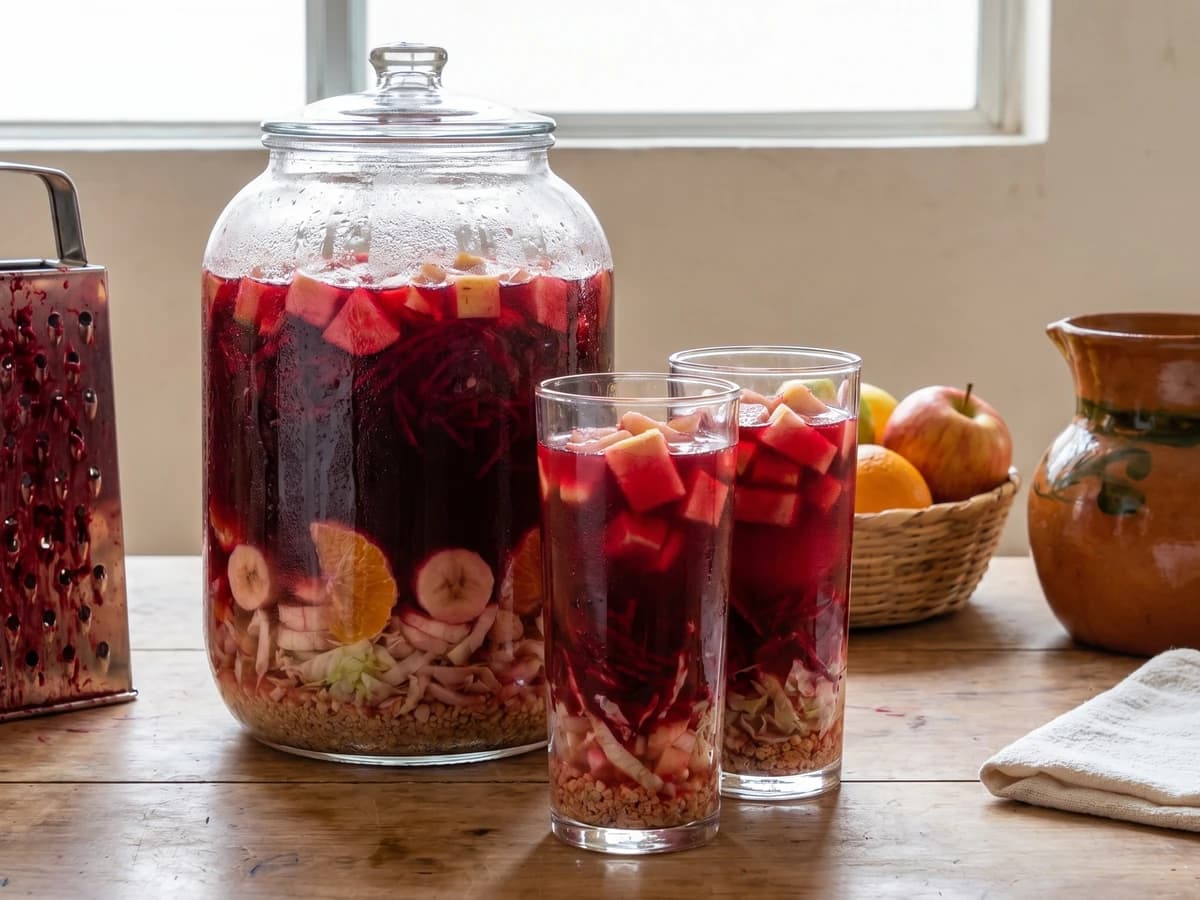
Aguascalientes' Lenten agua fresca, jewel-red from cooked beet and full of apple, banana, orange, lettuce, and ground peanuts, served cold when Holy Week meets the Feria de San Marcos.

Chef Lupita
Sonora and Sinaloa's creamy malted barley water, built on toasted cebada perla, Mexican canela, vanilla from Papantla, and evaporated milk. Pink-beige, rich, and served cold over heavy ice in a heavy glass tumbler. Liquid cookie comfort the northwest way.

Chef Lupita
Yucatán's everyday tonic of boiled chaya leaves blended with lima agria, sugar, and ice. The bright green jarra that sits on every Peninsula table from Mérida to Valladolid.