
Chef Lupita
Agua de Alfalfa
Ciudad de México's highland market agua fresca, fresh alfalfa blended with pineapple and lime until bright green, strained clean, and poured cold from the vitrolero.
A cooking platform built around craft, culture, and the stories behind what we eat.

Created by
Yucatán's hibiscus agua, flor de jamaica steeped off the heat with canela and pimienta gorda, sweetened with piloncillo, and chilled until the deep ruby color is the most-poured drink on the Peninsula.
This is the Yucatán Peninsula's most-poured drink. From Mérida to Valladolid to Campeche, the jarra of jamaica sits on every cocina económica counter at lunchtime, deep ruby red, sweating in the tropical heat. The Peninsula does not drink jamaica the way the rest of Mexico does. Here it carries canela and pimienta gorda, the warm baking spices that mark almost every Yucatecan kitchen, the same pimienta gorda that goes into the recado for cochinita pibil and the relleno negro. Cada estado, su propia cocina, and the Peninsula puts its spice cabinet into the agua fresca.
The technique is simple and unforgiving. You do not boil jamaica. You bring the water to a boil with the spices, kill the heat, and steep the flowers off the burner. Twenty minutes, covered. Boiling water cooks the tannin out of the petals and turns the agua bitter and brown. Hot water steeped slowly pulls the color and the flavor clean. This is the difference between an agua de jamaica that tastes like flowers and one that tastes like burnt tea. No me vengas con atajos.
Piloncillo is the sweetener, not white sugar. The dark cone of unrefined cane gives the agua a depth that granulated cannot reach, a faint smokiness that meets the canela halfway. In Mérida the señoras serve it in heavy glass jarras over crushed ice with a wedge of lima agria on the rim. The lima agria, that bitter orange the Yucatán uses in place of lemon, is what every Yucatecan thinks of when they taste this drink at home. If you cannot find lima agria, regular lime will work, but you should know what you are missing. Saber cocinar es saber vivir, and on a 35-degree afternoon in Mérida, knowing how to pour a glass of this is its own kind of survival.
The hibiscus flower (Hibiscus sabdariffa) is not native to Mexico. It traveled from West Africa through the Caribbean during the colonial period and was cultivated in the Yucatán Peninsula and the Pacific states of Guerrero, Oaxaca, and Nayarit by the 18th century, where the warm climate suited the plant. The Yucatán version is distinguished from the central Mexican version by the inclusion of pimienta gorda (allspice, Pimenta dioica), a spice native to the Caribbean and southern Mexico that became one of the defining flavors of Yucatecan cuisine and entered nearly every regional preparation from recados to aguas frescas. Mexico is now the world's second-largest producer of dried jamaica after Sudan, with the bulk of domestic production coming from Guerrero, though the Peninsula's distinctive preparation style with canela and pimienta gorda is recognized as its own regional tradition.
Quantity
2 cups (about 80 grams)
Quantity
10 cups
divided
Quantity
1 stick, about 4 inches
Quantity
4 whole
lightly cracked
Quantity
1 cup
chopped (or 3/4 to 1 cup granulated cane sugar, to taste)
Quantity
1 strip, about 2 inches
no pith
Quantity
for serving
Quantity
for serving
Quantity
for serving
| Ingredient | Quantity |
|---|---|
| dried flor de jamaica (hibiscus flowers) | 2 cups (about 80 grams) |
| filtered waterdivided | 10 cups |
| canela (Mexican cinnamon) | 1 stick, about 4 inches |
| pimienta gorda (allspice berries)lightly cracked | 4 whole |
| piloncillochopped (or 3/4 to 1 cup granulated cane sugar, to taste) | 1 cup |
| orange peelno pith | 1 strip, about 2 inches |
| ice (optional) | for serving |
| lima agria or fresh lime wedges (optional) | for serving |
| fresh mint sprigs (optional) | for serving |
Place the dried hibiscus flowers in a colander and rinse briefly under cold running water. Jamaica is a dried agricultural product and it carries dust from the field and the warehouse. Two seconds of cold water and you are done. Do not soak them in the colander. You will wash out the flavor before you have even started.
In a heavy 4-quart pot, combine 5 cups of the water with the canela stick, the cracked pimienta gorda, and the strip of orange peel. Bring to a boil over medium-high heat. The canela and the pimienta gorda are what make this a Yucatecan agua de jamaica and not a generic one. The Peninsula leans on pimienta gorda the way central Mexico leans on cumin. Tóstala ligeramente entre los dedos before it goes in to wake up the oils.
The moment the water reaches a rolling boil, turn off the heat. Add the rinsed jamaica and the chopped piloncillo. Stir once. Cover the pot. Let it steep undisturbed for 20 minutes. Off the heat, not on it. Boiling jamaica makes the agua bitter and turns the color from ruby red to a muddy brown. Hot water extracts the flavor clean. Boiling water pulls out the tannin. This is the difference between an agua that tastes like flowers and an agua that tastes like a tea bag left too long.
Set a fine-mesh strainer over a large heatproof pitcher or bowl. Pour the concentrate through, pressing gently on the flowers with the back of a spoon. Do not crush them or you will release the bitter parts. Discard the spent jamaica, the canela, the pimienta gorda, and the orange peel. Stir in the remaining 5 cups of cold water. Taste now. The agua should be tart first, then sweet, with the warmth of canela and pimienta gorda showing up at the back of the tongue.
If it tastes too tart, add a little more dissolved piloncillo, a tablespoon at a time. If it tastes too sweet, add cold water. A proper agua de jamaica is sour-forward, not syrupy. The Yucatán heat does not want a dessert in a glass. It wants something that cuts the humidity. Refrigerate at least 4 hours, or overnight. The flavors settle and integrate as it cools.
Fill tall glasses or hand-painted Ticul ceramic mugs with ice. Pour the chilled jamaica over the top. Squeeze a wedge of lima agria into each glass if you have it, regular lime if you do not. The acid of the lima sharpens the hibiscus and makes the canela and pimienta gorda come forward. Set the pitcher on the table on a henequen placemat and let people refill their own glasses. Así se hace y punto.
1 serving (about 250g)
Culinary guides, cultural storytelling, and the editorial depth that makes cooking meaningful.
Discover Culinary ExplorerChef Lupita
Ciudad de México's highland market agua fresca, fresh alfalfa blended with pineapple and lime until bright green, strained clean, and poured cold from the vitrolero.
Chef Lupita
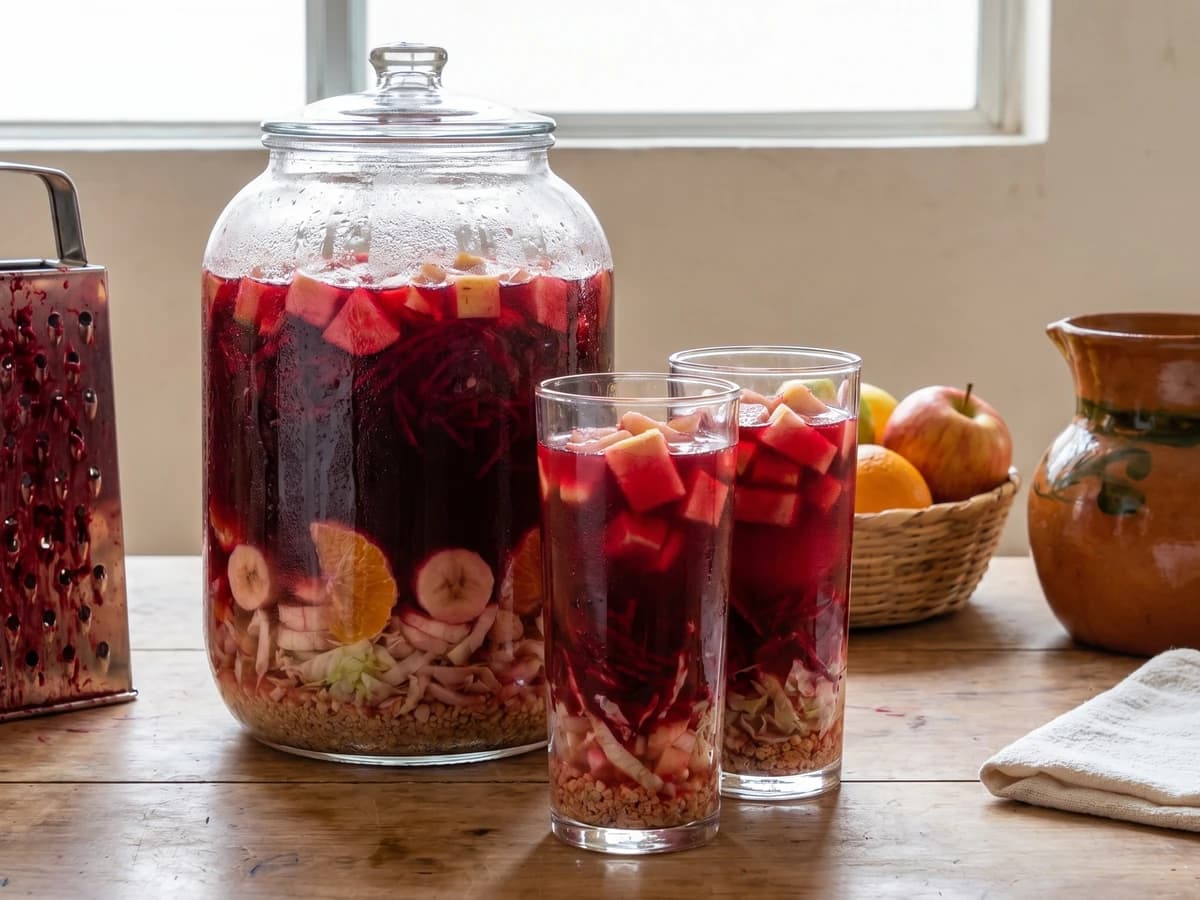
Aguascalientes' Lenten agua fresca, jewel-red from cooked beet and full of apple, banana, orange, lettuce, and ground peanuts, served cold when Holy Week meets the Feria de San Marcos.

Chef Lupita
Sonora and Sinaloa's creamy malted barley water, built on toasted cebada perla, Mexican canela, vanilla from Papantla, and evaporated milk. Pink-beige, rich, and served cold over heavy ice in a heavy glass tumbler. Liquid cookie comfort the northwest way.

Chef Lupita
Yucatán's everyday tonic of boiled chaya leaves blended with lima agria, sugar, and ice. The bright green jarra that sits on every Peninsula table from Mérida to Valladolid.