
Chef Lupita
Agua de Alfalfa
Ciudad de México's highland market agua fresca, fresh alfalfa blended with pineapple and lime until bright green, strained clean, and poured cold from the vitrolero.
A cooking platform built around craft, culture, and the stories behind what we eat.
Created by
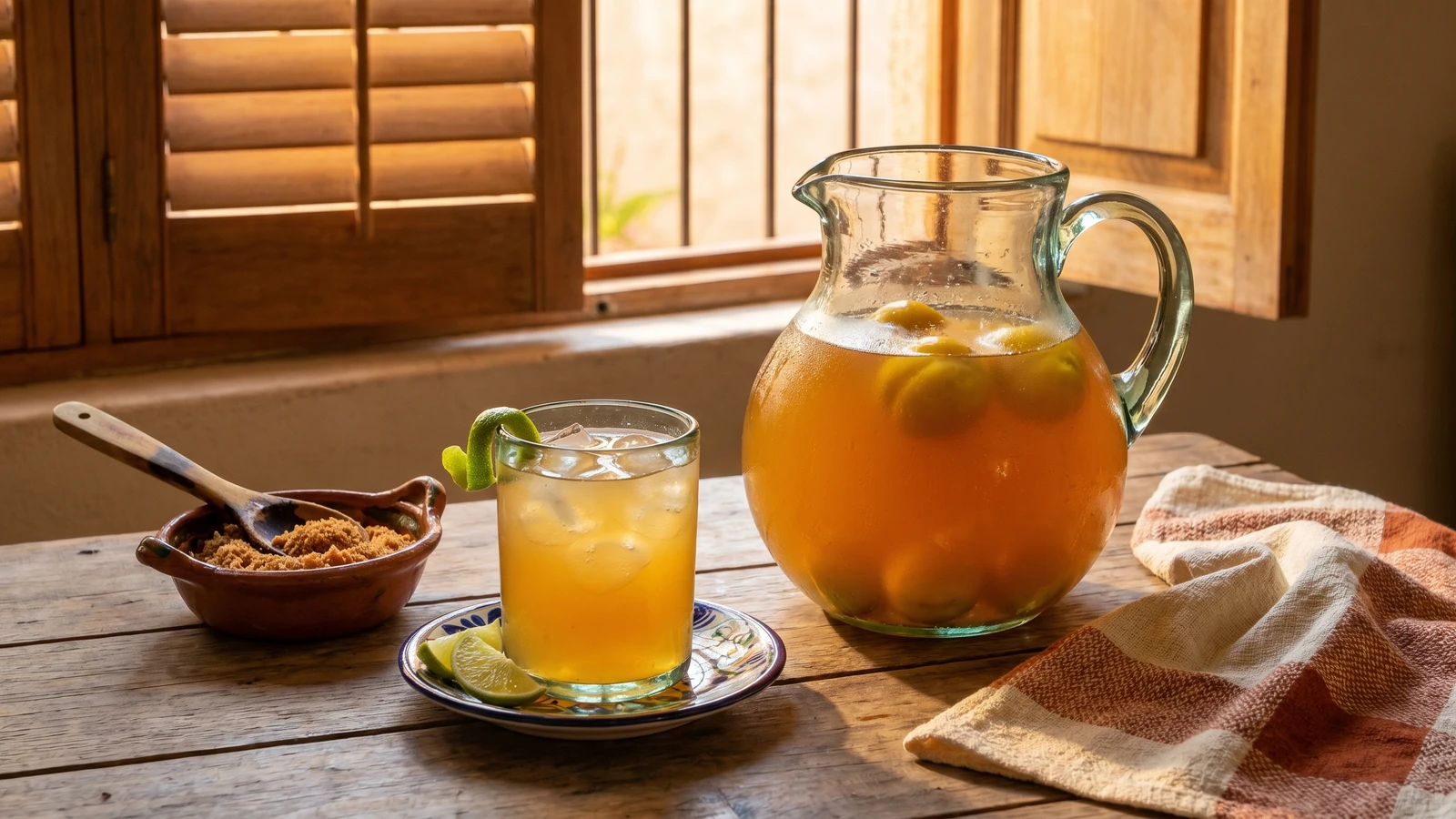
Sinaloa's seasonal yellow plum water from the orchards around Aguacaliente de Gárate. Small native ciruelas bruised whole into cold water with piloncillo and a strip of lime peel. Tangy, floral, in season for only a few weeks.
This is from Sinaloa. Specifically from the inland pueblos around Aguacaliente de Gárate and the orchards of the San Ignacio sierra, where the ciruela amarilla, the small native yellow plum that botanists call Spondias purpurea, ripens for a few weeks in late spring and early summer and the whole region rearranges itself around the harvest.
This is not the European plum and it is not the dried prune. The ciruela amarilla is a stone fruit native to Mesoamerica, no bigger than a small walnut, with a thin yellow-orange skin, a perfumed flesh that tastes somewhere between mango and apricot, and a fat pit that takes up most of the fruit. The water is built around the pit as much as the flesh. You bruise the ciruelas whole, pit and all, and let the cold water pull the floral perfume and a whisper of almond bitterness out of the fruit. That bitterness is the signature. Without it, the agua is just sweet. With it, the agua is sinaloense.
I sat with a senora in a market in Mazatlan one June afternoon while she filled a clay jarra with this exact drink and explained to me that her mother made it with the ciruelas her father shook out of the tree behind the house. She said the piloncillo has to be the dark kind from the panela vendor on the corner, not the pale stuff in the supermarket, and the lime peel must go in green and come out before the agua sits, or it turns the water sour. I wrote it down. Saber cocinar es saber vivir.
This is northwest Mexico. The desert pours into the glass. The drink lives for a few weeks a year, and when it is gone, it is gone until next May.
The ciruela amarilla is botanically Spondias purpurea, a stone fruit native to Mesoamerica with cultivation evidence going back thousands of years in the lowlands of what are now Sinaloa, Nayarit, and the Pacific coastal states. The fruit is referenced in Nahuatl as 'xocotl' and was central to several pre-Columbian festivals tied to the late-spring harvest, including Hueyi Tozoztli. In modern Sinaloa, the ciruela amarilla remains a yard-tree fruit more than a commercially farmed one, which is why agua de ciruela rarely travels beyond the state: the brief season and fragile fruit make it almost impossible to ship, so the drink belongs to the people who live where the trees grow.
Quantity
2 pounds
ripe, washed
Quantity
8 cups
divided
Quantity
1/2 cup
grated, or to taste
Quantity
1 small strip
no pith
Quantity
1 pinch
Quantity
for serving
Quantity
for serving
| Ingredient | Quantity |
|---|---|
| yellow ciruelas (Spondias purpurea, amarilla variety)ripe, washed | 2 pounds |
| cold filtered waterdivided | 8 cups |
| piloncillograted, or to taste | 1/2 cup |
| lime peelno pith | 1 small strip |
| sea salt | 1 pinch |
| ice (optional) | for serving |
| lime wedges (optional) | for serving |
Rinse the ciruelas under cold water and dry them on a clean towel. Pick out any that are split, fermented, or mushy past ripeness. You want fruit that gives slightly under your thumb and smells faintly floral, almost like a green mango married to a small yellow plum. Underripe ciruelas will leave the water flat and astringent. Overripe ones turn it cloudy and sour in a way that does not refresh.
Place the ciruelas in a wide bowl or a clay olla. Using a wooden spoon or a clean fist, press and bruise the fruit until the skins split and the flesh releases its juice. Do not pulverize them. You want the pits intact and the flesh roughly broken open. The pit is part of the flavor in this drink. It carries a faint almond bitterness that gives the agua its backbone. No me vengas con atajos. Skip this step and use a blender and you crack the pits, which makes the water bitter and wrong.
Add 2 cups of the cold water to the bowl and stir in the grated piloncillo, the strip of lime peel, and the pinch of salt. Mash and stir until the piloncillo has dissolved into the fruit juice. The mixture should look like a thick rough pulp the color of late afternoon sun. Cover the bowl and let it sit on the counter for one to two hours so the fruit gives up its perfume to the water. This is the step the senoras in Aguacaliente de Gárate do not skip.
Pour in the remaining 6 cups of cold water and stir well. Set a medium-mesh strainer over a clean jarra or glass pitcher. Pour the agua through, pressing gently on the solids with the back of a wooden spoon. Press, do not crush. You are extracting the juice and the floral notes, not the fiber. Discard the strained pulp and pits, or save them to chew on while you finish setting the table. That is the cook's pay.
Taste the agua. The ciruela amarilla has its own sweetness and its own acidity, and no two batches come out the same. If it leans too tart, grate in a little more piloncillo and stir until dissolved. If it tastes flat, a few more drops of lime juice will wake it back up. Salt should be barely perceptible, just enough to make the fruit sing. Asi se hace y punto.
Chill the jarra in the refrigerator for at least 30 minutes, or pour over ice directly into heavy glass tumblers. Serve with lime wedges on the side for guests who like it sharper. The agua should taste like the orchard it came from: floral, tangy, a little wild. Drink it the day you make it. By the second day the fruit has tired and the brightness is gone. Recetas probadas y garantizadas.
1 serving (about 250g)
Culinary guides, cultural storytelling, and the editorial depth that makes cooking meaningful.
Discover Culinary ExplorerChef Lupita
Ciudad de México's highland market agua fresca, fresh alfalfa blended with pineapple and lime until bright green, strained clean, and poured cold from the vitrolero.
Chef Lupita
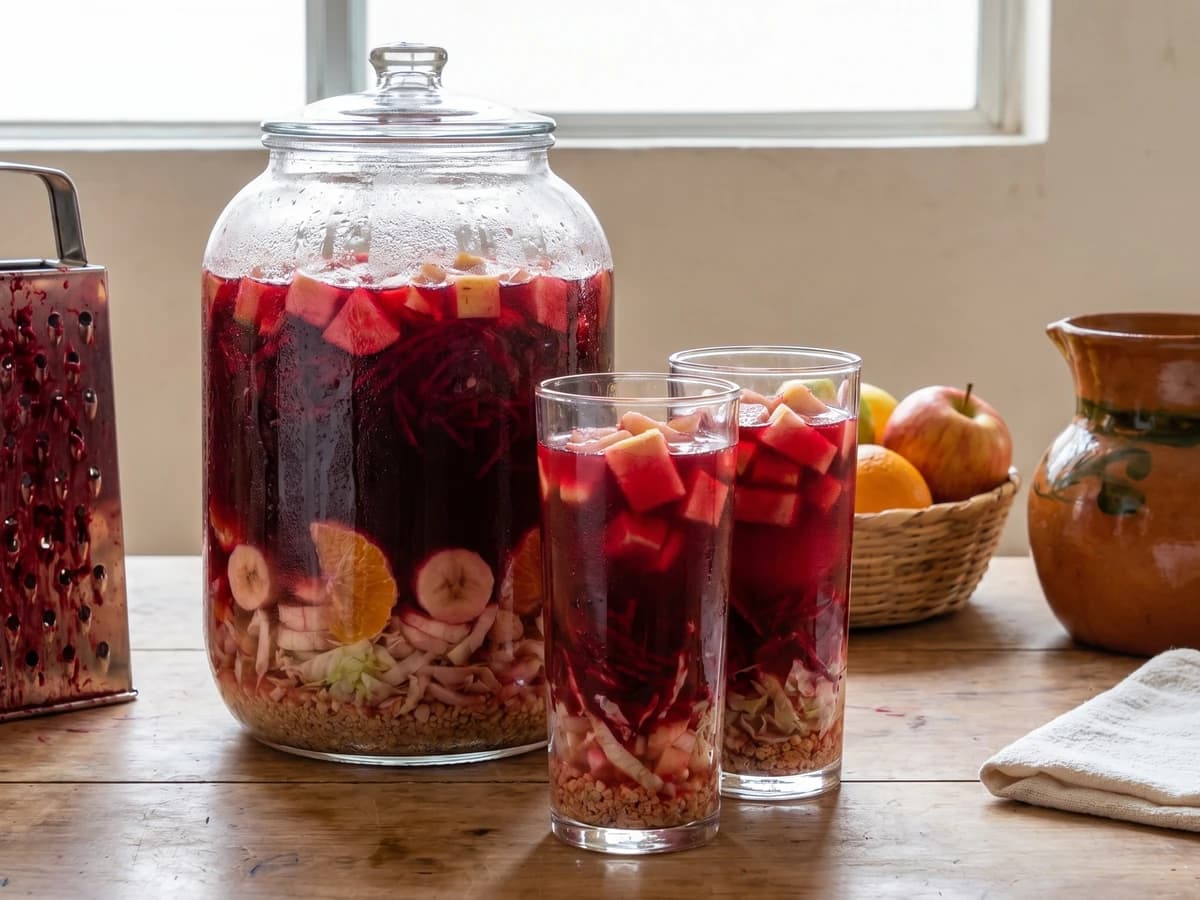
Aguascalientes' Lenten agua fresca, jewel-red from cooked beet and full of apple, banana, orange, lettuce, and ground peanuts, served cold when Holy Week meets the Feria de San Marcos.

Chef Lupita
Sonora and Sinaloa's creamy malted barley water, built on toasted cebada perla, Mexican canela, vanilla from Papantla, and evaporated milk. Pink-beige, rich, and served cold over heavy ice in a heavy glass tumbler. Liquid cookie comfort the northwest way.

Chef Lupita
Yucatán's everyday tonic of boiled chaya leaves blended with lima agria, sugar, and ice. The bright green jarra that sits on every Peninsula table from Mérida to Valladolid.