Chef Lupita
Aceite de Chiltepin Bajacaliforniano
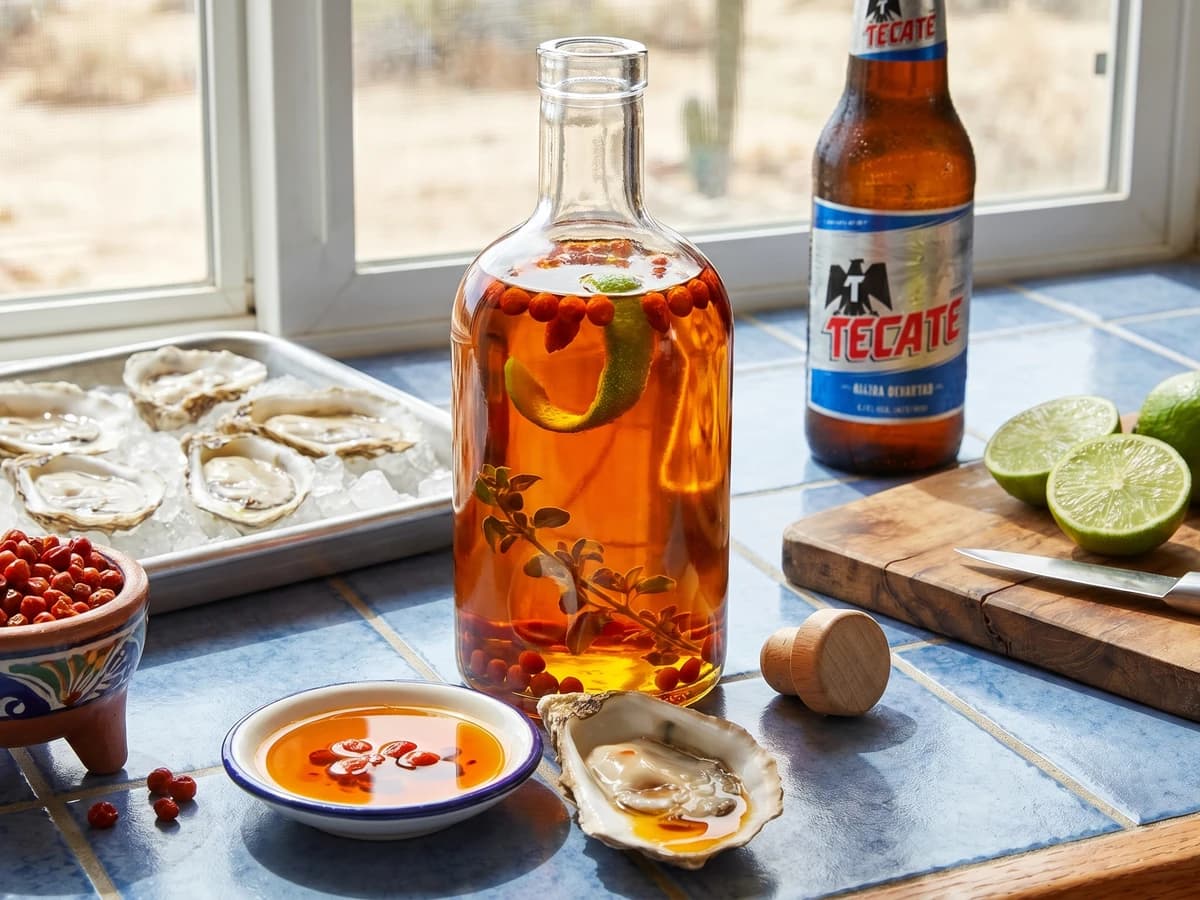
Baja California's wild chiltepin steeped in olive oil with garlic, orejon, and lime peel, until the oil turns ruby-amber and carries the slow, sneaky burn of the desert coast.
A cooking platform built around craft, culture, and the stories behind what we eat.
Created by
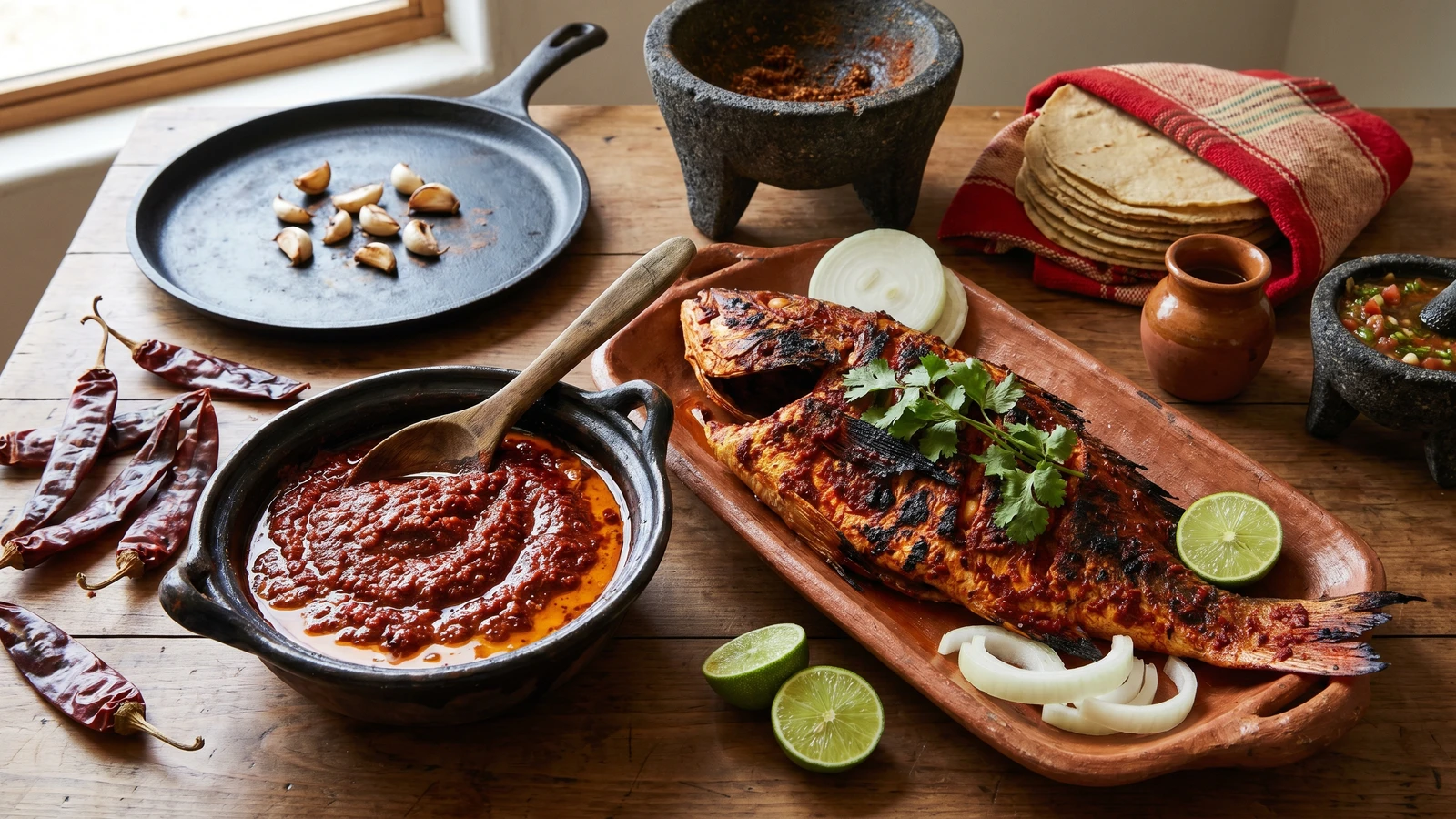
Oaxaca's Costa Chica adobo of toasted chile costeño rojo, garlic, cumin, and vinegar, ground into a sharp red paste that coats whole snapper before it goes over charcoal.
This adobo is from the Costa Chica of Oaxaca. From Puerto Escondido, from Pinotepa Nacional, from the small coastal towns where the snapper comes off the panga in the morning and is split open, painted red, and grilled over coals by the afternoon. This is not adobo from Tlaxcala. This is not the adobo of central Mexico. The Costa Chica has its own chile and its own grammar.
The chile is chile costeño rojo. Not guajillo. Not chile de árbol. Chile costeño rojo, a small leathery red chile grown along the Oaxacan coast, sharper and brighter than guajillo and with a clean heat that does not bury the fish underneath it. If your chile vendor does not know the difference, you have the wrong vendor. Esto no es comida de un solo Mexico, and the costeño rojo is what tells you which Mexico this dish belongs to.
The paste is built on the comal first. Toasted chile, toasted garlic, toasted cumin and clove, ground with vinegar de piña and the juice of a Oaxacan orange. Then it goes into hot lard for five minutes until the chile darkens and the fat beads at the edges. That bloom is the recipe. Raw chile paste tastes of vinegar. Bloomed adobo tastes of toasted coast. La manteca es el sabor.
My mother never made this. She was from Jalisco and the only fish she trusted was pescado zarandeado from Nayarit. But I spent two weeks in Pinotepa with a senora named Doña Carmen who grilled pescado a la talla every Sunday for her family on a piece of corrugated metal she set across two cinder blocks. She wrote nothing down. I sat with my notebook and watched her do it twelve times in a row until I had it. This adobo is hers. Saber cocinar es saber vivir.
Pescado a la talla, the technique of butterflying a whole fish open and grilling it 'to the size' over wood coals, is documented along the Pacific coast from Guerrero through Oaxaca and is most closely associated with the Costa Chica region that straddles the two states. The chile costeño rojo is an Oaxacan landrace cultivated in the coastal plains around Pinotepa Nacional and Jamiltepec, distinct from the chile costeño amarillo grown in the same region for yellow moles and salsas. The dish itself reflects the cooking economy of fishing communities where the entire fish is cooked at once over an outdoor fire, a practice that predates the Spanish introduction of vinegar by centuries; the modern adobo with its vinegar and orange juice is a colonial-era adaptation that fused indigenous chile-grinding traditions with European acidulants.
Quantity
20
stemmed and seeded
Quantity
8
unpeeled
Quantity
1 teaspoon
Quantity
1 teaspoon
Quantity
4
Quantity
1 teaspoon
Quantity
1/3 cup
Quantity
1/3 cup
Quantity
2 tablespoons
Quantity
1 tablespoon, plus more to taste
Quantity
1 tablespoon
for color depth
Quantity
3 tablespoons
melted
Quantity
2 fish, about 2 pounds each
butterflied open and scaled
Quantity
for serving
Quantity
for serving
Quantity
for serving
Quantity
for serving
| Ingredient | Quantity |
|---|---|
| dried chile costeño rojostemmed and seeded | 20 |
| garlic clovesunpeeled | 8 |
| whole cumin seed | 1 teaspoon |
| whole black peppercorns | 1 teaspoon |
| whole cloves | 4 |
| dried Mexican oregano | 1 teaspoon |
| white vinegar de piña or unfiltered apple cider vinegar | 1/3 cup |
| fresh orange juice | 1/3 cup |
| fresh lime juice | 2 tablespoons |
| kosher salt | 1 tablespoon, plus more to taste |
| achiote paste (recado rojo from Yucatan) (optional)for color depth | 1 tablespoon |
| manteca de cerdomelted | 3 tablespoons |
| whole red snapper (huachinango or pargo)butterflied open and scaled | 2 fish, about 2 pounds each |
| lime halves (optional) | for serving |
| hand-pressed corn tortillas (optional) | for serving |
| salsa de chile costeño (optional) | for serving |
| sliced raw white onion (optional) | for serving |
Heat a dry comal over medium. Toast the chile costeño rojo a few at a time, pressing them flat with a spatula for about 15 seconds per side. They are thin-skinned and they burn faster than guajillo or ancho. The moment they puff and turn fragrant, pull them off. The kitchen should smell sharp and slightly smoky, like a chile vendor's stall in the Pinotepa market. Burned costeño turns the adobo bitter and there is no fixing it.
Transfer the toasted chiles to a heatproof bowl. Cover with hot tap water, not boiling. Boiling water cooks the skin and pulls the bitterness out. Hot water softens the flesh clean. Weigh them down with a small plate so they stay submerged. Let them soak for 15 minutes until pliable. Drain and reserve a quarter cup of the soaking liquid in case the paste needs loosening later.
On the same comal, toast the unpeeled garlic cloves over medium heat, turning every minute, until the skins are blackened in spots and the cloves are soft, about eight minutes. Pull them off and let them cool enough to peel. In a small dry skillet, toast the cumin, peppercorns, and cloves over low heat for about 90 seconds, swirling the pan, until fragrant. Grind them to a fine powder in a spice grinder or molcajete with the dried oregano. This step is the spine of the adobo.
Combine the drained chiles, peeled toasted garlic, ground spices, vinegar, orange juice, lime juice, salt, and achiote paste if using in a blender. Blend on high for two full minutes until completely smooth. The paste should be the color of red brick, glossy, and thick enough to coat the back of a spoon. If it is too thick to move in the blender, add reserved chile soaking liquid one tablespoon at a time. No more than two tablespoons total. The adobo needs to cling to the fish, not run off it.
Warm the melted lard in a small skillet over medium heat. Pour in the chile paste. It will sputter. Cook for five to seven minutes, stirring constantly with a wooden spoon, until the paste darkens by a shade and the fat starts to bead at the edges. La manteca es el sabor. This step is what separates a raw chile slurry from a real adobo. Skip it and the fish will taste of vinegar and not of toasted chile. Taste for salt now and adjust. Cool to room temperature before using.
Lay the butterflied snapper flesh-side up on a sheet pan. Spread the cooled adobo generously over the flesh side first, working it into every fold of the fillet, then flip and coat the skin side. Use all of it. Cover and refrigerate for at least 30 minutes and up to four hours. Longer than four hours and the vinegar starts to firm up the flesh in a way you do not want. The fish should be marinated, not pickled.
Build a charcoal fire and let it burn down to gray-edged embers, medium-hot. Lay the snapper in a hinged grill basket, flesh side down first. Grill for about six to seven minutes, until the adobo darkens and forms a crust where it touches the metal. Flip the basket and grill skin side down for another six to eight minutes, depending on the thickness of the fish. The flesh should flake when pressed near the spine. The skin will char in spots. That is correct. A pescado a la talla without char is a pescado al vapor wearing chile. Asi se hace y punto.
Slide the whole fish onto a long clay platter. Set lime halves around the rim, a stack of warm corn tortillas in a woven servilleta, sliced raw white onion in a small dish, and a molcajete of salsa de chile costeño on the side. Each diner builds tacos at the table, pulling the flesh away in pieces. This is family-style eating from Puerto Escondido and Pinotepa, not a plated entree. Recetas probadas y garantizadas.
1 serving (about 315g)
Culinary guides, cultural storytelling, and the editorial depth that makes cooking meaningful.
Discover Culinary ExplorerChef Lupita
Baja California's wild chiltepin steeped in olive oil with garlic, orejon, and lime peel, until the oil turns ruby-amber and carries the slow, sneaky burn of the desert coast.

Chef Lupita
Puebla's Lenten convent adobo, a brick-red vinegar chile paste of ancho, guajillo, garlic, oregano, and comino made to dress fish for the meatless calendar.
Chef Lupita
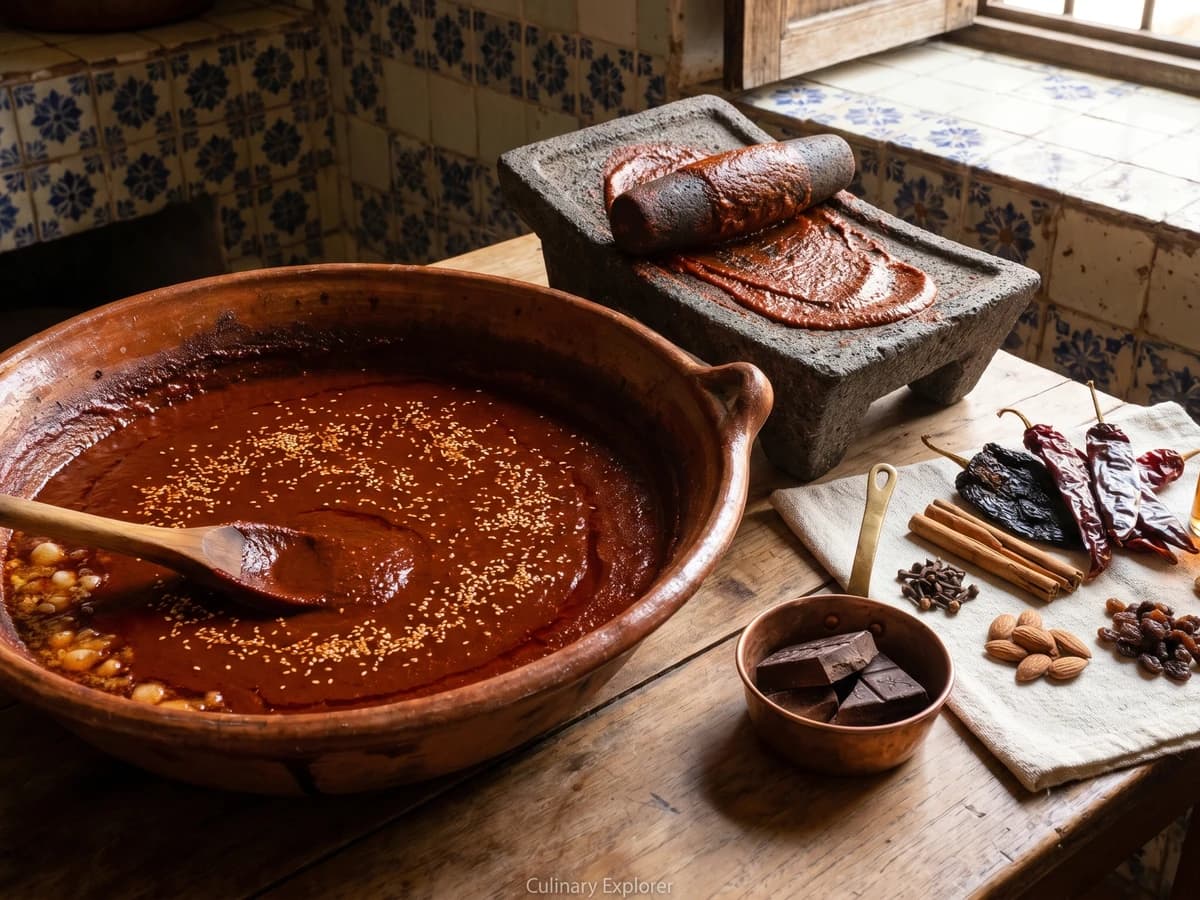
Zacatecas' wedding-table adobo, built from toasted guajillo and ancho, piloncillo, sour orange, chocolate, canela, clavo, almonds, sesame, and lard.

Chef Lupita
Puebla's convent kitchens built this adobo with ancho, guajillo, jerez, almonds, raisins, clove, and lard, a baroque marinade that stains pork loin and finishes as the sauce.