Chef Lupita
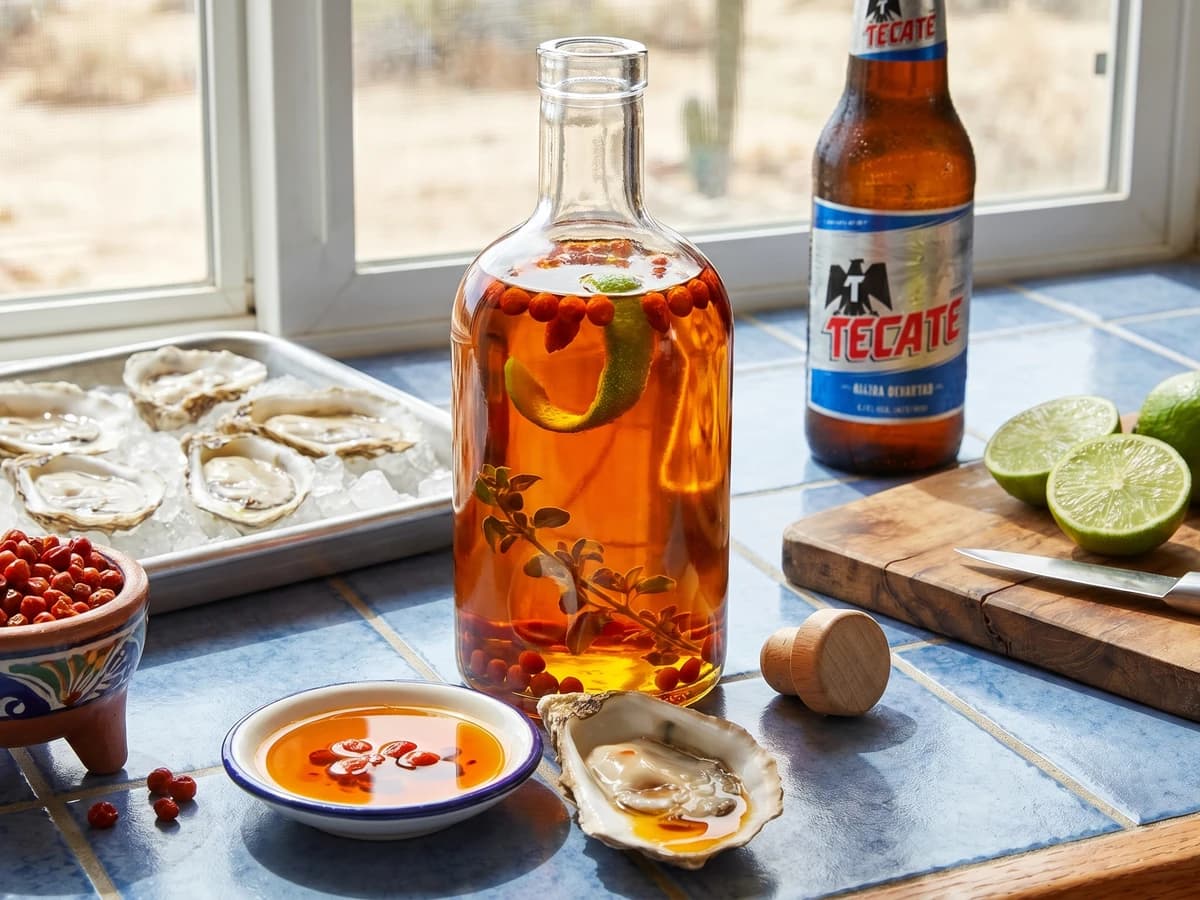
Aceite de Chiltepin Bajacaliforniano
Baja California's wild chiltepin steeped in olive oil with garlic, orejon, and lime peel, until the oil turns ruby-amber and carries the slow, sneaky burn of the desert coast.
A cooking platform built around craft, culture, and the stories behind what we eat.

Created by
Guerrero's coast gives this adobo its authority: guajillo, pasilla mexicano, morita, chile costeño, garlic, vinegar, and fire, ground into the paste that belongs on butterflied fish.
Guerrero, the Acapulco coast, Barra Vieja, Playa Bonfil: that is where pescado a la talla lives. Not in a hotel buffet. On the beach, split open across the backbone, painted red with adobo, and cooked over coals until the edges tighten and the skin blisters.
The chile base here is guajillo for red fruit and color, pasilla mexicano for dark depth, morita for smoke, and a little chile costeño because the coast has its own voice. Do not confuse chile costeño with guajillo. They are not the same chile, not the same heat, not the same regional memory. Pregúntale a las señoras del mercado. They know.
I learned this style from women who worked fish before the tourists arrived, women who could butterfly a huachinango cleanly while keeping one eye on the comal. The adobo is thick because it has to cling to the fish. It is fried because raw chile paste tastes unfinished. It rests before the fire because the salt and vinegar need time to enter the flesh. No me vengas con atajos.
This is a coastal Guerrero adobo, made for fish, charcoal, lime, and a clay cazuela on the table. Cada estado, su propia cocina. Así se hace y punto.
Pescado a la talla is strongly associated with Barra Vieja and the Acapulco coast of Guerrero, where restaurants and beach cooks popularized the butterflied, adobo-painted fish during the 20th century as coastal tourism grew. The technique joins older Pacific fishing practices with inland Mexican adobo grammar: dried chiles toasted on a comal, acid from vinegar or citrus, garlic, and spices ground into a paste that survives direct fire. The use of chile costeño marks the Guerrero and Oaxaca coastal pantry; it is a regional chile with its own heat and aroma, not a stand-in for guajillo.
Quantity
8
stemmed and seeded
Quantity
2
stemmed and seeded
Quantity
2
stemmed
Quantity
1
stemmed and seeded
Quantity
4
unpeeled
Quantity
1/4 medium
Quantity
1 teaspoon
Quantity
1/2 teaspoon
Quantity
2
Quantity
1/2 teaspoon
Quantity
1 teaspoon, plus more to taste
Quantity
3 tablespoons
Quantity
2 tablespoons
Quantity
1/4 cup
Quantity
1/3 to 1/2 cup
as needed
Quantity
2 fish, 1 1/2 to 2 pounds each
butterflied for pescado a la talla
| Ingredient | Quantity |
|---|---|
| dried chile guajillostemmed and seeded | 8 |
| dried chile pasilla mexicanostemmed and seeded | 2 |
| dried chile moritastemmed | 2 |
| dried chile costeñostemmed and seeded | 1 |
| garlic clovesunpeeled | 4 |
| white onion | 1/4 medium |
| dried Mexican oregano | 1 teaspoon |
| cumin seeds | 1/2 teaspoon |
| whole cloves | 2 |
| black peppercorns | 1/2 teaspoon |
| kosher salt | 1 teaspoon, plus more to taste |
| apple cider vinegar or cane vinegar | 3 tablespoons |
| fresh lime juice | 2 tablespoons |
| neutral oil or melted manteca de cerdo | 1/4 cup |
| chile soaking wateras needed | 1/3 to 1/2 cup |
| whole white-fleshed fish such as huachinango, robalo, or doradobutterflied for pescado a la talla | 2 fish, 1 1/2 to 2 pounds each |
Heat a dry comal over medium. Toast the guajillo, pasilla mexicano, morita, and chile costeño one at a time, 15 to 25 seconds per side, just until they soften, darken slightly, and smell deep. The pasilla and costeño burn fast. If a chile goes black, throw it out. Burned chile makes bitter adobo, and no blender can save it.
Put the toasted chiles in a bowl and cover with hot water, not boiling. Let them sit 15 minutes, until pliable. Press them under the water with a small plate if they float. Save 1/2 cup of the soaking water, then drain the chiles.
On the same comal, toast the unpeeled garlic and white onion until the garlic skins blacken in spots and the onion has browned edges. Peel the garlic. This is where the adobo gets the coastal grill flavor before it ever touches the fish.
Toast the Mexican oregano, cumin seeds, cloves, and black peppercorns on the comal for 20 to 30 seconds, moving them constantly. They should smell alive, not scorched. Grind them in a molcajete or spice grinder with the salt.
Blend the soaked chiles, peeled garlic, charred onion, ground spices, vinegar, lime juice, and 1/3 cup chile soaking water until completely smooth. Stop and scrape the blender. Blend again. You want a thick paste that spreads like soft clay, not a loose salsa.
Heat the oil or melted manteca de cerdo in a small cazuela or skillet over medium. Add the chile paste carefully. It will sputter. Cook 6 to 8 minutes, stirring, until the color deepens to brick red and the fat begins to shine around the edges. This step is not decoration. It cooks out the raw chile taste and gives the adobo body.
Taste for salt and vinegar. The adobo should be concentrated because fish and fire will soften it. Let it cool before using. For pescado a la talla, salt the butterflied fish lightly, smear the adobo generously over the flesh side, and let it rest 30 minutes before grilling over charcoal.
1 serving (about 260g)
Culinary guides, cultural storytelling, and the editorial depth that makes cooking meaningful.
Discover Culinary ExplorerChef Lupita
Baja California's wild chiltepin steeped in olive oil with garlic, orejon, and lime peel, until the oil turns ruby-amber and carries the slow, sneaky burn of the desert coast.

Chef Lupita
Puebla's Lenten convent adobo, a brick-red vinegar chile paste of ancho, guajillo, garlic, oregano, and comino made to dress fish for the meatless calendar.
Chef Lupita
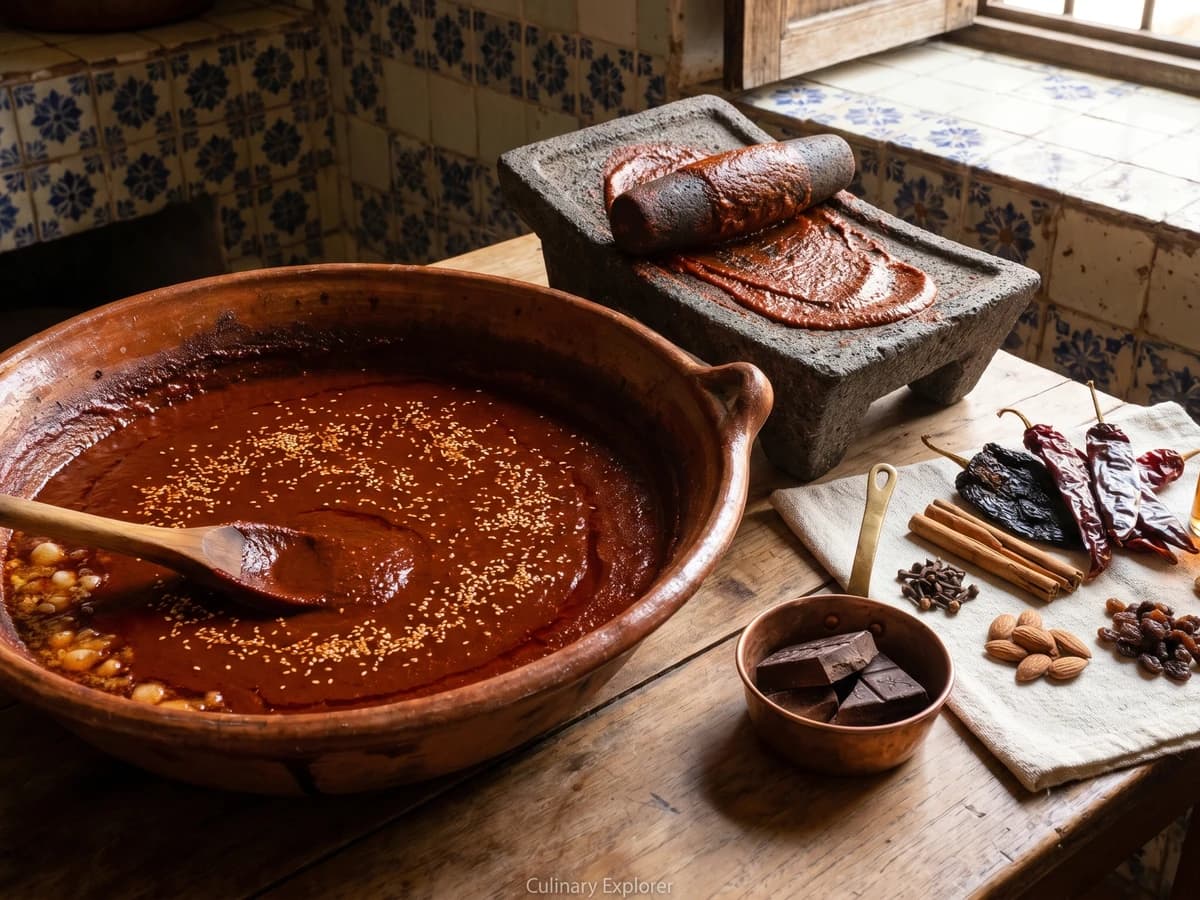
Zacatecas' wedding-table adobo, built from toasted guajillo and ancho, piloncillo, sour orange, chocolate, canela, clavo, almonds, sesame, and lard.

Chef Lupita
Puebla's convent kitchens built this adobo with ancho, guajillo, jerez, almonds, raisins, clove, and lard, a baroque marinade that stains pork loin and finishes as the sauce.