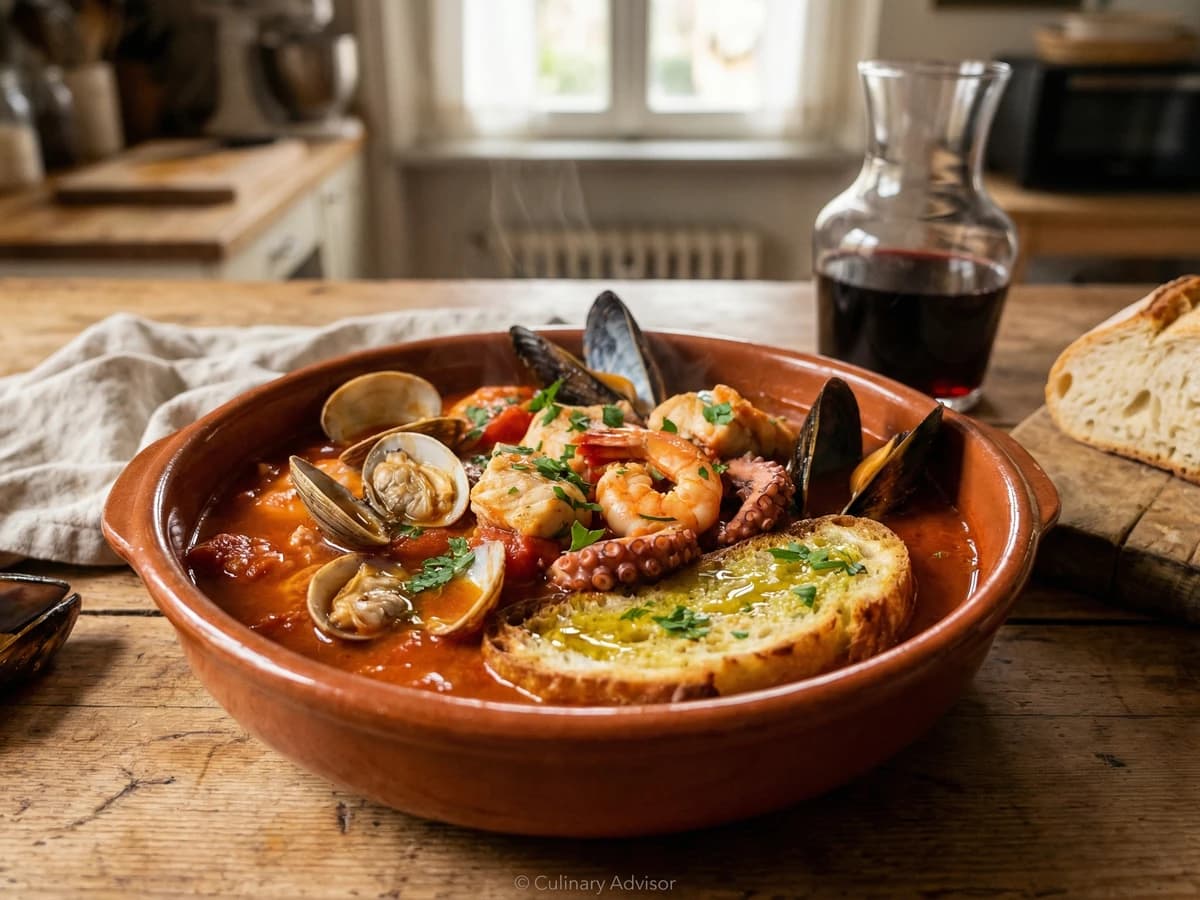
The humblest soup in Tuscany, born from the wild Maremma where shepherds and charcoal burners transformed water, onions, stale bread, and an egg into sustenance. Proof that poverty teaches better than plenty.
Soups & Stews
Italian, Tuscan
Weeknight
Budget Friendly
20 min
Active Time
45 min cook•1 hr 5 min total
Yield4 servings
Acquacotta means cooked water. This is not a charming name invented for tourists. It is a plain description of what shepherds, charcoal burners, and field workers in the Maremma had to eat. Water. Onions from the garden. Tomatoes when there were tomatoes. Stale bread because there was no fresh. An egg if the hens were laying.
The Maremma is the wild coastal plain of southern Tuscany, once malarial swampland where only the desperate worked. The butteri, Tuscan cowboys who herded half-wild cattle through the marshes, carried bread, onions, and oil in their saddlebags. At midday they built a fire, boiled water in a tin pot, cooked the onions, and broke an egg into the broth. This was their meal. They did not complain.
I do not romanticize poverty. But I recognize that necessity strips away pretension and reveals what actually matters. This soup matters. The onions must cook until they surrender completely. The bread must be stale enough to absorb without dissolving. The egg must be soft, its yolk enriching the broth when broken. When these things are done correctly, you have a dish that proves you do not need a recipe to cook. You need attention, good ingredients, and respect for what you are doing.
Acquacotta sustained the poorest workers of the Maremma for centuries: the butteri who herded cattle through malarial swamps, the carbonai who burned charcoal in isolated forest camps, the shepherds who walked their flocks across the wild coastal plain. Each group made the soup with whatever they carried, which was never much. The egg on top was often a luxury, added only when a hen could be found.
The technique, the tradition, and the story behind every dish.
Pecorino Romano or Parmigiano-Reggianofreshly grated
1/2 cup
fresh basil leaves
for serving
Equipment Needed
•Heavy 4-quart pot or Dutch oven
•Four warmed soup bowls
Instructions
1
Cook the onions
In a heavy pot or Dutch oven, warm the olive oil over medium heat. Add the sliced onions and celery. Cook slowly, stirring occasionally, until the onions are completely soft, golden, and beginning to melt into the oil. This takes at least 20 minutes. Do not rush. The sweetness of properly cooked onions is the foundation of this soup. If the onions brown too quickly, lower the heat and add a tablespoon of water.
The onions should not fry or crisp. They must become soft and yielding, almost jammy. This is where the flavor lives.
2
Add the tomatoes
Add the tomatoes to the pot. If using canned, crush them by hand as you add them, letting the juices fall into the pot. Cook, stirring occasionally, until the tomatoes break down and begin to combine with the onions, about 10 minutes. The mixture should smell sweet and earthy.
3
Add the water and simmer
Pour in the water. Yes, water. This is acquacotta, cooked water. The name is not poetry but plain description. Add one teaspoon of salt and a small pinch of peperoncino if you like gentle heat. Bring to a simmer and cook uncovered for 15 minutes. The broth should taste of onions and tomatoes, simple and clean. Adjust salt as needed.
Some add a Parmigiano rind here for depth. This is acceptable, though not traditional to the Maremma. The purest versions rely only on the vegetables and good oil.
4
Prepare the bread
Place one thick slice of stale bread in the bottom of each of four warmed soup bowls. The bread must be stale, at least two days old. Fresh bread turns to paste. Stale bread absorbs the broth while maintaining some structure.
5
Poach the eggs
Crack the eggs, one at a time, directly into the simmering soup. Space them apart so they do not touch. Let them poach gently until the whites are just set but the yolks remain runny, about 3 to 4 minutes. The eggs should tremble when you lift them. Do not overcook them.
If you are nervous about poaching eggs in soup, you may poach them separately in salted water and place one atop each bowl. But the traditional method is to cook them directly in the broth, where they absorb its flavor.
6
Assemble and serve
Ladle the hot soup over the bread in each bowl, ensuring each portion receives plenty of onions, tomatoes, and broth. Carefully lift one poached egg into each bowl, placing it atop the bread. Scatter grated cheese over all. Drizzle generously with your best olive oil. Add a few torn basil leaves and freshly ground pepper. Serve immediately. The yolk should break when the spoon touches it, enriching the broth.
Chef Tips
•The bread must be stale. Two days old at minimum. Fresh bread becomes gummy paste. Tuscan bread, made without salt, is traditional, but any country bread with a dense crumb will work if properly dried.
•Use water, not broth. The name tells you this. The flavor comes from the long-cooked onions and the olive oil. Broth would overwhelm the simplicity and miss the point entirely.
•Your olive oil matters enormously in this soup. The finishing drizzle is where you taste it most directly. Use the best you have. A harsh or bitter oil will ruin everything.
•In the Maremma, wild herbs like nepitella (a type of mint) sometimes appear. Fresh basil is more common outside the region. A few leaves of either, torn at the last moment, brightens the bowl.
Advance Preparation
•The soup base of onions, tomatoes, and water can be made several hours ahead and kept at room temperature. Reheat to a simmer before poaching the eggs.
•Do not assemble the bowls until you are ready to serve. The bread must soak in hot broth, the eggs must be freshly poached, and everything must come together at the last moment.
Frequently Asked Questions
Nutrition Information
1 serving (about 450g)
Calories
535 calories
Total Fat
32 g
Saturated Fat
7 g
Trans Fat
0 g
Unsaturated Fat
24 g
Cholesterol
200 mg
Sodium
850 mg
Total Carbohydrates
44 g
Dietary Fiber
5 g
Sugars
8 g
Protein
17 g
Where cooking meets culture.
Culinary guides, cultural storytelling, and the editorial depth that makes cooking meaningful.