
Chef Juliette
Smelt (Éperlans)
Tiny éperlans, lightly floured and fried until their tails stand crisp, arrive in a generous heap on a napkin with fried parsley and grooved lemon, a weeknight lesson in heat and restraint.
A cooking platform built around craft, culture, and the stories behind what we eat.

Created by Chef Juliette
Based on No. 983, Huîtres Soufflées, from Le Guide Culinaire (1907) by Auguste Escoffier
Each oyster sits beneath a cap of Parmesan soufflé, caught over the stove and finished in a fierce oven until golden and proud. The triumph lasts minutes, so have the table waiting.
Huîtres Soufflées (oysters baked beneath Parmesan soufflé) teaches one exact lesson: set the underside before you ask the oven for height. Each oyster is lightly poached, returned to its deep shell between two layers of the cheese preparation, then warmed from below until the first collar lifts. Only then does the hot oven cook and colour the cap. Skip that brief stove heat and the top can bronze while the base remains wet.
The source assumed the apparatus and rhythm of a grand kitchen: a brigade-sized batch of ready-to-bake Soufflé au Parmesan (No. 2295a), a flat range beneath a metal tray, a fierce oven beside it, and hands ready to carry the dish away. It asks for neither a saucier on staff nor a stockpot never off the fire, and its oven, not a salamander, must raise and colour the soufflé. At home, use a heavy stovetop-safe roasting pan across two burners, enough of the referenced preparation for twelve shells, and four guests already seated. The tammy, silver timbale, and enormous formula stay with the separate soufflé entry; they are brigade scaffolding here. The light poach, salt-supported shells, heat beneath, and immediate bake are the dish itself.
When it works, the oyster stays tender beneath an ivory centre and a Parmesan-gold dome, the shell holding every buttery, briny drop. Level the shells before filling and watch for the first rise on the stove. That is the moment that matters, and it is quick enough for one cook, one stove, one evening.
Huîtres soufflées belong to the classical Parisian dining-room repertoire, where oysters arriving from Normandy, Brittany, and the Atlantic beds became composed hot hors-d'oeuvre as well as raw shellfish. The dish borrowed the oyster shell as both mould and serving vessel, while Parmesan reflects the cosmopolitan larder of the national canon rather than a claim to any single oyster coast. Its stove-to-oven sequence is not decorative theatre: setting the base first lets the soufflé rise around the oyster without leaving a wet floor.
Quantity
12
Quantity
2 cups (480 ml / about 410 g) ready-to-bake Soufflé au Parmesan (No. 2295a)
freshly prepared and not yet baked
Quantity
5 cups (1.2 L / 1.1 kg)
for supporting the shells
| Ingredient | Quantity |
|---|---|
| large live oysters in deep, well-cupped shells | 12 |
| Soufflé au Parmesanfreshly prepared and not yet baked | 2 cups (480 ml / about 410 g) ready-to-bake Soufflé au Parmesan (No. 2295a) |
| coarse sea saltfor supporting the shells | 5 cups (1.2 L / 1.1 kg) |
Set a rack in the upper-middle of the oven and heat it thoroughly to 450°F (230°C). Spread the coarse salt about 1 inch (2.5 cm) deep in a heavy stovetop-safe roasting pan. Press twelve hollows into the salt and test the unopened oysters in them; every deep shell must sit level, because a tilted shell loses its filling before the heat can set it.
Scrub the oysters under cold running water. Holding each cup-side down in a folded towel, shuck it and strain every drop of liquor through a fine sieve into the smallest saucepan you own. Slip out the oyster, keep the deep half-shell, scrape away hinge fragments, rinse the inside quickly, and dry it. Warm the strained liquor until it barely trembles, then add the oysters and poach for 20 to 30 seconds, just until their edges begin to ruffle. Lift them out immediately. If the liquor reaches a boil, pull the pan from the heat before the oysters go in; a hard boil tightens them before the baking has even begun.
Nest the cleaned deep shells in their prepared hollows. Put a scant teaspoon of the ready-to-bake Soufflé au Parmesan (No. 2295a) in the bottom of each shell, lay one poached oyster over it, then cover with about 2 tablespoons more. Shape a loose rounded cap without pressing or packing it. Work briskly and divide the preparation evenly; the first layer cushions the oyster, while the upper layer supplies the visible rise.
Set the roasting pan across two burners over medium-low heat. Warm it for 3 to 5 minutes, rotating the pan halfway through, until a narrow collar of soufflé begins to swell against the shell rims. You are catching the base, not frying it. If one side rises while the other stays quiet, lower the hotter burner and rotate the pan at once. Ça se rattrape: even heat matters more than speed, and the caps need only begin lifting before the oven takes over.
Carry the pan directly into the hot oven with two dry mitts. Bake without opening the door for the first 4 minutes, then watch closely until the caps stand proud, their centres are set with a faint tremble, and the Parmesan colours to a clear butter-gold, 5 to 7 minutes in all. If they have risen but remain pale, move the pan one rack higher for 30 to 60 seconds. Keep them in the oven rather than reaching for the broiler; the source asks the same heat to cook and colour them together.
Carry the pan straight to a sturdy trivet and serve three shells per person, warning everyone that both shells and salt are fiercely hot. The domes begin settling the moment they leave the oven; that is the nature of a hot soufflé, not a failure. Eat them at once with small oyster forks or teaspoons. À table!
1 serving (about 135g)
Culinary guides, cultural storytelling, and the editorial depth that makes cooking meaningful.
Discover Culinary ExplorerChef Juliette
Tiny éperlans, lightly floured and fried until their tails stand crisp, arrive in a generous heap on a napkin with fried parsley and grooved lemon, a weeknight lesson in heat and restraint.

Chef Juliette
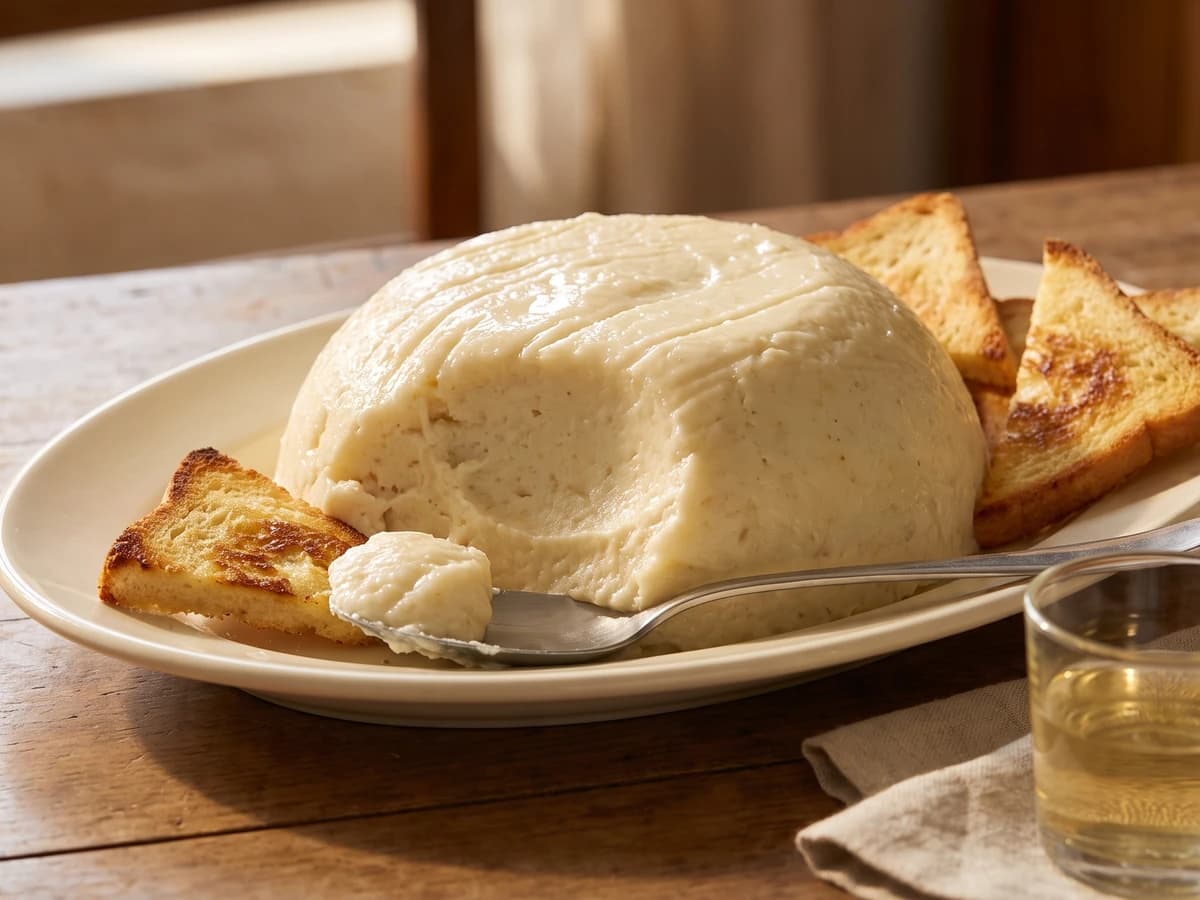
Brandade de Morue turns salt cod, warm olive oil, and milk into a pale, silky emulsion: keep everything warm and add the oil slowly, then crown the generous dome with butter-fried bread.
Chef Juliette
Salt cod worked warm with cream, one patient spoonful at a time, until the rough flakes become a glossy Nîmes paste, domed generously and ringed with butter-fried croutons for the table.

Chef Juliette
Wine-poached char packed in its earthenware crock beneath butter gold: a make-ahead first course that turns careful cooling, thorough boning, and one unbroken seal into quiet abundance.