
Chef Juliette
Smelt (Éperlans)
Tiny éperlans, lightly floured and fried until their tails stand crisp, arrive in a generous heap on a napkin with fried parsley and grooved lemon, a weeknight lesson in heat and restraint.
A cooking platform built around craft, culture, and the stories behind what we eat.

Created by Chef Juliette
Based on No. 980, Huîtres à la Favorite, from Le Guide Culinaire (1907) by Auguste Escoffier
Huîtres à la Favorite layers barely poached oysters, silken Béchamel, and black truffle in their shells, then flashes them beneath fierce heat until Parmesan freckles gold and butter gleams at the bubbling edge.
Huîtres à la Favorite (oysters Favorite-style) teaches the discipline of keeping an oyster tender while building grandeur around it. Before you touch a pan, put a bowl beneath every shell and save the liquor. That clean, briny liquid is the poaching medium and the dish's backbone; lose it down the sink and no amount of truffle can put the sea back.
The original assumed a saucier with Béchamel waiting, a brigade opening trays of oysters, and a salamander hot enough to glaze them in seconds. At home, twelve oysters feed four, one small saucepan makes the exact amount of Béchamel, a salt-set sheet pan steadies the shells, and a fully heated broiler supplies the fierce top heat. The separate sauce station and service trays were scaffolding, so they go. The oysters' own liquor, the gentle poach, the truffle slice, and the quick Parmesan-and-butter glaze are the dish, so they stay. One cook, one stove, one evening.
Done properly, each shell arrives mottled gold, bubbling at the rim, with an oyster still plump beneath its ivory sauce and a dark breath of truffle between them. The moment that matters is the final glaze: sauce hot, oysters warm, broiler fierce, and no waiting between assembly and heat.
Huîtres à la Favorite belongs to the named-garnish repertoire of Parisian grand kitchens, not to the raw-oyster customs of Brittany or Normandy. Favorite is an appellation of composed service, not an oyster variety: the flesh is poached in its own liquor, returned to the shell with Béchamel and truffle, then finished beneath a fierce glaze of Parmesan and butter. The method passed naturally to formal home tables because its luxury lies in assembly and timing, while its indispensable flavor still comes from the liquor caught at the shucking board.
Quantity
12
scrubbed
Quantity
4 cups (960 ml / 1.1 kg)
for stabilizing the shells
Quantity
2 tablespoons (30 ml / 28 g)
for the Béchamel
Quantity
2 tablespoons (30 ml / 16 g)
Quantity
3/4 cup (180 ml / 185 g)
warmed and divided
Quantity
1/4 teaspoon (1.25 ml / 1.5 g)
Quantity
1/16 teaspoon (0.3 ml / 0.15 g)
Quantity
1/16 teaspoon (0.3 ml / 0.15 g)
Quantity
1 small truffle (about 15 g)
cut into 12 paper-thin slices
Quantity
1/4 cup (60 ml / 20 g)
finely grated
Quantity
1 1/2 tablespoons (22 ml / 21 g)
melted for finishing
| Ingredient | Quantity |
|---|---|
| medium-large live oysters in deeply cupped shellsscrubbed | 12 |
| coarse sea saltfor stabilizing the shells | 4 cups (960 ml / 1.1 kg) |
| unsalted butterfor the Béchamel | 2 tablespoons (30 ml / 28 g) |
| all-purpose flour | 2 tablespoons (30 ml / 16 g) |
| whole milkwarmed and divided | 3/4 cup (180 ml / 185 g) |
| fine sea salt | 1/4 teaspoon (1.25 ml / 1.5 g) |
| ground white pepper | 1/16 teaspoon (0.3 ml / 0.15 g) |
| freshly grated nutmeg | 1/16 teaspoon (0.3 ml / 0.15 g) |
| black trufflecut into 12 paper-thin slices | 1 small truffle (about 15 g) |
| Parmesanfinely grated | 1/4 cup (60 ml / 20 g) |
| unsalted buttermelted for finishing | 1 1/2 tablespoons (22 ml / 21 g) |
Set an oven rack about 5 inches (13 cm) below the broiler and heat the broiler on high. Spread the coarse salt 1/2 inch (1.25 cm) deep in a 9 by 13-inch (23 by 33 cm) rimmed metal tray. The salt is not seasoning; it holds each curved shell level so the Béchamel stays around the oyster instead of running onto the tray.
Melt the 2 tablespoons butter in a small heavy saucepan over medium-low heat. Stir in the flour and cook for about 90 seconds, until the roux smells faintly of biscuits but remains pale. Reserve 2 tablespoons of the warm milk, then whisk the rest into the roux in three additions. Bring the Béchamel, the milk sauce bound with a pale roux, to a gentle bubble and cook for 4 to 5 minutes, whisking often, until it falls from the whisk in a broad ribbon. Season with the salt, white pepper, and nutmeg. If it goes lumpy, take it off the heat, whisk vigorously, and pass it through a fine sieve. If it is too thick to spread, loosen it a teaspoon at a time with the reserved milk; if it runs thin, simmer it another minute. Keep it warm with parchment pressed directly against the surface.
Keep each oyster cupped-side down and open it over a bowl so every drop of liquor is caught. Slide the oyster knife along the top shell, cut the adductor, and lift away the flat shell. Detach the oyster from the deep shell, then ébarber, trim away the ragged dark fringe the classical recipe calls the beard, along with any shell fragments. Do not rinse the oyster flesh. Strain all the collected liquor through a fine-mesh sieve lined with damp cheesecloth. Rinse the empty deep shells thoroughly, dry their outsides, and nest them level in the salt. Discard any oyster that smelled sour or was gaping and failed to close when tapped before opening.
Pour the strained oyster liquor into a 10-inch (25 cm) sauté pan and bring it only to a bare tremble over medium-low heat. Add the oysters in one layer, working in two batches if necessary, and spoon the liquor over them for 30 to 60 seconds. Lift each oyster out as soon as it plumps, its fringe begins to curl, and its center turns barely opaque. If the liquor reaches a boil, pull the pan off the heat and lift the oysters immediately; caught at the first boil, the final glaze can finish them without turning them rubbery. Ça se rattrape.
Spoon about 1 teaspoon of warm Béchamel into each deep shell. Set a poached oyster on the sauce, lay one thin truffle slice over it, and cover with another teaspoon of Béchamel. Sprinkle the Parmesan evenly over the twelve shells, then let a few drops of melted butter fall over each one. Assemble lightly and quickly; the source calls for layers, not a mound of sauce.
Slide the tray beneath the fully heated broiler and glaze for 1 to 3 minutes, rotating the tray once if the heat is uneven. Pull it when the Béchamel bubbles at the edges, the Parmesan is freckled gold, and the butter shines across the surface. If the cheese darkens before the sauce bubbles, lower the tray one rack and continue briefly; if the sauce bubbles while the top remains pale, move it closer only for the final few seconds. This is glazing, not a second poach. Carry the tray straight to the table. À table!
1 serving (about 110g)
Culinary guides, cultural storytelling, and the editorial depth that makes cooking meaningful.
Discover Culinary ExplorerChef Juliette
Tiny éperlans, lightly floured and fried until their tails stand crisp, arrive in a generous heap on a napkin with fried parsley and grooved lemon, a weeknight lesson in heat and restraint.

Chef Juliette
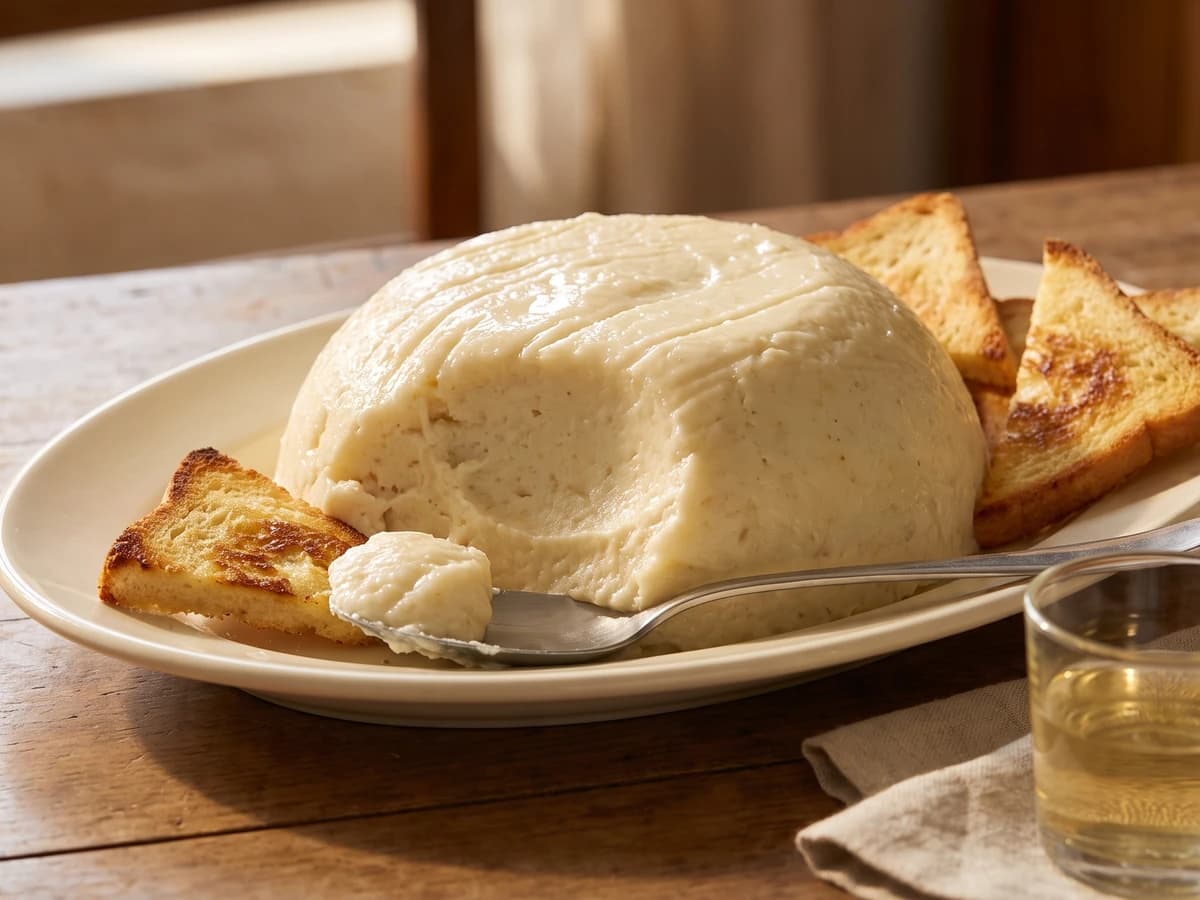
Brandade de Morue turns salt cod, warm olive oil, and milk into a pale, silky emulsion: keep everything warm and add the oil slowly, then crown the generous dome with butter-fried bread.
Chef Juliette
Salt cod worked warm with cream, one patient spoonful at a time, until the rough flakes become a glossy Nîmes paste, domed generously and ringed with butter-fried croutons for the table.

Chef Juliette
Wine-poached char packed in its earthenware crock beneath butter gold: a make-ahead first course that turns careful cooling, thorough boning, and one unbroken seal into quiet abundance.