Culinary Explorer
A cooking platform built around craft, culture, and the stories behind what we eat.
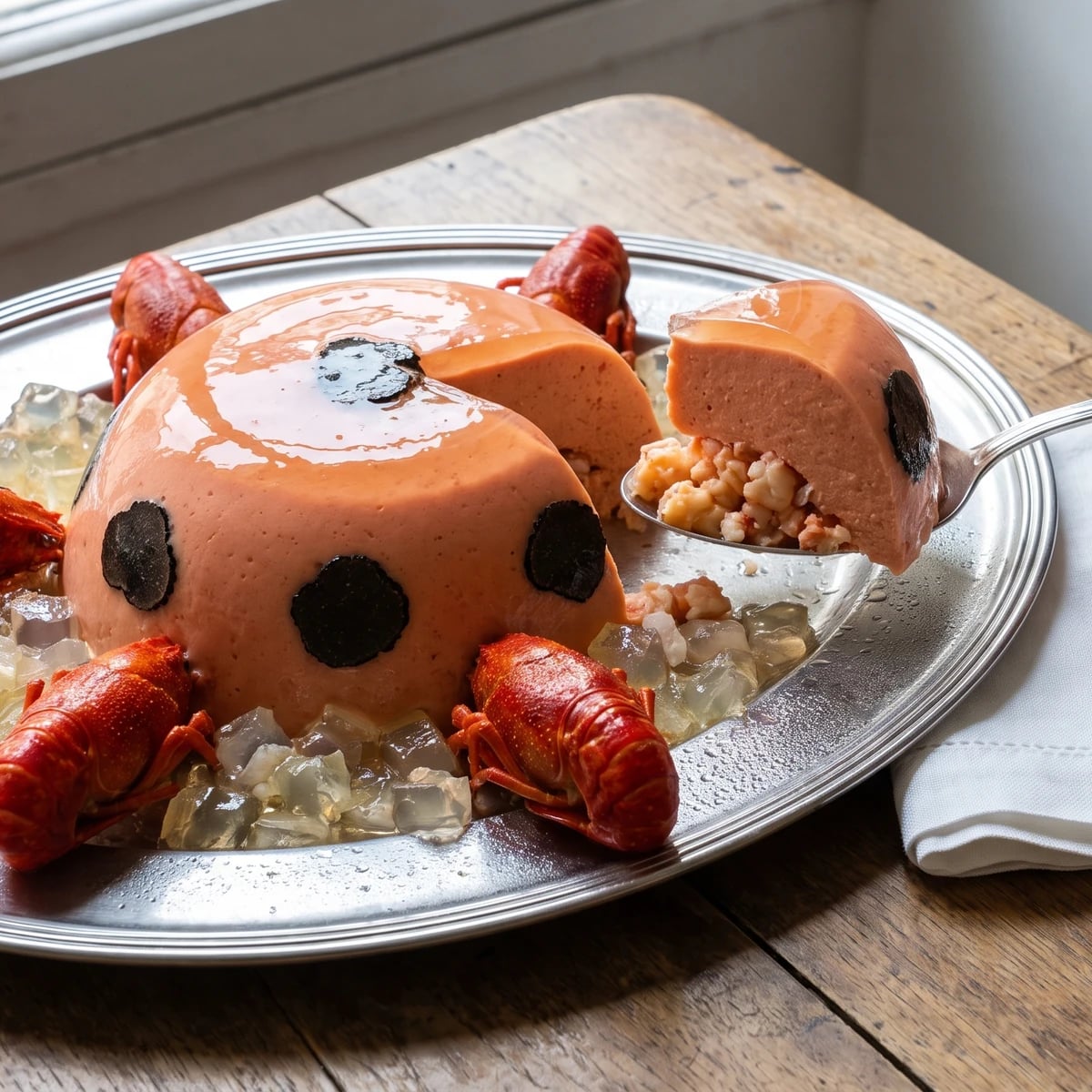
Mousse d’Écrevisses
Created by Chef Juliette
Shells become colour, flavour, and structure in this cold crayfish mousse, where fish velouté and jelly meet half-whipped cream over ice for a smooth coral set.
Mousse d’Écrevisses (cold crayfish mousse) teaches the governing principle of every cold shellfish mousse: temperature is structure. The shell purée, fish velouté, jelly, and cream must meet while cool enough to hold an emulsion but still fluid enough to blend without lumps. Keep that balance and the mousse sets smooth, coral-pink, and light on the tongue rather than rubbery or greasy.
The original assumed a saucier on staff, fish velouté and fish jelly waiting beside a stockpot never off the fire, a heavy tamis, a Charlotte mould, and broken ice by the barrowful. A salamander has no work in this cold preparation. At home, a sturdy mortar or powerful blender, a fine sieve, two nested bowls, and an ordinary refrigerator do the same work. Thirty crayfish become twelve, with the original proportions rounded only to measures a home spoon can hold. One cook, one stove, one evening.
The rice cushion, carved block of ice, and towering border of jelly were service scaffolding, so they can go. Pounding the shells with their Mirepoix (No. 228), rubbing the purée through a tamis, using Red Colouring Butter (No. 142), half-whipping the cream, and working the mixture over ice are the dish itself, so they stay. The moment that matters is the final fold: the base must be cold and beginning to thicken, never already set.
Ingredients
whole raw crayfish
Quantity
12 medium (about 1½ lb / 680 g total)
dispatched and rinsed
prepared Mirepoix
Quantity
½ cup (120 ml / 90 g) Mirepoix (No. 228)
unsalted butter
Quantity
1¼ teaspoons (6 ml / 6 g)
cool and pliable
| Ingredient | Quantity |
|---|---|
| whole raw crayfishdispatched and rinsed | 12 medium (about 1½ lb / 680 g total) |
| prepared Mirepoix | ½ cup (120 ml / 90 g) Mirepoix (No. 228) |
| unsalted buttercool and pliable | 1¼ teaspoons (6 ml / 6 g) |
Where cooking meets culture.
Culinary guides, cultural storytelling, and the editorial depth that makes cooking meaningful.
Discover Culinary Explorer