
Chef Juliette
John Dory (St. Pierre)
John Dory has the delicacy of sole and the firmness of turbot. A light flouring, a quick butter sauté, and nut-brown beurre noisette show exactly why looks never mattered.
A cooking platform built around craft, culture, and the stories behind what we eat.
Created by Chef Juliette
Based on No. 971, Timbale de Queues d’Écrevisses à la Nantua, from Le Guide Culinaire (1907) by Auguste Escoffier
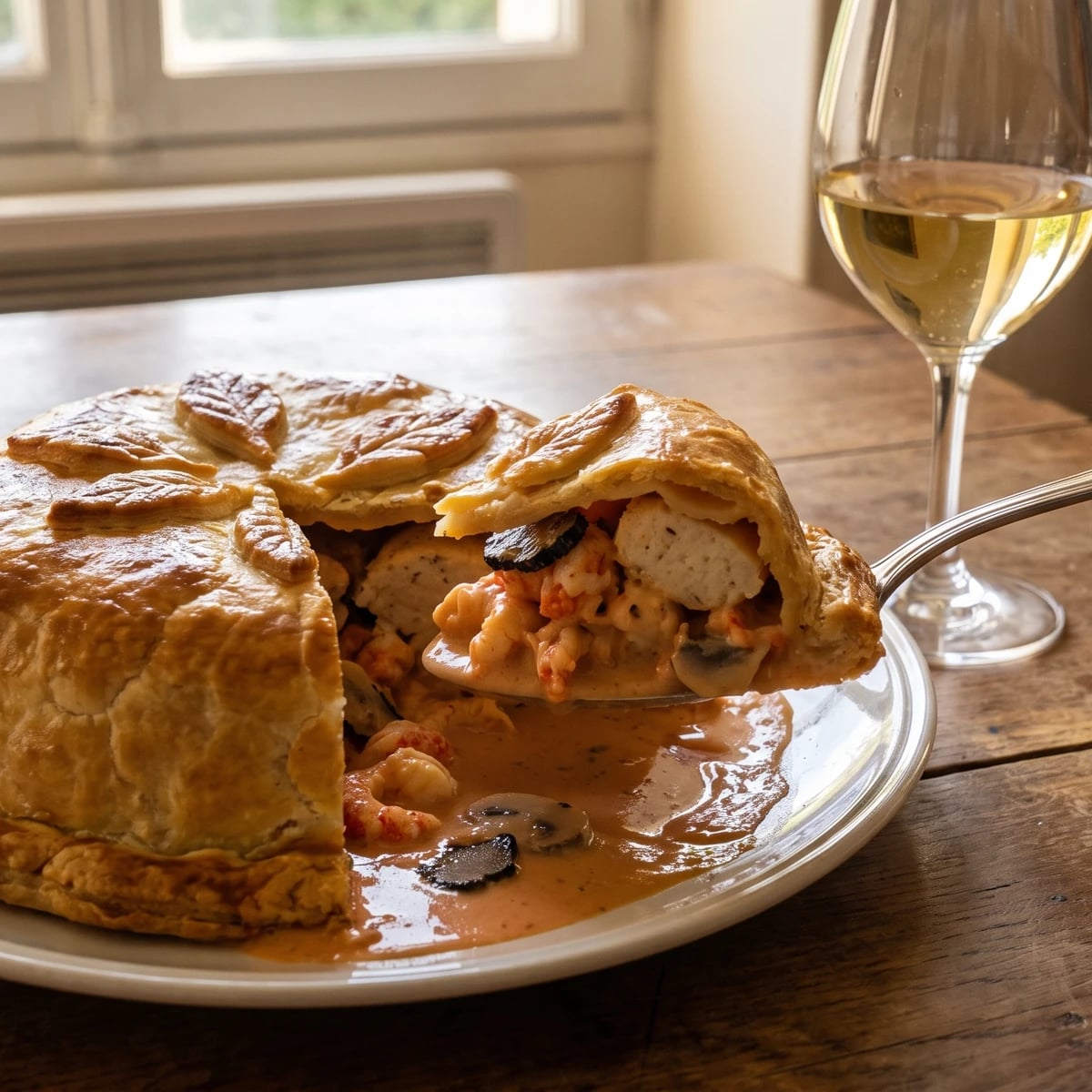
A crisp pastry timbale opens onto crayfish tails, tender whiting quenelles, white mushrooms, and black truffle, all bound in a coral-pink Nantua sauce whose gloss and depth come from the shells.
Timbale de Queues d’Écrevisses à la Nantua (crayfish-tail pastry timbale with Nantua sauce) teaches one unarguable thing: keep the shells. The tails are the garnish, sweet and delicate, but the crushed heads and shells give the sauce its coral colour, mineral depth, and unmistakable crayfish perfume. Discard them and you can still make cream sauce, but you cannot make this dish.
The original assumed a pastry cook, a saucier on staff, prepared crayfish butter and cream sauce waiting beside a stock never off the fire, and a dedicated timbale mold. The salamander belonged to that kitchen too, though this entry does not call on it. Here, a small springform pan replaces the mold, a sturdy food processor and fine sieve replace the mortar and tammy, and the same crayfish shells supply both the butter and the sauce. Sixty crayfish for ten become twenty-four for four, with every garnish kept in proportion. The napkin presentation is brigade scaffolding and can go; the hot empty crust, whiting quenelles, black truffle, and shell-built sauce are the dish and must stay. One cook, one stove, one evening.
When it lands correctly, the pastry is butter-gold and crisp, the lid lifts onto a coral-pink sauce gleaming around orange-red tails, pale quenelles, white mushrooms, and a black crown of truffle. Do not hurry the shell extraction or merely drain it. Press the cream sauce firmly through the crushed shells, because that pressure is where Nantua gives up its full character.
The dish belongs to Nantua in the Ain, where the lake and surrounding waterways made freshwater crayfish part of the local table for generations. Sauce Nantua traveled from that crayfish country into the grand kitchen, becoming the celebrated companion to fish quenelles and other delicate forcemeats, while the pastry timbale turned the same garniture into a formal centerpiece. Nantua is sometimes mistaken for ordinary pink cream sauce, but its identity comes from crayfish shells and crayfish butter; the colour alone proves nothing.
Quantity
2 cups (475 ml / 250 g)
Quantity
½ cup plus 1 tablespoon (135 ml / 125 g)
cubed
Quantity
½ teaspoon (2.5 ml / 3 g)
Quantity
1
Quantity
2 tablespoons (30 ml / 30 g), plus up to 1 tablespoon (15 ml / 15 g) if needed
Quantity
1
Quantity
1 teaspoon (5 ml / 5 g)
Quantity
24, about 2¼ pounds (1 kg)
humanely dispatched by the fishmonger immediately before cooking
Quantity
7 tablespoons (105 ml / 100 g)
divided
Quantity
3 tablespoons (45 ml / 45 g)
Quantity
1 tablespoon plus ½ teaspoon (17 ml / 16 g)
Quantity
1½ teaspoons (7.5 ml / 9 g)
divided
Quantity
⅛ teaspoon (0.6 ml / 0.25 g)
Quantity
5 ounces (140 g)
cubed and thoroughly chilled
Quantity
1
thoroughly chilled
Quantity
½ cup plus 1 tablespoon (135 ml / 135 g)
thoroughly chilled and divided
Quantity
6, about 2 ounces (60 g)
trimmed and grooved
Quantity
½ teaspoon (2.5 ml / 2.5 g)
Quantity
5 cups plus ⅓ cup (1.26 liters / 1.26 kg)
divided
Quantity
¼ cup loosely packed (60 ml / 34 g)
thinly sliced and divided
Quantity
1 tablespoon (15 ml / 8 g)
Quantity
6 tablespoons (90 ml / 92 g)
| Ingredient | Quantity |
|---|---|
| all-purpose flour | 2 cups (475 ml / 250 g) |
| cold unsalted buttercubed | ½ cup plus 1 tablespoon (135 ml / 125 g) |
| fine salt | ½ teaspoon (2.5 ml / 3 g) |
| large egg | 1 |
| ice water | 2 tablespoons (30 ml / 30 g), plus up to 1 tablespoon (15 ml / 15 g) if needed |
| large egg yolk | 1 |
| water for egg wash | 1 teaspoon (5 ml / 5 g) |
| whole raw freshwater crayfishhumanely dispatched by the fishmonger immediately before cooking | 24, about 2¼ pounds (1 kg) |
| Mirepoixcooked in butter | 2½ teaspoons (12 ml / 12 g) Mirepoix (No. 228) |
| unsalted butterdivided | 7 tablespoons (105 ml / 100 g) |
| dry white wine | 3 tablespoons (45 ml / 45 g) |
| Cognac or French brandy | 1 tablespoon plus ½ teaspoon (17 ml / 16 g) |
| fine saltdivided | 1½ teaspoons (7.5 ml / 9 g) |
| cayenne pepper | ⅛ teaspoon (0.6 ml / 0.25 g) |
| skinless whiting filletcubed and thoroughly chilled | 5 ounces (140 g) |
| large egg whitethoroughly chilled | 1 |
| heavy creamthoroughly chilled and divided | ½ cup plus 1 tablespoon (135 ml / 135 g) |
| small white button mushroomstrimmed and grooved | 6, about 2 ounces (60 g) |
| fresh lemon juice | ½ teaspoon (2.5 ml / 2.5 g) |
| waterdivided | 5 cups plus ⅓ cup (1.26 liters / 1.26 kg) |
| fresh black trufflethinly sliced and divided | ¼ cup loosely packed (60 ml / 34 g) |
| all-purpose flour for the cream sauce | 1 tablespoon (15 ml / 8 g) |
| whole milk | 6 tablespoons (90 ml / 92 g) |
Work the cold butter into the flour and salt until the mixture resembles coarse crumbs with a few pea-sized pieces remaining. Beat the whole egg with 2 tablespoons of ice water, add it to the flour, and bring the dough together with your fingertips. If dry flour remains, add the extra water a teaspoon at a time; stop as soon as the dough holds when squeezed. Divide it into two pieces, two-thirds for the shell and one-third for the lid, flatten both, wrap, and chill for 45 minutes.
Heat the oven to 375°F (190°C). Roll the larger dough piece to about ⅛ inch (3 mm) thick and line an 18 cm (7-inch) springform pan, carrying the pastry about 1¾ inches (4.5 cm) up the side. Chill for 10 minutes, line with parchment and weights, then bake for 20 minutes. Remove the weights and parchment, brush the interior lightly with some of the egg yolk beaten with the teaspoon of water, and bake for 7 to 9 minutes more, until dry and butter-gold. Roll the remaining dough into an 18 cm round, decorate it with simple pastry leaves cut from the scraps, brush with egg wash, and bake separately on a lined sheet for 16 to 20 minutes. If the shell develops a crack, press a thin scrap of raw dough over it with egg wash and bake for another 4 minutes. Ça se rattrape.
Melt 2 tablespoons of the unsalted butter in a wide lidded sauté pan over medium-high heat. Add the Mirepoix (No. 228), then the whole crayfish, and toss until every shell has turned a distinct, brilliant red. Pull the pan away from the burner and any hood flame, add the Cognac, return the pan to the heat, and ignite it with a long match while keeping the lid beside you. Never pour brandy from its bottle near a flame. When the flame dies, add the white wine, ½ teaspoon of the salt, and the cayenne. Cover, lower the heat, and cook for 10 minutes, shaking the pan two or three times, until the tail meat is opaque.
Lift the crayfish from the pan, keeping every drop of cooking liquor and mirepoix. Twist off and peel the tails, remove the dark intestinal threads, and keep the tail meat covered. Put the heads, claws, shells, and other remains into a sturdy food processor and pulse them into a coarse paste, working in batches if necessary. Melt 3 tablespoons of butter in the sauté pan, add about one-third of the shell paste, and cook gently for 5 minutes, stirring until the butter turns deep coral. Press it through a fine-mesh sieve into a small bowl. Reserve 1 tablespoon of this crayfish butter for the quenelles, then keep the rest for finishing the sauce. Return the pressed shell material to the pan with the remaining shell paste and reserved cooking liquor. Wash and sanitize the processor bowl and blade thoroughly, then chill them before making the forcemeat.
Bring 5 cups of water to a bare tremble in a broad saucepan. In the cold processor, pulse the whiting with ¼ teaspoon of salt until smooth, then add the egg white and pulse just until absorbed. With the motor running briefly, add 3 tablespoons of cold cream, followed by the reserved tablespoon of crayfish butter. The forcemeat should be glossy, cold, and firm enough to hold on a spoon; reserve another tablespoon of cream for adjustment. Poach a teaspoonful as a test. If it spreads or turns coarse, stop and chill the forcemeat over ice for 10 minutes before pulsing it once more. If it is rubbery, pulse in the reserved cream a teaspoon at a time. Shape 8 small quenelles between two wet teaspoons and poach them without boiling for 6 to 8 minutes, turning once, until puffed, opaque, and 145°F (63°C) at the center. Drain and cover.
Put the grooved mushrooms into a small saucepan with 1 tablespoon of butter, ⅓ cup of water, the lemon juice, and a pinch of salt. Cover and simmer gently for 5 to 7 minutes, until tender but still very white. Lift them out and reserve the cooking liquor. Set aside roughly one-third of the black truffle slices for the final crown; the remaining slices belong inside the timbale.
Melt the final tablespoon of plain butter in a saucepan, stir in the tablespoon of flour, and cook this roux gently for 2 minutes without letting it colour. Whisk in the milk, then ¼ cup of the cold cream, and simmer for 5 minutes until smooth and thick enough to coat a spoon. Add this cream sauce to the crushed crayfish shells and their liquor, cover, and hold at the gentlest simmer for 8 minutes. Work the mixture through a fine-mesh sieve in small batches, pressing hard with a ladle until the shells are nearly dry, then discard them. Reduce the strained sauce if it runs thin; if it is too tight, loosen it with the reserved mushroom liquor a teaspoon at a time. Whisk in the remaining crayfish butter off the heat. If the sauce looks oily or split, whisk in the final tablespoon of cold cream, little by little, until the gloss returns. Taste and correct the salt.
Lower the oven to 325°F (165°C) and warm the empty pastry shell and its lid for 6 to 8 minutes. Meanwhile, combine the crayfish tails, quenelles, mushrooms, inner truffle slices, and 2 teaspoons of the mushroom cooking liquor in a small saucepan. Warm them gently, turning with a spoon so nothing catches, then fold in enough sauce Nantua to coat everything generously. Do not boil once the tails and quenelles are in the sauce; hard heat toughens both and can throw the butter out of the emulsion.
Release the hot timbale shell from its pan and set it on a warm serving plate. Spoon in the garnish and sauce, letting the surface sit generously full rather than packed tight. Arrange the reserved black truffle slices in a crown, place the pastry lid on top, and carry it straight to the table. The formal napkin underneath served the dining room, not the flavor, so leave it behind and cut the timbale while the pastry is crisp. À table!
1 serving (about 320g)
Culinary guides, cultural storytelling, and the editorial depth that makes cooking meaningful.
Discover Culinary Explorer
Chef Juliette
John Dory has the delicacy of sole and the firmness of turbot. A light flouring, a quick butter sauté, and nut-brown beurre noisette show exactly why looks never mattered.

Chef Juliette
Fresh haddock proves its delicacy in the meunière pan: a fine flour crust, moist pearly flakes, and beurre noisette sharpened with lemon and parsley, ready from one skillet in half an hour.

Chef Juliette
Éperlans à l’Anglaise turns small fish into a lesson in disciplined coating: boned smelts under a close, crisp crumb, pan-fried in clarified butter and finished with bright, half-melted maître d’hôtel butter.

Chef Juliette
Tiny smelts, shallot, mushrooms, white wine, gratin sauce, and fine bread raspings meet a fierce oven, where the fish must turn tender in the same breath the buttered crust bronzes.