Culinary Explorer
A cooking platform built around craft, culture, and the stories behind what we eat.
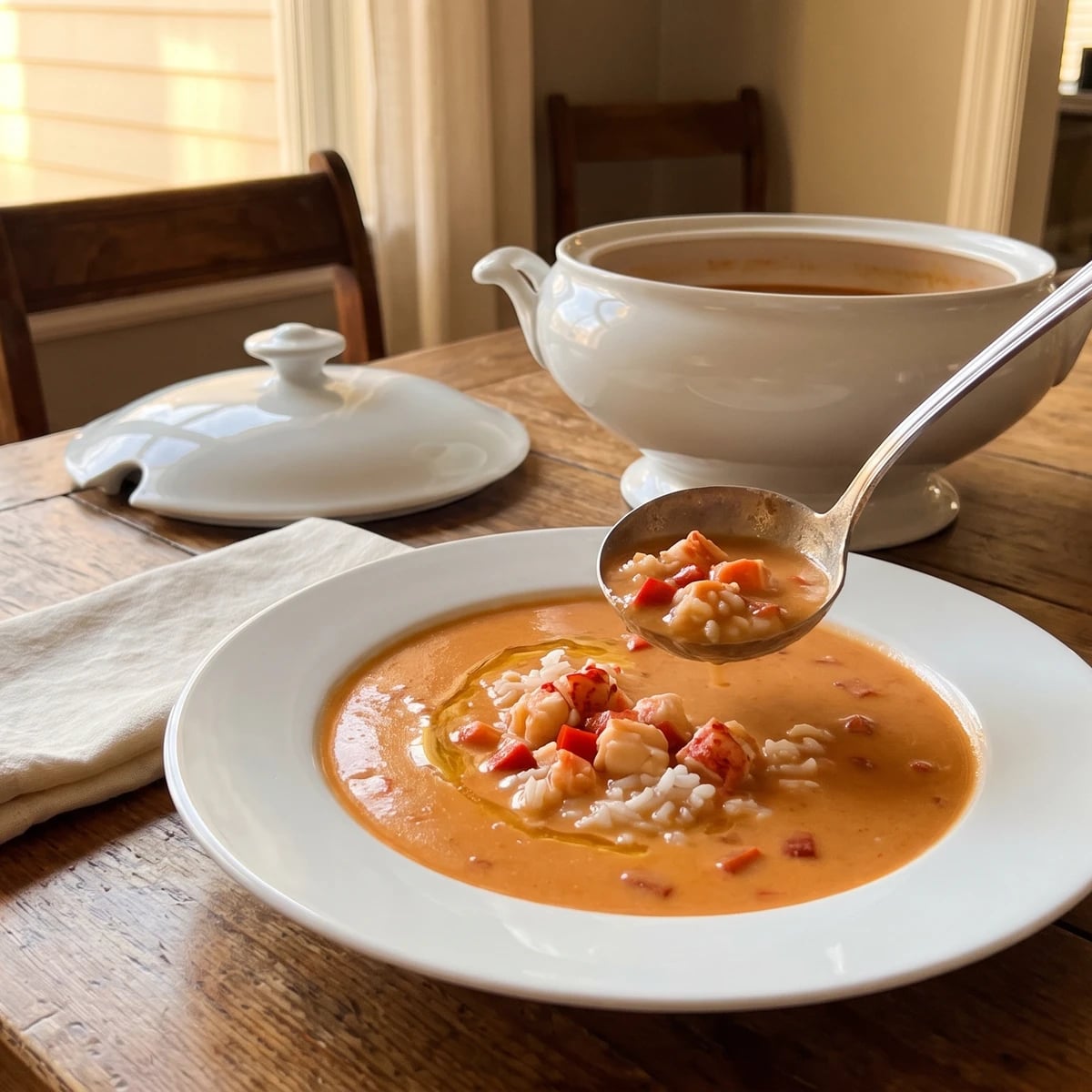
Velouté de Homard au Paprika
Created by Chef Juliette
Paprika warms this coral-ivory lobster velouté without scorching it, while the à l’Américaine foundation of tomato, onion, Cognac, and shell liquor gives cream the depth it needs.
Velouté de Homard au Paprika (silken lobster soup warmed with paprika) teaches extraction. The shell must give everything it has before cream enters the pot, and the paprika must warm the lobster without bullying it. Bloom the spice briefly in fat, then meet it promptly with liquid; scorched paprika turns bitter, and cream cannot hide it.
The original assumed a saucier, a stockpot never off the fire, and a mortar with a tamis, a drum sieve, for pounding and passing the shells. At home, a sturdy pot, kitchen shears, a rolling pin, a fine sieve, and good unsalted shellfish stock do the same honest work. This version keeps the source proportions of one medium lobster, two concassed tomatoes, two roughly chopped onions, two spoonfuls of rice, and one of pimento, then scales the finished soup to about two quarts. Repeated passings and the open-flame flourish are brigade scaffolding and can go; shell browning, wine reduction, paprika, roux, and the Cleveland liaison, the egg-yolk-and-cream binding finish, are the dish and stay. One cook, one stove, one evening.
The finished velouté should be coral-ivory, glossy enough to catch the light, with tender lobster dice, grains of rice, and red pimento appearing in every ladleful. The step that decides the pot is the shell extraction: simmer gently, crush firmly, and press for liquor without forcing gritty shell paste through the sieve.
Ingredients
medium live lobster
Quantity
1 (about 2 lb / 900 g)
dispatched and cut into shell-on pieces immediately before cooking
unsalted butter
Quantity
6 tablespoons (90 ml / 85 g)
divided
neutral oil
Quantity
2 tablespoons (30 ml / 28 g)
| Ingredient | Quantity |
|---|---|
| medium live lobsterdispatched and cut into shell-on pieces immediately before cooking | 1 (about 2 lb / 900 g) |
| unsalted butterdivided | 6 tablespoons (90 ml / 85 g) |
| neutral oil | 2 tablespoons (30 ml / 28 g) |
Where cooking meets culture.
Culinary guides, cultural storytelling, and the editorial depth that makes cooking meaningful.
Discover Culinary Explorer