Culinary Explorer
A cooking platform built around craft, culture, and the stories behind what we eat.
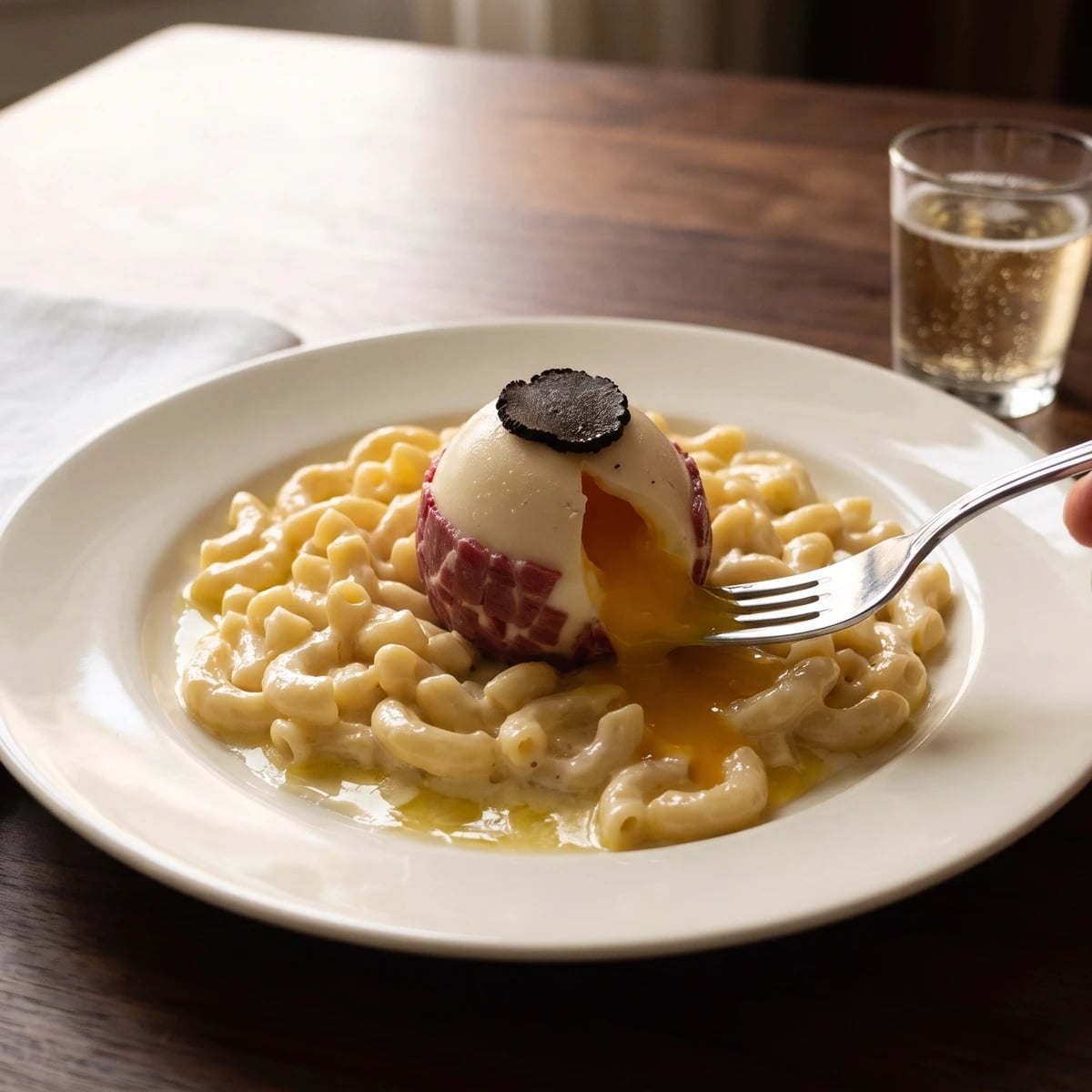
Moulded Eggs Palermitaine
Created by Chef Juliette
Truffle, cured tongue, a softly set egg, and macaroni in cream meet inside a crisp tartlet, a precise lesson in gentle poaching and confident unmoulding for the special-occasion table.
Œufs moulés à la palermitaine (Palermo-style moulded eggs) teaches one precise thing: a buttered mould releases cleanly only when its lining is truly cold. The reward is handsome without fuss, a softly poached egg wearing a black truffle round on its crown and a ruby mosaic of cured tongue at its sides, settled over crisp pastry and macaroni glazed with cream.
The original entry assumes a brigade's quiet abundance: Baba-moulds (small, tapered cylindrical moulds) bedded in ice, baked tartlet crusts at one station, and macaroni with cream ready at another. At home, four metal dariole moulds stand in for Baba-moulds because their taper releases the eggs in the same way, the refrigerator replaces the ice bed, and a low oven steadies the bain-marie (hot-water bath) while pastry and macaroni are made in sequence. The ice bed and extra hands were scaffolding. The truffle base, tongue fixed in butter, gentle bain-marie, crisp tartlet, and creamed macaroni are the dish, so all of them stay.
Work in that order and this becomes one cook, one stove, one evening. Press the truffle and tongue into softened butter, then chill until a fingertip leaves no mark before you crack in the eggs. That firm, cold lining is the one step that matters most; if it is soft, the pattern slides away before the water ever warms.
Ingredients
all-purpose flour
Quantity
1 cup (125 g)
fine salt
Quantity
2½ teaspoons (15 g), divided
cold unsalted butter for the pastry
Quantity
4½ tablespoons (65 g)
diced
| Ingredient | Quantity |
|---|---|
| all-purpose flour | 1 cup (125 g) |
| fine salt | 2½ teaspoons (15 g), divided |
| cold unsalted butter for the pastrydiced | 4½ tablespoons (65 g) |
Where cooking meets culture.
Culinary guides, cultural storytelling, and the editorial depth that makes cooking meaningful.
Discover Culinary Explorer