Culinary Explorer
A cooking platform built around craft, culture, and the stories behind what we eat.
Moulded Eggs à la Carignan
Created by Chef Juliette
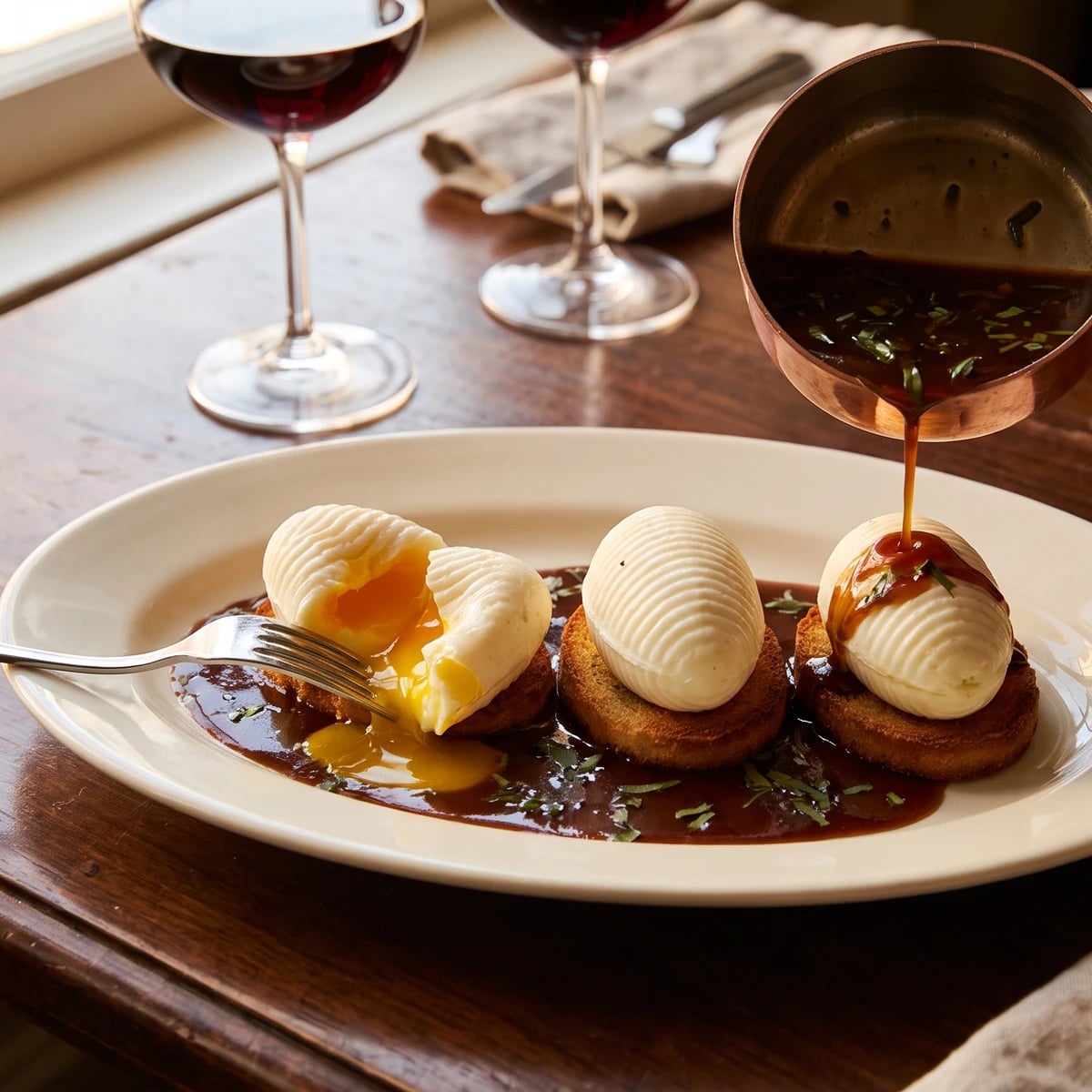
Shell-moulded eggs teach the gentleness of the bain-marie: a tender yolk held in fine chicken forcemeat, turned onto butter-fried toast, then covered with glossy Châteaubriand sauce.
Œufs moulés à la Carignan (shell-moulded eggs with chicken forcemeat and Châteaubriand sauce) teach one precise lesson: gentle heat must set three textures at once. The forcemeat must cook through, the white must turn tender and opaque, and the yolk must remain yielding. Before touching a pan, know this: the bain-marie, a hot-water bath, must quiver, never boil.
The original assumed a saucier on staff, a stock never off the fire, fine poultry forcemeat waiting in the cold, and trays of narrow scallop-shell Madeleine-moulds. At home, a small processor makes the forcemeat, gelatin-rich stock reduces into the sauce foundation, and four large shell moulds or oval metal ramekins replace the brigade tray. The production volume and holding pots were scaffolding, so they go. The thin lining, gentle poach, matching butter-fried toast, and sauce Châteaubriand are the dish, so they stay. One cook, one stove, one evening.
Turned out properly, each egg keeps the ridges of its mould and sits proudly on a crisp golden croûton, with mahogany sauce gleaming over the pale shell and soft yolk. Cooking well is not cooking fancy. Watch the water, not the clock: the quiet bain-marie decides the dish.
Ingredients
boneless, skinless chicken breast
Quantity
3½ ounces (100 g)
very cold and diced
liquid egg white
Quantity
1 tablespoon (15 ml / 15 g)
very cold
heavy cream
Quantity
2 tablespoons (30 ml / 30 g)
very cold, with 1 teaspoon reserved
| Ingredient | Quantity |
|---|---|
| boneless, skinless chicken breastvery cold and diced | 3½ ounces (100 g) |
| liquid egg whitevery cold | 1 tablespoon (15 ml / 15 g) |
| heavy creamvery cold, with 1 teaspoon reserved | 2 tablespoons (30 ml / 30 g) |
Where cooking meets culture.
Culinary guides, cultural storytelling, and the editorial depth that makes cooking meaningful.
Discover Culinary Explorer