
Chef Juliette
Smelt (Éperlans)
Tiny éperlans, lightly floured and fried until their tails stand crisp, arrive in a generous heap on a napkin with fried parsley and grooved lemon, a weeknight lesson in heat and restraint.
A cooking platform built around craft, culture, and the stories behind what we eat.

Created by Chef Juliette
Based on No. 390, Mock Tomatoes, from Le Guide Culinaire (1907) by Auguste Escoffier
A cold-table trompe-l’œil of walnut-sized tomatoes, peeled to silk, lightly pressed, marinated, and dressed with parsley stalks and piped green-butter leaves to look freshly plucked from the vine.
Tomates en trompe-l’œil (mock tomatoes) teach restraint. The illusion survives only if you remove a little moisture without bruising the fruit: peel cleanly, press gently, and give the marinade half an hour to season the surface while the centre stays fresh.
The classical cold station assumed a garde-manger with finished Cooked Marinade for Venison (No. 168), green butter ready for the piping bag, fine linen, and enough hands to dress whole trays. Here we make twelve, loosen the skins with a brief blanch, use a clean tea towel for the linen, and pipe the leaves from a small parchment cornet. The large batch and dedicated cold station were brigade scaffolding, so they go. The careful pressing, thirty-minute marinade, parsley stalk, and butter leaves are the dish, so they stay. One cook, one stove, one evening.
Finished properly, each tomato is satiny red and lightly glossy, with a green stalk and tiny leaves firm enough to hold their shape. The pressing decides everything: use cupped fingers and stop as soon as the towel takes up the surface juice. You are shaping the tomato, not crushing it.
Tomates en trompe-l’œil belong to the classical French cold-table repertoire associated with Parisian grand-house and hotel kitchens, where the garde-manger turned simple hors-d’œuvre into small visual jokes. The surprise is that nothing else pretends to be a tomato; a real peeled tomato is pressed, seasoned, and rebuilt as an idealized fruit on the vine. Parsley stalks and beurre vert carried the illusion from pantry work to the formal buffet without changing the tomato underneath.
Quantity
14 (about 12 oz / 350 g total)
each roughly the size of a walnut
Quantity
⅓ cup (80 ml / 80 g) Cooked Marinade for Venison (No. 168)
fully chilled
Quantity
1 tablespoon (15 ml / 14 g)
Quantity
2 teaspoons (10 ml / 10 g)
Quantity
2 loosely packed cups (475 ml / 55 g)
leaves separated and 12 sturdy stalk tips reserved
Quantity
6 tablespoons (90 ml / 85 g)
softened but cool
Quantity
⅛ teaspoon (0.6 ml / 0.7 g)
| Ingredient | Quantity |
|---|---|
| small ripe cocktail tomatoeseach roughly the size of a walnut | 14 (about 12 oz / 350 g total) |
| Cooked Marinade for Venisonfully chilled | ⅓ cup (80 ml / 80 g) Cooked Marinade for Venison (No. 168) |
| mild olive oil | 1 tablespoon (15 ml / 14 g) |
| white wine vinegar | 2 teaspoons (10 ml / 10 g) |
| flat-leaf parsleyleaves separated and 12 sturdy stalk tips reserved | 2 loosely packed cups (475 ml / 55 g) |
| unsalted buttersoftened but cool | 6 tablespoons (90 ml / 85 g) |
| fine sea salt | ⅛ teaspoon (0.6 ml / 0.7 g) |
Bring a small saucepan of water to the boil and prepare a bowl of iced water. Reserve 12 neat parsley stalk tips, then blanch the leaves for 10 seconds and cool them immediately. Squeeze the leaves in a clean towel until truly dry, chop them finely, and pound or process them to a smooth green paste. Beat this into the softened butter with the salt until the beurre vert, green butter, is evenly coloured. If the butter turns shiny or greasy, it has become too warm; chill it for 5 minutes and beat again. Ça se rattrape.
Bring the saucepan back to a lively boil. Prick the base of each tomato once with the point of a knife, lower three or four at a time into the water for 8 to 12 seconds, then transfer them directly to the iced water. Peel away the loosened skins without cutting into the flesh. If a skin still clings, return that tomato to the hot water for another 5 seconds rather than scraping it. Keep the 12 neatest tomatoes and reserve the spares for another plate.
Lay each peeled tomato in a fold of clean, lint-free linen or a tea towel. Cup it between your fingers and press just until it yields slightly and the cloth absorbs the loose surface juice, keeping the fruit round. This is the principle that decides the dish: too wet and the marinade slides away, too much pressure and the tomato collapses. If one develops a small tear, keep the torn side underneath; if it splits completely, season it for toast and use a spare.
Whisk together the chilled Cooked Marinade for Venison (No. 168), olive oil, and white wine vinegar in a shallow nonreactive dish. Add the pressed tomatoes and turn them carefully to coat. Marinate in the refrigerator for exactly 30 minutes, turning once halfway through. Longer is not better here because the acid eventually softens the flesh; if a tasted tomato seems too sharp, drain the batch at once and roll it in a teaspoon of additional olive oil.
Drain the tomatoes thoroughly and blot their bases so they will sit without sliding. Push one reserved parsley stalk tip gently into the top of each tomato. Fit a small piping bag or parchment cornet with a fine leaf opening, fill it with the beurre vert, and pipe two or three little leaves around every stalk. If the leaves slump, place the filled bag and tomatoes in the refrigerator for 5 minutes, then pipe again once the butter is cool enough to hold a clean ridge.
Arrange the tomates en trompe-l’œil on a chilled platter with a little room between them and refrigerate uncovered for 20 minutes to set the butter leaves. Cover loosely if holding them longer, then serve cold with small forks or cocktail picks. Cooking well is not cooking fancy. À table!
1 serving (about 100g)
Culinary guides, cultural storytelling, and the editorial depth that makes cooking meaningful.
Discover Culinary ExplorerChef Juliette
Tiny éperlans, lightly floured and fried until their tails stand crisp, arrive in a generous heap on a napkin with fried parsley and grooved lemon, a weeknight lesson in heat and restraint.

Chef Juliette
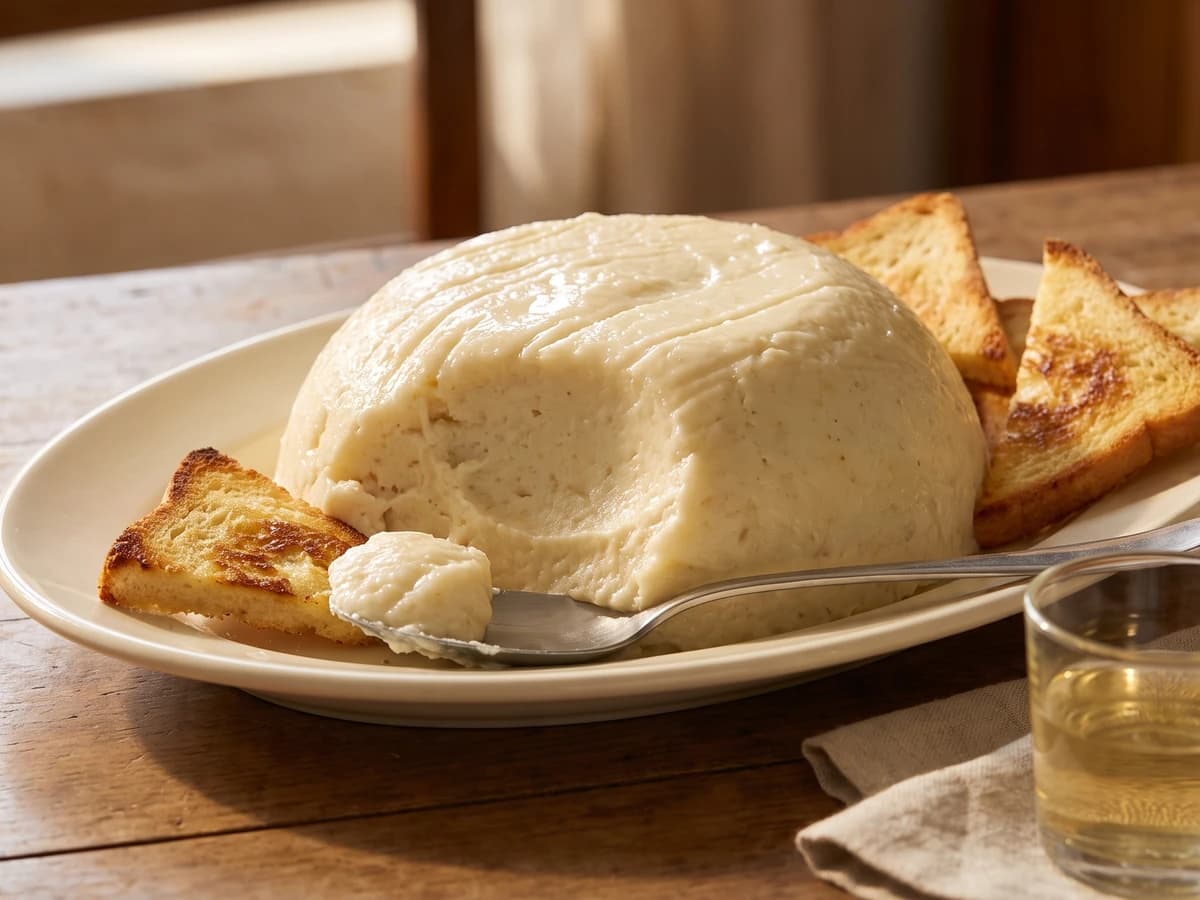
Brandade de Morue turns salt cod, warm olive oil, and milk into a pale, silky emulsion: keep everything warm and add the oil slowly, then crown the generous dome with butter-fried bread.
Chef Juliette
Salt cod worked warm with cream, one patient spoonful at a time, until the rough flakes become a glossy Nîmes paste, domed generously and ringed with butter-fried croutons for the table.

Chef Juliette
Wine-poached char packed in its earthenware crock beneath butter gold: a make-ahead first course that turns careful cooling, thorough boning, and one unbroken seal into quiet abundance.