
Chef Juliette
Smelt (Éperlans)
Tiny éperlans, lightly floured and fried until their tails stand crisp, arrive in a generous heap on a napkin with fried parsley and grooved lemon, a weeknight lesson in heat and restraint.
A cooking platform built around craft, culture, and the stories behind what we eat.
Created by Chef Juliette
Based on No. 374, Lark Pâte, from Le Guide Culinaire (1907) by Auguste Escoffier
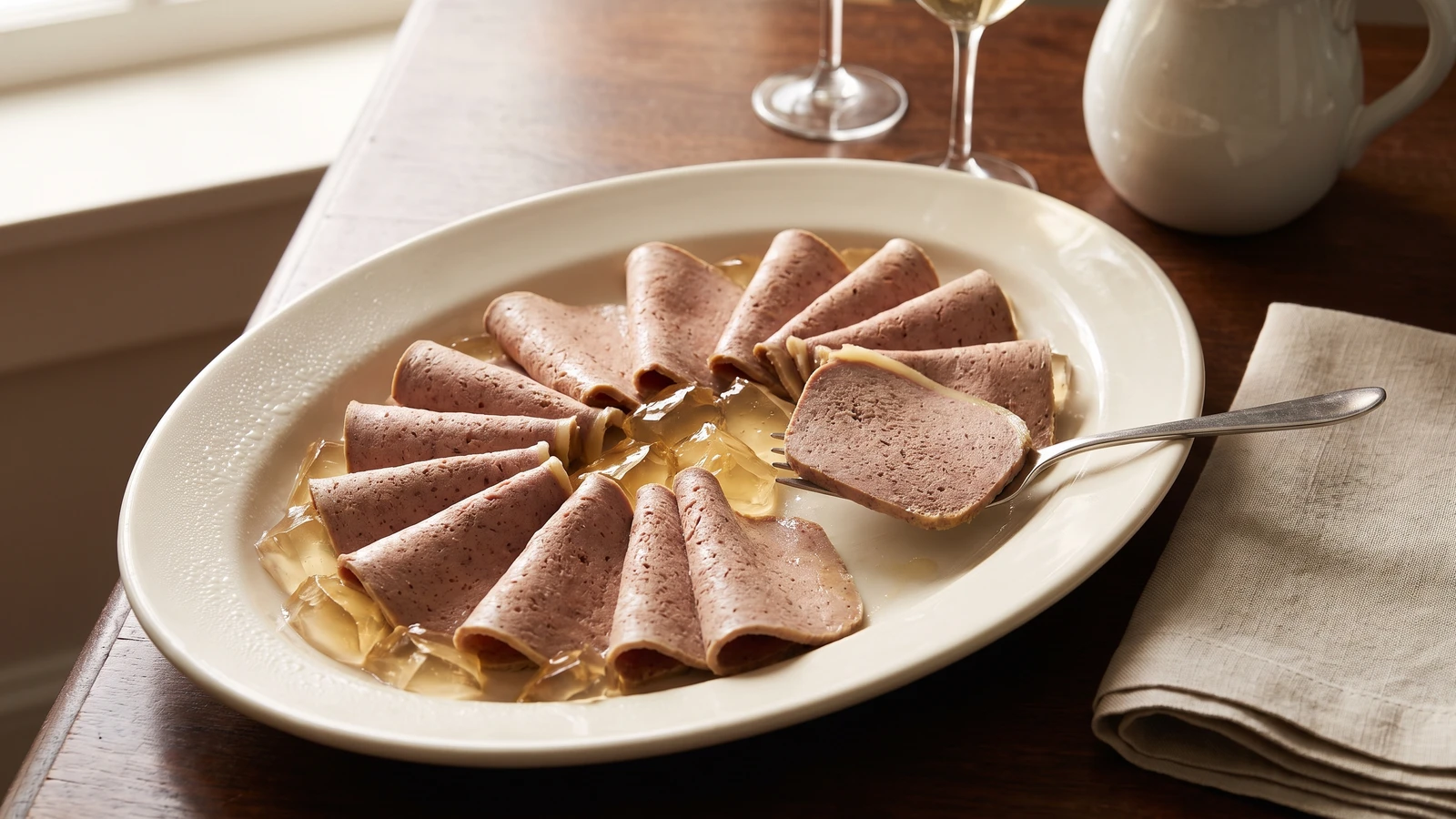
Ready-made pâté d’alouettes, chilled until firm, turned out, and cut into very thin slices with broken aspic at the center: classical cold-table service reduced to one precise, generous gesture.
Pâté d’Alouettes (lark pâté) teaches the discipline of cold hors-d’œuvre service. The one true thing to know before touching a pan is that you won’t need one: cold is the technique. The pâté must be thoroughly set before the knife enters it, or a fine game forcemeat becomes a soft, untidy paste on the platter.
The original entry assumed a charcutier-made pâté arriving in its pot or crust, a professional larder, and crushed ice always waiting. Your honest equivalent is a legally sold, ready-made pâté, a refrigerator, and a deep bowl of ice water. The brigade’s ice station and repeated service platters were scaffolding and can go; deep chilling, turning out, thin slicing, and the small mound of broken jelly are the dish and must stay. One cook, one stove left cold, one evening.
When it is right, the slices hold close, clean edges while the broken aspic catches the light at their center. The setting decides everything. If the first slice bends or smears, stop. Ça se rattrape: return the pâté to the ice bath until firm, dry it well, and begin again with a clean knife.
Pâté d’alouettes belongs to the small-game charcuterie associated with the Beauce plain around Pithiviers in the Loiret, from which prepared pâtés traveled to Parisian cold hors-d’œuvre tables in pots and pastry crusts. Its classical entry is not a formula for making forcemeat, but a service instruction for handling a finished charcutier’s specialty. It should not be confused with the Provençal alouettes sans tête, beef rolls whose name is figurative; this pâté was made from the game bird itself.
Quantity
1 pot or pastry-crusted pâté, 7 ounces (200 g)
unopened and well chilled
Quantity
½ cup (120 ml / 120 g)
chilled until firm
Quantity
6 cups (1.4 L / about 1.3 kg)
Quantity
2 cups (475 ml / 475 g)
| Ingredient | Quantity |
|---|---|
| commercially prepared, legally sold Pâté d’Alouettesunopened and well chilled | 1 pot or pastry-crusted pâté, 7 ounces (200 g) |
| prepared clear aspic jellychilled until firm | ½ cup (120 ml / 120 g) |
| ice cubes | 6 cups (1.4 L / about 1.3 kg) |
| cold water | 2 cups (475 ml / 475 g) |
Refrigerate the unopened pâté for at least 4 hours, until thoroughly cold. Keep a pâté en croûte in its retail mold or wrapping so the crust remains supported. This first chilling cools the center evenly; the ice bath that follows gives it the firmness required for very thin slicing.
Combine the ice cubes and cold water in a deep bowl. Place a sealed pot in the bath with the water coming almost to its rim, never over it. If the pâté is in pastry, enclose the wrapped pâté in a watertight bag, press out the air, and nestle it into the ice for 25 to 30 minutes. Water must not touch the pâté or its crust.
While the pâté sets, use a fork to break the firm aspic into small, irregular pieces. Do not mince it or cut it into formal cubes; broken jelly should catch the light in loose facets. Return it to the refrigerator while you unmold and slice the pâté.
Dry the container completely. For a potted pâté, run a thin knife once around the edge, place a chilled board over the pot, and invert them together. If it sticks, don’t pry it apart. Ça se rattrape: wrap the outside of the pot in a warm damp cloth for 5 seconds, then invert it again. For pâté en croûte, remove only the retail mold and wrapping; the pastry remains part of the pâté.
Use a long, thin-bladed knife dipped briefly in hot water and wiped completely dry. Cut the pâté into small slices about ⅛ inch (3 mm) thick, cleaning and drying the blade between cuts. If a slice bends, drags, or smears, the pâté is too warm. Return the unsliced portion to the ice bath for 10 minutes rather than forcing the knife through it.
Overlap the slices closely around a chilled hors-d’œuvre dish, keeping the arrangement low and generous. Spoon a little broken aspic into the middle, exactly enough to brighten the pâté without burying it. Serve at once, while every slice remains firm and clean. À table!
1 serving (about 80g)
Culinary guides, cultural storytelling, and the editorial depth that makes cooking meaningful.
Discover Culinary ExplorerChef Juliette
Tiny éperlans, lightly floured and fried until their tails stand crisp, arrive in a generous heap on a napkin with fried parsley and grooved lemon, a weeknight lesson in heat and restraint.

Chef Juliette
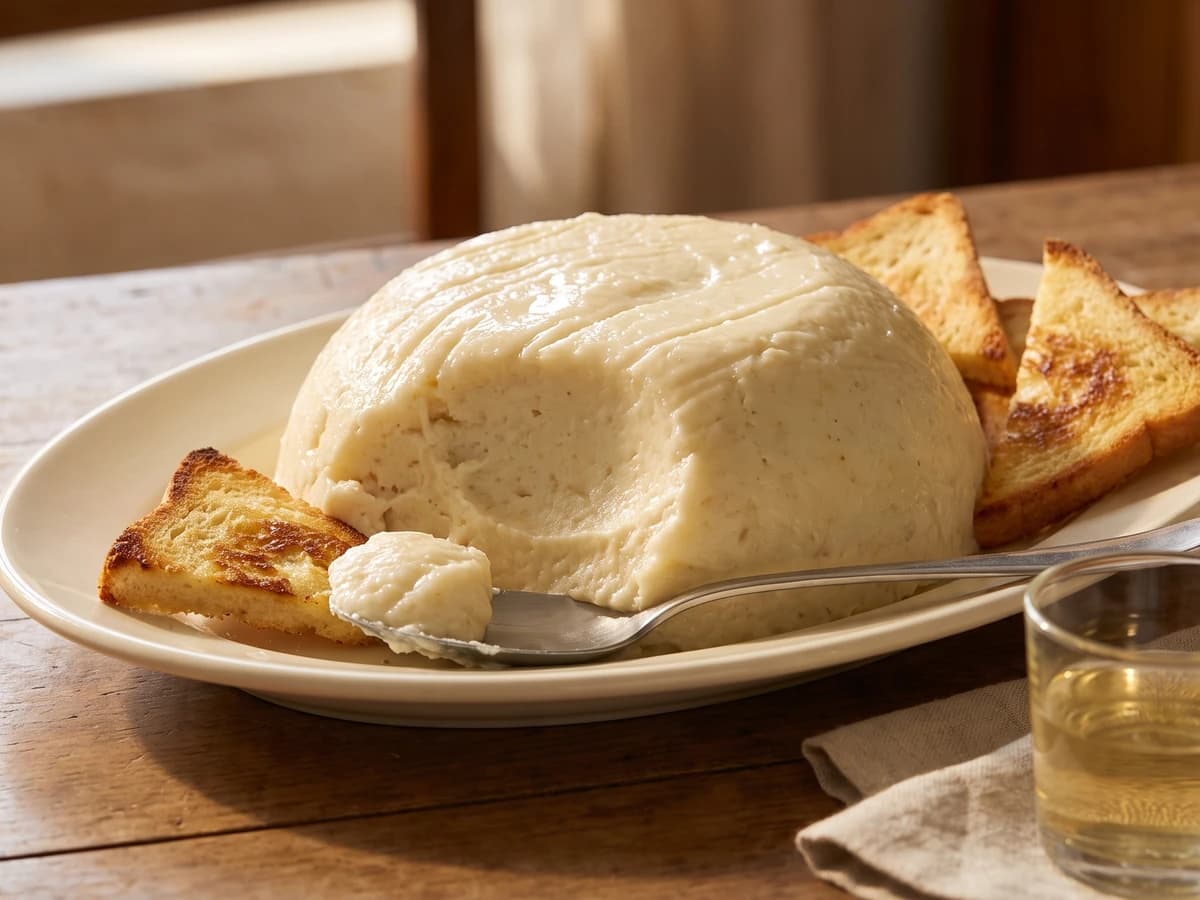
Brandade de Morue turns salt cod, warm olive oil, and milk into a pale, silky emulsion: keep everything warm and add the oil slowly, then crown the generous dome with butter-fried bread.
Chef Juliette
Salt cod worked warm with cream, one patient spoonful at a time, until the rough flakes become a glossy Nîmes paste, domed generously and ringed with butter-fried croutons for the table.

Chef Juliette
Wine-poached char packed in its earthenware crock beneath butter gold: a make-ahead first course that turns careful cooling, thorough boning, and one unbroken seal into quiet abundance.