
Chef Juliette
Smelt (Éperlans)
Tiny éperlans, lightly floured and fried until their tails stand crisp, arrive in a generous heap on a napkin with fried parsley and grooved lemon, a weeknight lesson in heat and restraint.
A cooking platform built around craft, culture, and the stories behind what we eat.

Created by Chef Juliette
Based on No. 357, Herrings with French Beans, from Le Guide Culinaire (1907) by Auguste Escoffier
Very cold new-season herring, skinned and bright with parsley, beside firm haricots verts carrying melted butter. The clean shock of cold fish and hot beans makes this spare hors-d’œuvre sing.
Harengs aux haricots verts (salted herrings with French beans) teaches temperature contrast as surely as a sauce teaches reduction. The herring must be thoroughly cold, the beans tender-firm and hot beneath fresh butter. Blur that line and the dish goes flat. Keep it, and four ingredients make a vivid hors-d’œuvre.
The old entry assumed that the first lightly cured herring of early autumn could travel directly from Dutch hands to a staffed cold larder, while a separate vegetable cook timed the beans. This preparation never needed a saucier, a stockpot, or a salamander; the brigade scaffolding was only division of labor, and that can go. Buy commercially cured young herring from a trusted fishmonger, chill the serving platter, and cook the beans last in one saucepan. The service is scaled to two whole herrings and four guests, while the seasoning, sequence, and contrast remain untouched: one cook, one stove, one evening.
The one step that matters most is timing. Skin and parsley the herring before the beans enter the water, then let nothing delay the journey from drained saucepan to butter, bowl, and table.
Harengs aux haricots verts belongs to the classical French hors-d’œuvre table, but its prized early-season fish came from Dutch North Sea curing, where lightly salted young herring was valued for its delicate flesh and brief keeping life. French service paired that cold richness with haricots verts, whose buttered warmth made the preserved fish seem fresher and rounder. The old argument survives in the service itself: the beans may be dressed cold as a salad, but this preparation insists upon hot buttered beans beside very cold herring.
Quantity
2 whole (about 14 oz / 400 g total)
dressed, skin on, and very cold
Quantity
4½ cups (1.1 L / 400 g)
topped and tailed
Quantity
3 tablespoons (45 ml / 12 g)
finely chopped
Quantity
3 tablespoons (45 ml / 42 g)
Quantity
3 quarts (2.8 L / 2.8 kg)
Quantity
1 tablespoon (15 ml / 18 g)
| Ingredient | Quantity |
|---|---|
| commercially prepared lightly salt-cured and marinated young herringsdressed, skin on, and very cold | 2 whole (about 14 oz / 400 g total) |
| slender French beans (haricots verts)topped and tailed | 4½ cups (1.1 L / 400 g) |
| flat-leaf parsley leavesfinely chopped | 3 tablespoons (45 ml / 12 g) |
| unsalted butter | 3 tablespoons (45 ml / 42 g) |
| water | 3 quarts (2.8 L / 2.8 kg) |
| fine sea salt | 1 tablespoon (15 ml / 18 g) |
Put an oval serving platter and four appetizer plates in the refrigerator for at least twenty minutes. Set a clean serving bowl beside the stove and warm it with hot tap water just before the beans are ready, then dry it thoroughly. Bring the measured water to a full boil in a wide saucepan while you prepare the herring.
Work on a chilled board. Starting at the cut head end, loosen a corner of skin with a small knife, grip it through a piece of kitchen paper, and pull steadily toward the tail. Open each dressed herring and, if it remains on the bone, lift the two fillets cleanly from the backbone and remove any visible pin bones. If the skin tears, don't dig into the flesh; chill the fish for five minutes, dry the loose edge, and begin again with the paper for grip. Arrange the fillets whole on the cold platter, scatter the chopped parsley lightly over them, cover, and return them to the refrigerator.
Add the salt to the boiling water, then drop in the haricots verts. Cook uncovered at a lively boil for four to six minutes, depending on their thickness, until brilliant green and cooked through but still somewhat firm. A bean should bend and then part cleanly under the teeth, with no raw squeak. Do not cool them in water; cold beans would undo the dish. If the fish platter is not ready, drain the beans anyway and hold them in the dry covered saucepan for no more than three minutes.
Drain the beans very thoroughly, shake the colander twice, and return them to the dry hot saucepan off the heat. Add the butter and toss until every bean carries a clear golden sheen. If the butter gathers into a watery puddle, ça se rattrape: lift out the beans, boil the liquid for fifteen to twenty seconds to drive off the water, remove the pan from the heat, and return the beans for one final toss. Transfer them immediately to the warm, dry serving bowl.
Bring the very cold platter of parsleyed herring and the bowl of hot buttered beans to the table together, keeping them in their separate dishes as the preparation requires. Give each guest a portion of herring and beans so the first bite catches both temperatures. Add no lemon, vinaigrette, or decorative garnish; cold fish, warm beans, parsley, and real butter are the whole grammar. À table!
1 serving (about 215g)
Culinary guides, cultural storytelling, and the editorial depth that makes cooking meaningful.
Discover Culinary ExplorerChef Juliette
Tiny éperlans, lightly floured and fried until their tails stand crisp, arrive in a generous heap on a napkin with fried parsley and grooved lemon, a weeknight lesson in heat and restraint.

Chef Juliette
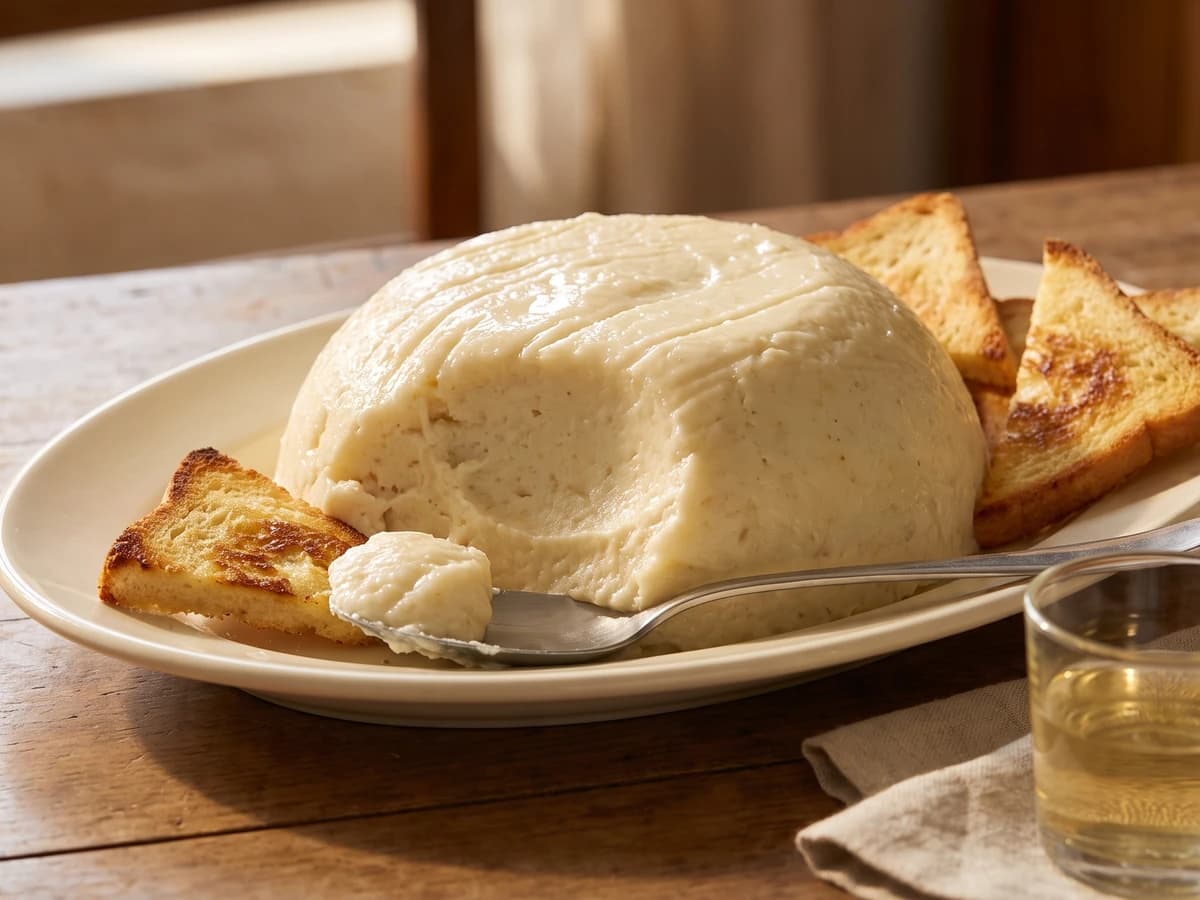
Brandade de Morue turns salt cod, warm olive oil, and milk into a pale, silky emulsion: keep everything warm and add the oil slowly, then crown the generous dome with butter-fried bread.
Chef Juliette
Salt cod worked warm with cream, one patient spoonful at a time, until the rough flakes become a glossy Nîmes paste, domed generously and ringed with butter-fried croutons for the table.

Chef Juliette
Wine-poached char packed in its earthenware crock beneath butter gold: a make-ahead first course that turns careful cooling, thorough boning, and one unbroken seal into quiet abundance.