
Chef Juliette
Smelt (Éperlans)
Tiny éperlans, lightly floured and fried until their tails stand crisp, arrive in a generous heap on a napkin with fried parsley and grooved lemon, a weeknight lesson in heat and restraint.
A cooking platform built around craft, culture, and the stories behind what we eat.

Created by Chef Juliette
Based on No. 339, Duchesses à la Reine, from Le Guide Culinaire (1907) by Auguste Escoffier
Duchesses à la Reine turn three exact textures into one generous bite: dry little choux, a white creamed poultry purée, and clear jelly holding a dark crown of black truffle.
Duchesses à la Reine (little Choux filled with creamed poultry purée) teach one precise lesson: control the moisture. The shells must be baked thoroughly dry, the filling cold and supple, and the gelée, a savory poultry jelly, cool enough to coat without soaking the pastry. White within, dark on top, each bite should yield through a glossy jelly cap into smooth poultry cream while the Choux still has structure.
The source formula assumed pastry cooks turning out trays of Choux, a saucier on staff, cooked fowl ready in the cold pantry, and a stock never off the fire for clear jelly. A salamander has no part in this cold finish; nothing is browned after the shells leave the oven. At home, we make twenty-four, use plainly cooked chicken or guinea hen, replace a separately clarified stockpot jelly with good clear poultry broth strengthened by gelatin, and use a processor before the traditional sieve. The brigade staging is scaffolding and can go. The dry shell, silken purée, clear gelée, and black truffle are the dish, and they stay.
The one step that decides the finish is cooling the gelée until it falls from the brush like light syrup. Too warm and the Choux drinks it; too cold and it lands in lumps. Catch it at that glossy, slightly tacky moment and the truffle will cling exactly where it belongs. One cook, one stove, one evening.
Duchesses à la Reine sit in the Parisian classical repertoire of petits hors-d'oeuvre, where baked Choux served as tidy edible cases for pale poultry purées and gelée supplied both protection and shine. À la reine is not a regional larder marker; in this family of dishes it signals delicate creamed poultry finished with truffle, a grand-kitchen pattern that traveled naturally to the bourgeois dinner table. These duchesses should not be confused with pommes duchesse: they are little pastries, white within and black-crowned.
Quantity
1/2 cup (120 ml / 120 g)
Quantity
4 tablespoons (60 ml / 56 g)
cut into small pieces
Quantity
1/4 teaspoon (1.25 ml / 1.5 g)
Quantity
1/2 cup (120 ml / 65 g)
Quantity
2
beaten separately, with the second used as needed
Quantity
2 packed cups (475 ml / 280 g)
skin and sinew removed and finely diced
Quantity
1/2 cup (120 ml / 120 g)
divided
Quantity
1/2 teaspoon (2.5 ml / 3 g)
Quantity
1/8 teaspoon (0.6 ml / 0.3 g)
Quantity
3/4 cup (180 ml / 180 g)
Quantity
1 1/2 teaspoons (7.5 ml / 4.5 g)
Quantity
1 small truffle (about 1 oz / 28 g, drained if preserved)
very finely chopped
| Ingredient | Quantity |
|---|---|
| water | 1/2 cup (120 ml / 120 g) |
| unsalted buttercut into small pieces | 4 tablespoons (60 ml / 56 g) |
| fine salt for the Choux | 1/4 teaspoon (1.25 ml / 1.5 g) |
| all-purpose flour | 1/2 cup (120 ml / 65 g) |
| large eggsbeaten separately, with the second used as needed | 2 |
| cooked chicken or guinea hen meatskin and sinew removed and finely diced | 2 packed cups (475 ml / 280 g) |
| cold heavy creamdivided | 1/2 cup (120 ml / 120 g) |
| fine salt for the poultry purée | 1/2 teaspoon (2.5 ml / 3 g) |
| ground white pepper | 1/8 teaspoon (0.6 ml / 0.3 g) |
| clear low-sodium chicken broth | 3/4 cup (180 ml / 180 g) |
| unflavored powdered gelatin | 1 1/2 teaspoons (7.5 ml / 4.5 g) |
| very black fresh or preserved black trufflevery finely chopped | 1 small truffle (about 1 oz / 28 g, drained if preserved) |
Heat the oven to 425°F (220°C) and line a baking sheet with parchment. Bring the water, butter, and salt to a full boil in a small heavy saucepan, making certain the butter has melted before the water boils away. Take the pan off the heat, add the flour all at once, and beat firmly with a wooden spoon until no dry flour remains. Return it to medium heat and work the paste for 2 to 3 minutes, until it gathers into a smooth ball and leaves a thin film across the pan floor. This drying matters: a wet paste spreads instead of rising.
Let the paste cool for 3 minutes, then beat in the first egg until the mixture becomes smooth again. Add the second beaten egg a spoonful at a time, stopping when the paste is glossy and falls from the spoon in a heavy V; depending on the flour and the size of the eggs, a little may remain. Pipe twenty-four rounds about 1 1/4 inches (3 cm) wide, leaving space between them, and flatten pointed tops with a damp fingertip. Bake for 10 minutes, lower the oven to 375°F (190°C), and continue for 15 to 18 minutes without opening the door, until the Choux are deep butter-gold and feel light. Pierce each underneath, turn off the oven, and return them for 8 minutes with the door slightly ajar. Cool completely. If a shell softens, ça se rattrape: bake it again at 300°F (150°C) for 6 to 8 minutes, then cool before filling.
Put 1/4 cup (60 ml / 60 g) of the cold chicken broth in a small bowl and sprinkle the gelatin evenly over it. Leave it for 5 minutes to bloom. Heat the remaining broth just until small bubbles gather at the edge, then remove it from the heat and stir in the bloomed gelatin until completely dissolved. Strain into a shallow bowl, taste for salt, and set the bowl over ice, stirring occasionally, until the gelée is clear, glossy, and the consistency of light syrup. If it sets before you need it, warm the bowl gently over barely warm water; if it remains watery, return it to the ice. Ça se rattrape.
Process the cooked poultry with 1/4 cup (60 ml / 60 g) of the cold cream, the salt, and white pepper until very smooth, stopping to scrape the bowl several times. Force the mixture through a fine-mesh sieve with a flexible scraper; the processor replaces the old mortar, but the sieve stays because the white, silken texture is part of the dish. Whip the remaining cream only until it holds soft folds, then fold it into the poultry purée. The finished purée should hold from a piping bag without feeling stiff. If it crumbles, work in a teaspoon of cold cream; if it becomes loose, chill it for 15 minutes before filling.
Fit a piping bag with a narrow plain tip and fill it with the cold poultry purée. Enlarge the drying hole beneath each Choux just enough to admit the tip, then pipe until the shell feels generously heavy but has not begun to split. Wipe the bottoms clean and stand the filled duchesses upright. Keep them cold while bringing the gelée to its coating consistency; warm purée or warm jelly will soften the pastry.
Brush each dome with a thin coat of syrupy gelée and wait 2 minutes, then apply a second coat for an even clear gloss. Sprinkle the finely chopped black truffle over the gelée while it is still tacky, pressing nothing down. If the glaze runs into the pastry, it is too warm; chill it over ice for a few minutes and coat again. Refrigerate the finished Duchesses à la Reine for 20 to 30 minutes so the jelly sets, then serve within 2 hours, while the Choux still holds its delicate shell. À table!
1 serving (about 140g)
Culinary guides, cultural storytelling, and the editorial depth that makes cooking meaningful.
Discover Culinary ExplorerChef Juliette
Tiny éperlans, lightly floured and fried until their tails stand crisp, arrive in a generous heap on a napkin with fried parsley and grooved lemon, a weeknight lesson in heat and restraint.

Chef Juliette
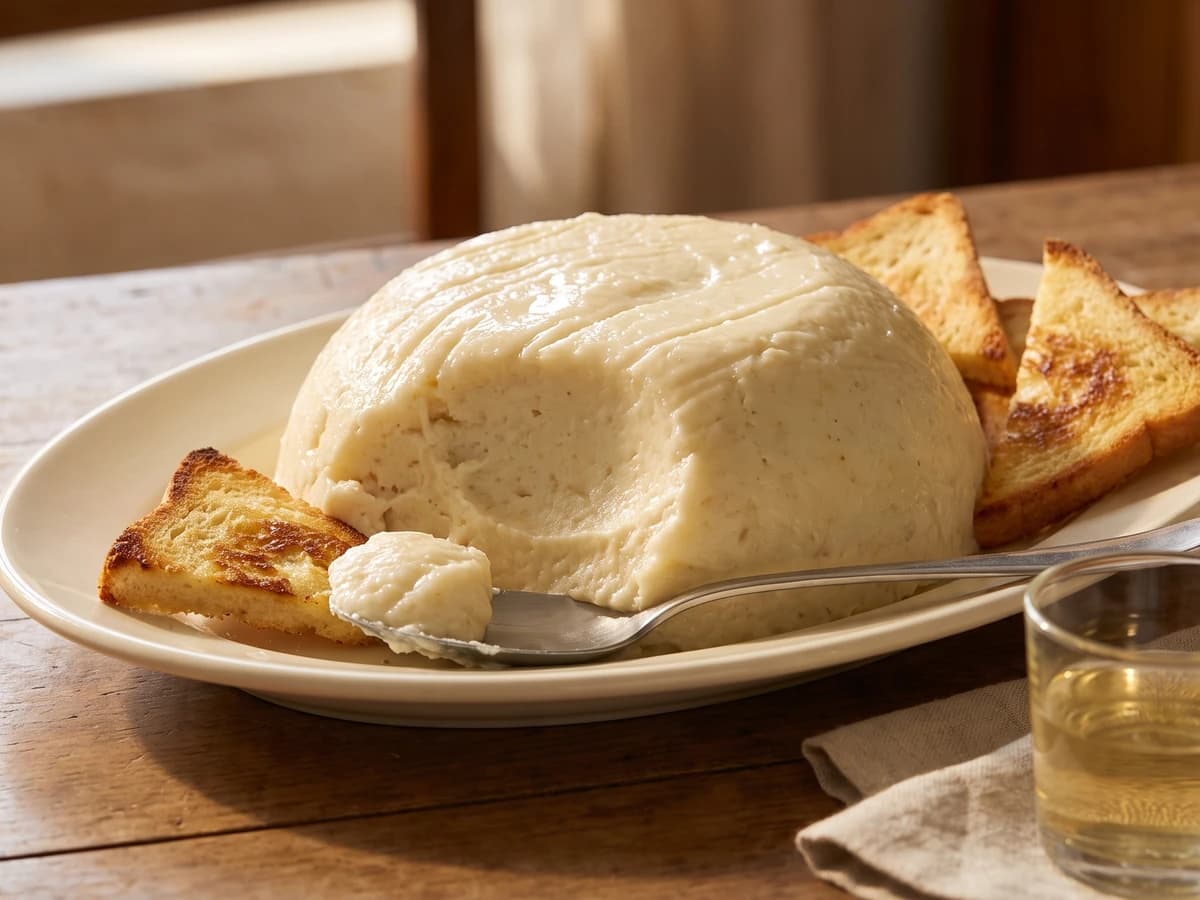
Brandade de Morue turns salt cod, warm olive oil, and milk into a pale, silky emulsion: keep everything warm and add the oil slowly, then crown the generous dome with butter-fried bread.
Chef Juliette
Salt cod worked warm with cream, one patient spoonful at a time, until the rough flakes become a glossy Nîmes paste, domed generously and ringed with butter-fried croutons for the table.

Chef Juliette
Wine-poached char packed in its earthenware crock beneath butter gold: a make-ahead first course that turns careful cooling, thorough boning, and one unbroken seal into quiet abundance.