
Chef Juliette
Smelt (Éperlans)
Tiny éperlans, lightly floured and fried until their tails stand crisp, arrive in a generous heap on a napkin with fried parsley and grooved lemon, a weeknight lesson in heat and restraint.
A cooking platform built around craft, culture, and the stories behind what we eat.
Created by Chef Juliette
Based on No. 325, Various Carolines, from Le Guide Culinaire (1907) by Auguste Escoffier
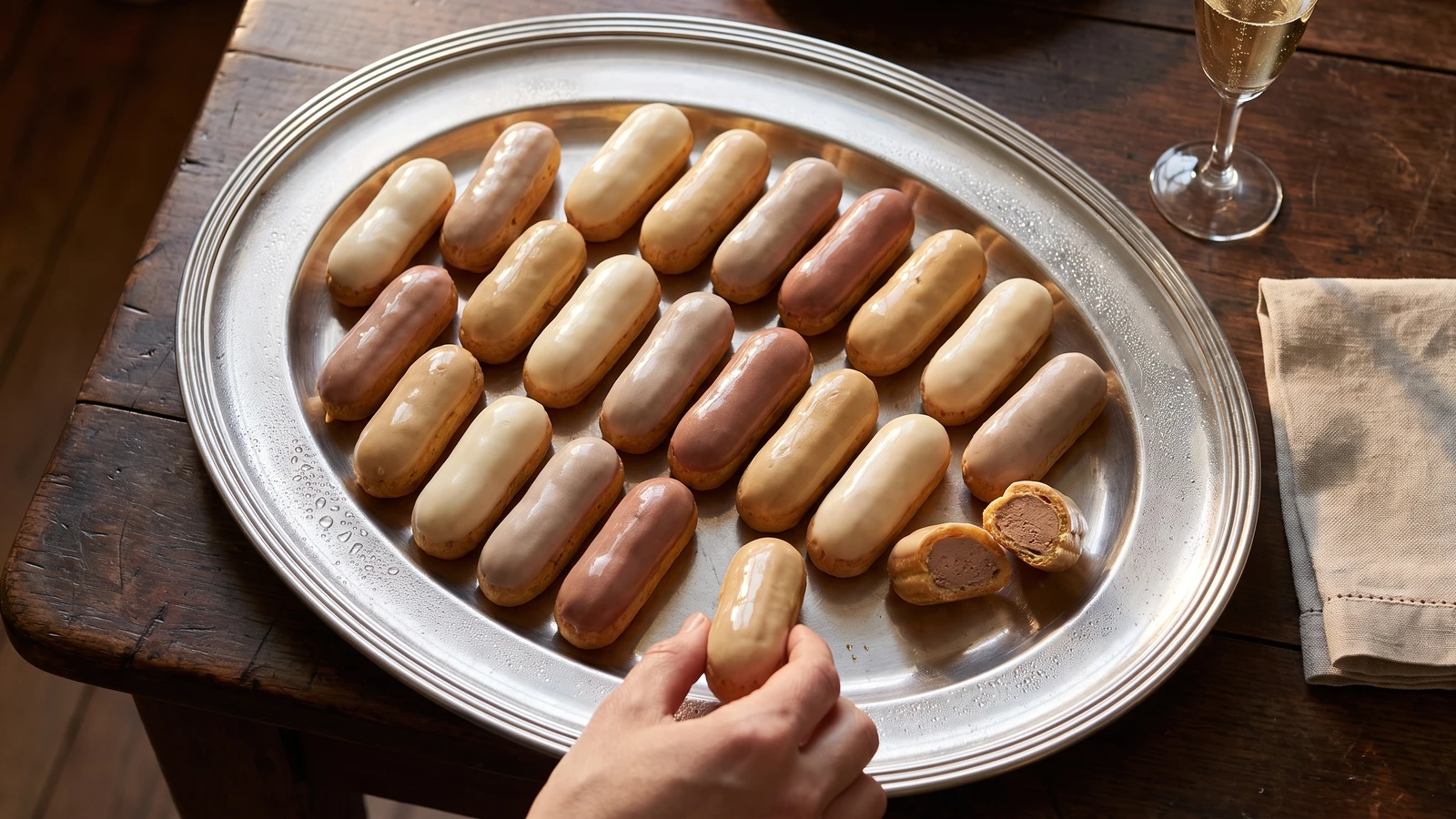
Carolines turn one unsweetened choux batch into four polished savory bites: tongue, chicken, game, and foie gras purées under matching chaud-froid coats, each finished with a clear aspic shine.
Carolines Variées (tiny savory choux éclairs) teach the cold kitchen's most exact lesson: temperature is an ingredient. Their shells must be dry and completely cold, their purées firm enough to pipe, and their chaud-froid, a sauce applied fluid and served set, cool enough to cling without soaking the pastry. Before you touch a pan, know this one true thing: warm components ruin the clean layers.
The original assumed a pastry hand, a saucier on staff, stock never off the fire, trays of prepared jelly, and a cold larder large enough to hold a brigade's work. At home, 300 grams of finished choux paste makes two dozen bites, one small roux-thickened sauce divides into four matching coats, powdered gelatin supplies the controlled set, and the refrigerator replaces the cold room. One cook, one stove, one evening.
Four separate saucepans and hands passing trays between stations were scaffolding, and they can go. The unsweetened shells, smooth savory purées, matching chaud-froid, and final brush of clear jelly are the dish itself, so those stay. Let the baked shells cool absolutely before filling them. That pause decides everything.
Carolines belong to the Parisian grande cuisine repertory of the garde-manger, the cold station responsible for hors d'œuvres, aspics, and decorated buffet pieces. Their éclair shape came from pastry practice, but their purpose was savory: tongue, fowl, game, or foie gras purée was sealed beneath matching chaud-froid and clear jelly. They could stand alone as polished bites or form a border around an aspic, a second use that explains their exact small scale and gleaming finish.
Quantity
1¼ cups (300 ml / 300 g) Ordinary Pâte à Choux (No. 2373)
prepared without the sugar and ready to pipe
Quantity
¼ cup (60 ml / 35 g)
finely chopped
Quantity
¼ cup (60 ml / 35 g)
finely chopped
Quantity
¼ cup (60 ml / 35 g)
finely chopped
Quantity
3 tablespoons (45 ml / 35 g)
diced
Quantity
3 tablespoons (45 ml / 40 g)
divided
Quantity
2 tablespoons (30 ml / 30 g)
divided
Quantity
Up to ½ teaspoon (2.5 ml / 3 g)
divided
Quantity
¼ teaspoon (1.25 ml / 0.5 g)
divided
Quantity
1 teaspoon (5 ml / 3 g)
Quantity
1 tablespoon (15 ml / 15 g)
Quantity
1 tablespoon plus 1 teaspoon (20 ml / 18 g)
Quantity
2 tablespoons plus 1 teaspoon (35 ml / 18 g)
Quantity
1¼ cups (300 ml / 300 g)
divided
Quantity
¼ cup (60 ml / 60 g)
Quantity
⅓ cup (80 ml / 80 g)
melted and cooled until fluid
| Ingredient | Quantity |
|---|---|
| Ordinary Pâte à Chouxprepared without the sugar and ready to pipe | 1¼ cups (300 ml / 300 g) Ordinary Pâte à Choux (No. 2373) |
| cooked beef tonguefinely chopped | ¼ cup (60 ml / 35 g) |
| cooked chicken thighfinely chopped | ¼ cup (60 ml / 35 g) |
| cooked game meat, such as venison or wild duckfinely chopped | ¼ cup (60 ml / 35 g) |
| cooked foie gras terrinediced | 3 tablespoons (45 ml / 35 g) |
| softened unsalted butter, for the puréesdivided | 3 tablespoons (45 ml / 40 g) |
| heavy cream, for the puréesdivided | 2 tablespoons (30 ml / 30 g) |
| fine saltdivided | Up to ½ teaspoon (2.5 ml / 3 g) |
| ground white pepperdivided | ¼ teaspoon (1.25 ml / 0.5 g) |
| powdered gelatin | 1 teaspoon (5 ml / 3 g) |
| cold water | 1 tablespoon (15 ml / 15 g) |
| unsalted butter, for the chaud-froid | 1 tablespoon plus 1 teaspoon (20 ml / 18 g) |
| plain flour | 2 tablespoons plus 1 teaspoon (35 ml / 18 g) |
| rich unsalted chicken stockdivided | 1¼ cups (300 ml / 300 g) |
| heavy cream, for the chaud-froid | ¼ cup (60 ml / 60 g) |
| clear, lightly seasoned aspic jellymelted and cooled until fluid | ⅓ cup (80 ml / 80 g) |
Heat the oven to 400°F (200°C) and line a heavy baking sheet with parchment. Transfer the Ordinary Pâte à Choux (No. 2373), prepared without its sugar, to a piping bag fitted with an 8 mm plain tip. Pipe 24 straight batons, each about 1½ inches (4 cm) long and ⅓ inch (8 mm) wide, leaving room for them to swell. Smooth any pointed tails with a damp fingertip.
Bake for 10 minutes without opening the door, then reduce the oven to 350°F (175°C) and continue for 10 to 12 minutes, until the shells are evenly golden and firm along their sides. Pierce each underside once with a skewer, lower the oven to 300°F (150°C), and dry them for 5 minutes more. Cool completely on a rack. A warm centre softens the filling and melts the coating, so quite cold means quite cold.
Work with one filling at a time, cleaning the processor or mortar between them. Purée the tongue, chicken, game, and foie gras separately, giving each one quarter of the softened butter and cream. Season each cautiously with salt and white pepper, remembering that tongue and foie gras may already be well seasoned. Pass each purée through a fine sieve, then reserve 1 teaspoon of every flavor in its own labeled bowl for the matching chaud-froid. Chill the remaining purées for 20 minutes. If one seems loose, don't add crumbs or flour; chill it until the butter firms. Ça se rattrape.
Make a small opening in the underside of every cold shell. Transfer each purée to a small piping bag and fill six carolines, stopping as soon as the shell feels weighty and the filling reaches the opening. Keep the four flavors in separate rows and maintain that order through coating and service. Overfilling splits the delicate shells and leaves no clean surface for the sauce.
Sprinkle the gelatin over the cold water and leave it to swell. Melt the butter in a small saucepan, stir in the flour, and cook gently for 90 seconds without allowing the roux to color. Gradually whisk in 1 cup (240 ml / 240 g) of the stock, then simmer for 5 to 7 minutes, stirring, until the sauce naps the back of a spoon. Add the cream and simmer for 2 minutes more. Remove from the heat and whisk in the softened gelatin until completely dissolved.
Cool the sauce with frequent stirring until it reaches about 82 to 86°F (28 to 30°C), fluid enough to pour but no longer warm. Divide it equally among the four reserved purées, whisk each smooth, and pass each portion through a clean fine sieve. If a sauce looks greasy or rough after flavoring, whisk in cold reserved stock one teaspoon at a time. If it sets before you can coat, stand the bowl briefly in barely warm water; if it runs like milk, set it over ice and stir. The temperature, not speed, decides this dish.
Place one filled caroline on a small fork over a wire rack and spoon its matching chaud-froid over the top and sides, allowing the excess to fall away. The shell should wear a fine, even coat, not disappear beneath a heavy blanket. Repeat by flavor, cleaning the fork between sauces, then chill the coated carolines for 20 to 30 minutes, until the surface is cold and set.
The melted aspic jelly must be cool and fluid. Brush a whisper-thin layer over each set caroline, using two light strokes rather than one heavy pass. If the brush drags, warm only the cup of jelly in tepid water; if jelly pools beneath the shells, let it cool another minute before continuing. Chill for at least 30 minutes, until the glaze catches the light without feeling sticky.
Arrange the carolines in four loose ranks so guests can distinguish tongue, chicken, game, and foie gras. Take them from the refrigerator 10 minutes before serving, enough to soften the purées without loosening their coats. Serve cold and glossy at the beginning of the meal. À table!
1 serving (about 110g)
Culinary guides, cultural storytelling, and the editorial depth that makes cooking meaningful.
Discover Culinary ExplorerChef Juliette
Tiny éperlans, lightly floured and fried until their tails stand crisp, arrive in a generous heap on a napkin with fried parsley and grooved lemon, a weeknight lesson in heat and restraint.

Chef Juliette
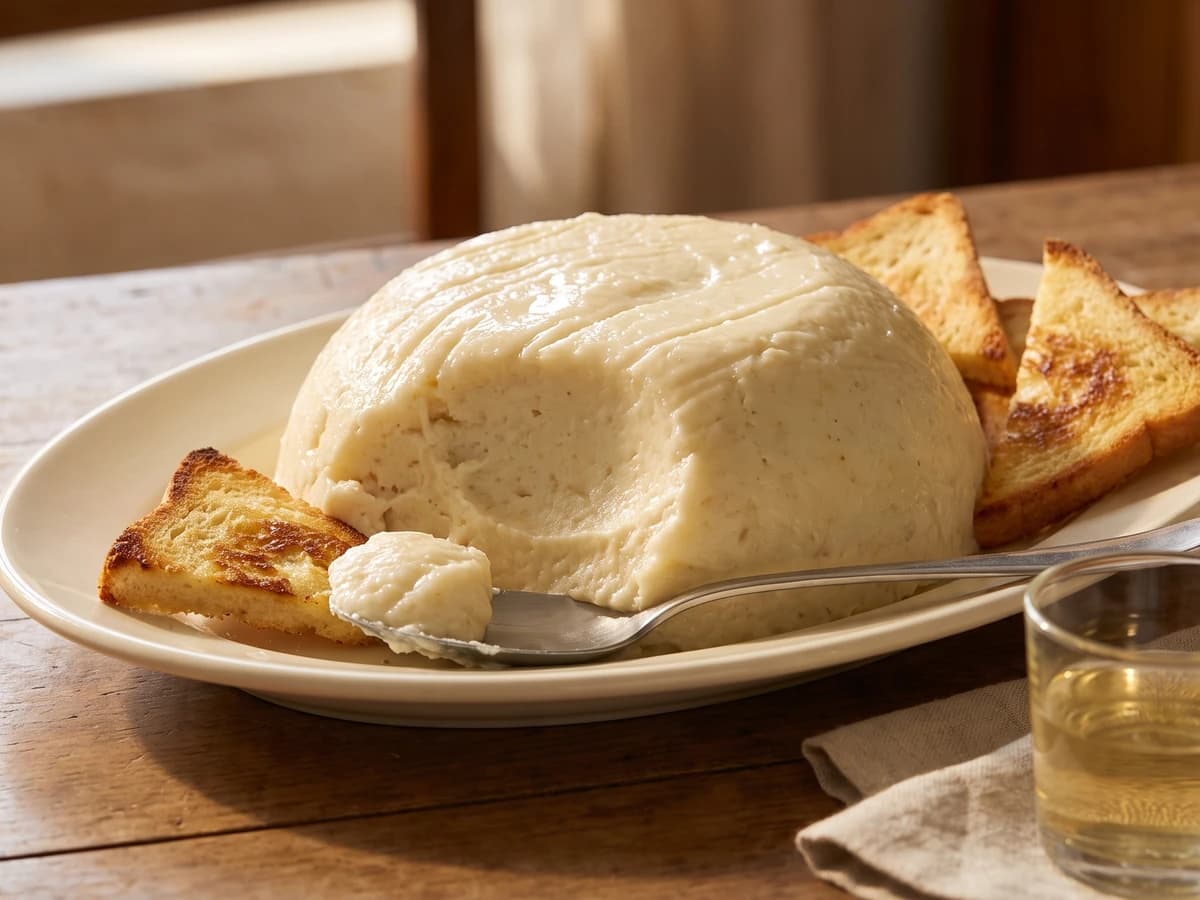
Brandade de Morue turns salt cod, warm olive oil, and milk into a pale, silky emulsion: keep everything warm and add the oil slowly, then crown the generous dome with butter-fried bread.
Chef Juliette
Salt cod worked warm with cream, one patient spoonful at a time, until the rough flakes become a glossy Nîmes paste, domed generously and ringed with butter-fried croutons for the table.

Chef Juliette
Wine-poached char packed in its earthenware crock beneath butter gold: a make-ahead first course that turns careful cooling, thorough boning, and one unbroken seal into quiet abundance.