
Chef Juliette
Smelt (Éperlans)
Tiny éperlans, lightly floured and fried until their tails stand crisp, arrive in a generous heap on a napkin with fried parsley and grooved lemon, a weeknight lesson in heat and restraint.
A cooking platform built around craft, culture, and the stories behind what we eat.

Created by Chef Juliette
Based on No. 318, Caviare Toast, from Le Guide Culinaire (1907) by Auguste Escoffier
A crisp, cool round of toast carries caviare butter, a grooved thread of softened butter, and a cold spoonful of fresh roe: three textures, no clutter, and a lesson in exact temperature.
Toast au Caviar (caviare toast) teaches temperature and proportion. The toast must be crisp and completely cool, the butter soft enough to spread and pipe, and the fresh caviar cold. Put caviar on warm bread and its clean salinity goes dull while the butter slips into the crumb. That is the one true thing to know before touching the pan.
The original entry assumed a garde-manger, the cold-larder station, with beurre de caviar (caviare butter) already prepared, bread rounds cut by the tray, and a fine grooved piping tube waiting. For one cook, one stove, one evening, that becomes twelve small rounds, one fine sieve, and a small piping bag. Brigade production is scaffolding and can go; the round toast, beurre de caviar, grooved butter border, and heap of fresh roe are the dish, so every one stays.
What reaches the table is small but generous: butter-gold toast under a savory veil, an ivory rim with neat ridges, and cool beads of caviar gathered at the center. Cooking well is not cooking fancy. Let every toast become completely cool before any butter touches it, because that pause decides the dish.
Toast au caviar belongs to the Parisian cold table, where French cooks absorbed caviar from Russian table customs and set its salinity against the quiet richness of bread and butter. The layer of caviare butter beneath the fresh roe is not needless repetition: the first carries flavor across every bite, while the center preserves the cool briny pop of the eggs. Its grooved butter border comes from the decorative language of the garde-manger, but it also keeps the loose caviar centered on a hand-held toast.
Quantity
6 thin slices (about 5½ oz / 155 g)
crusts removed
Quantity
5 tablespoons plus 1 teaspoon (80 ml / 75 g)
softened but not greasy, divided
Quantity
5 tablespoons (75 ml / 75 g)
kept chilled, divided
| Ingredient | Quantity |
|---|---|
| pain de miecrusts removed | 6 thin slices (about 5½ oz / 155 g) |
| unsalted cultured buttersoftened but not greasy, divided | 5 tablespoons plus 1 teaspoon (80 ml / 75 g) |
| fresh sturgeon caviarkept chilled, divided | 5 tablespoons (75 ml / 75 g) |
Heat the oven to 350°F (175°C). Cut twelve rounds from the pain de mie with a 2-inch (5 cm) cutter and arrange them on a dry baking sheet. Bake for 8 to 10 minutes, turning once, until crisp through and evenly butter-gold rather than dark at the edges. Transfer them to a wire rack and let them cool completely. If they soften while waiting, return the bare rounds to the oven for 2 minutes, then cool them again before proceeding.
Press 1 tablespoon (15 ml / 15 g) of the caviar through a fine-mesh sieve with a flexible spatula. Work this paste into 3 tablespoons (45 ml / 43 g) of the softened butter until the beurre de caviar is smooth and evenly gray. Stir rather than whip, since trapped air makes the spread coarse. If the butter turns oily, chill it for 5 minutes and stir again until creamy.
Spread the beurre de caviar evenly over the cooled toast rounds, taking it almost to the edge without crushing the crisp surface. Keep the layer thin but complete so every bite carries both butter and caviar. If the spread immediately melts or disappears into the bread, the toast is still warm; scrape the butter back into the bowl, cool the rounds fully, and begin again.
Fit a small piping bag with a fine grooved or open-star tip about ⅛ inch (3 mm) wide. Fill it with the remaining 2 tablespoons plus 1 teaspoon (35 ml / 32 g) softened butter, then pipe a slender ridged ring around the edge of each toast. If the thread cracks, the butter is too cold; warm the filled bag briefly between your palms. If it slumps and loses its grooves, chill the bag for 3 minutes. Ça se rattrape.
Using a small nonreactive spoon, place 1 teaspoon of the remaining chilled caviar in the center of each toast, inside the butter border. Let the eggs mound naturally and do not press or spread them. Arrange the Toasts au Caviar on a chilled platter and serve at once, while the bread is crisp, the butter yielding, and the roe properly cold. À table!
1 serving (about 72g)
Culinary guides, cultural storytelling, and the editorial depth that makes cooking meaningful.
Discover Culinary ExplorerChef Juliette
Tiny éperlans, lightly floured and fried until their tails stand crisp, arrive in a generous heap on a napkin with fried parsley and grooved lemon, a weeknight lesson in heat and restraint.

Chef Juliette
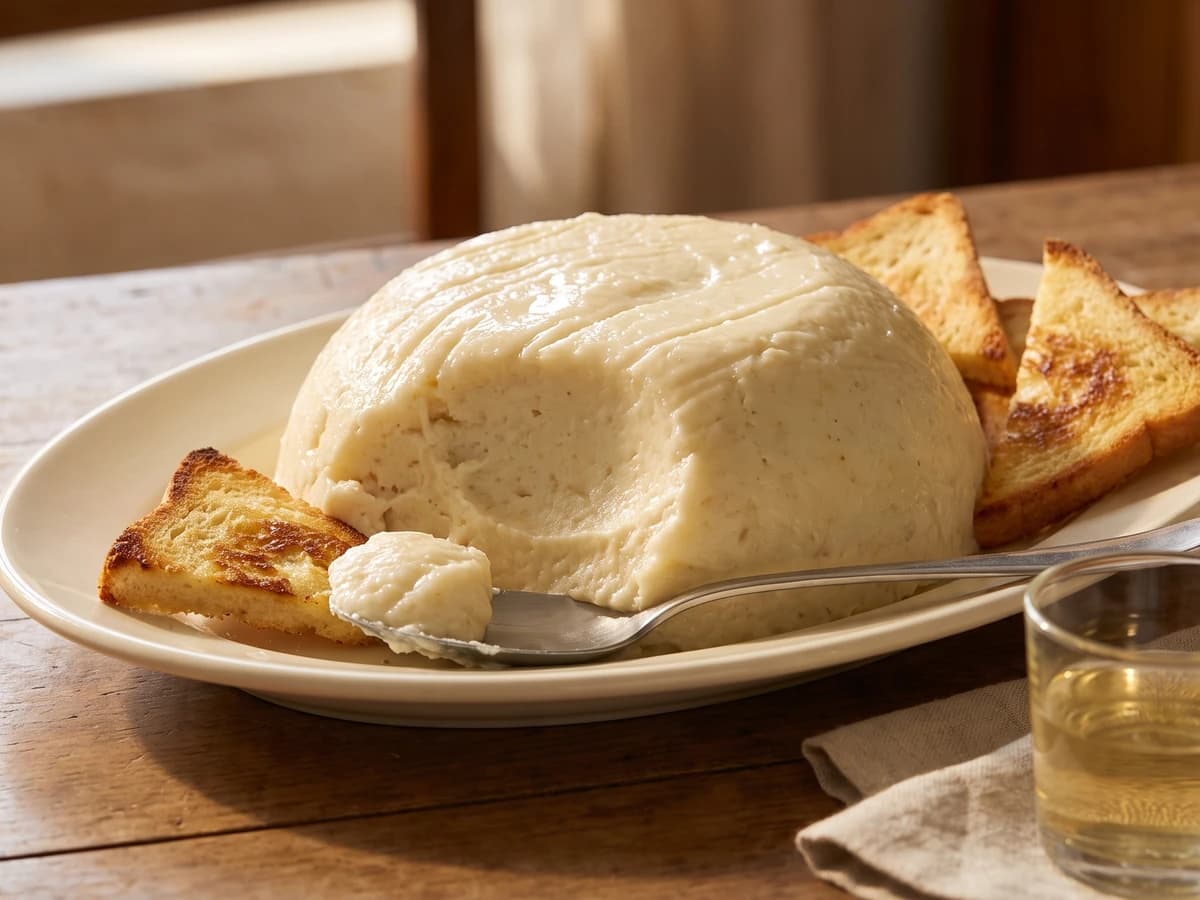
Brandade de Morue turns salt cod, warm olive oil, and milk into a pale, silky emulsion: keep everything warm and add the oil slowly, then crown the generous dome with butter-fried bread.
Chef Juliette
Salt cod worked warm with cream, one patient spoonful at a time, until the rough flakes become a glossy Nîmes paste, domed generously and ringed with butter-fried croutons for the table.

Chef Juliette
Wine-poached char packed in its earthenware crock beneath butter gold: a make-ahead first course that turns careful cooling, thorough boning, and one unbroken seal into quiet abundance.