
Chef Juliette
Smelt (Éperlans)
Tiny éperlans, lightly floured and fried until their tails stand crisp, arrive in a generous heap on a napkin with fried parsley and grooved lemon, a weeknight lesson in heat and restraint.
A cooking platform built around craft, culture, and the stories behind what we eat.

Created by Chef Juliette
Based on No. 307, Norwegian Anchovies or Kilkis, from Le Guide Culinaire (1907) by Auguste Escoffier
Anchois de Norvège ou Kilkis asks for no cooking and no decoration: lay the ready-cured fish in their own liquor, then stop while their briny, silvery character remains clear.
Anchois de Norvège ou Kilkis (ready-cured Norwegian anchovies or kilkis) teaches restraint: the curing liquor is already the dressing. The one true thing to know before touching a pan is that no pan belongs here. Good preserved fish needs neither lemon nor oil to explain itself.
The source entry assumed none of a brigade's scaffolding: no saucier, no stockpot kept on the fire, no salamander. It assumed a provisioner selling the fish fully prepared and a ravier (small hors-d'œuvre dish) waiting for service. The honest home equivalent is one small tin, four modest portions, and a spoonful of that same liquor. Because the source gives no quantity, only the scale has changed. The method and flavor remain exactly where the entry placed them.
The finished dish should be cool, silvery, and lightly glossy, with just enough amber liquor to wet the plate. The only step that matters is lifting the tender fish without stripping away their cure; handle them gently, spoon over their own liquor, and stop.
In the French canon, Anchois de Norvège ou Kilkis belongs to the cold hors-d'œuvre table rather than to a French fishing region. The paired names were commercial ones: the provisioner supplied the small fish already cured and held in their own liquor, so the kitchen's work was selection and service, not cooking. The lack of lemon, herbs, or added oil is deliberate, preserving the flavor established by the cure instead of covering it.
Quantity
1 small tin or jar (about 3¾ oz / 105 g net), with 2 teaspoons to 1 tablespoon (10 to 15 ml / about 10 to 15 g) packing liquor
opened just before serving, liquor reserved
| Ingredient | Quantity |
|---|---|
| ready-cured Norwegian anchovies or Kilkisopened just before serving, liquor reserved | 1 small tin or jar (about 3¾ oz / 105 g net), with 2 teaspoons to 1 tablespoon (10 to 15 ml / about 10 to 15 g) packing liquor |
Set the ravier beside you, then open the tin or jar immediately before serving. Reserve the packing liquor in a small cup rather than pouring it away. The fish should smell clean, saline, and pleasantly cured. If the container is swollen or leaking, or the contents smell sour or rancid, discard them; unsafe preserving cannot be rescued.
Lift the fish one at a time with a small fork or narrow palette knife, letting only the heaviest excess liquor drip away. Lay them in a loose, slightly overlapping row without rinsing, blotting, or pressing them flat; the seasoned surface is the dish. If one breaks, ça se rattrape: nestle the pieces together in its original shape and leave them alone. The liquor will restore their sheen.
Spoon 2 teaspoons (10 ml / about 10 g) of the reserved liquor over and around the fish, adding the remaining teaspoon only if the plate still looks dry. You want a light gloss and a shallow wetting of the ravier, not a deep pool. If you add too much, tilt the dish and lift away the excess with a teaspoon. Add no lemon, herbs, pepper, or oil. Serve at once. À table!
1 serving (about 30g)
Culinary guides, cultural storytelling, and the editorial depth that makes cooking meaningful.
Discover Culinary ExplorerChef Juliette
Tiny éperlans, lightly floured and fried until their tails stand crisp, arrive in a generous heap on a napkin with fried parsley and grooved lemon, a weeknight lesson in heat and restraint.

Chef Juliette
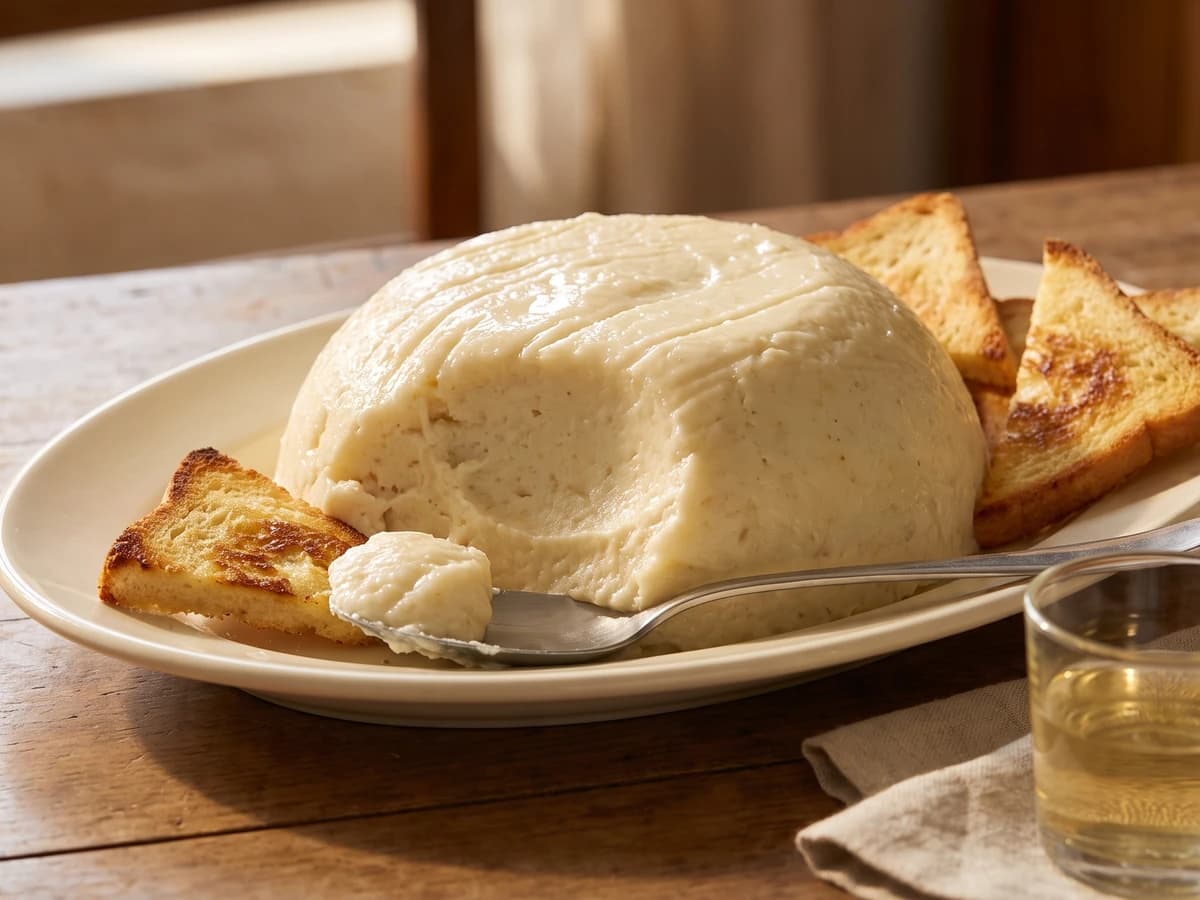
Brandade de Morue turns salt cod, warm olive oil, and milk into a pale, silky emulsion: keep everything warm and add the oil slowly, then crown the generous dome with butter-fried bread.
Chef Juliette
Salt cod worked warm with cream, one patient spoonful at a time, until the rough flakes become a glossy Nîmes paste, domed generously and ringed with butter-fried croutons for the table.

Chef Juliette
Wine-poached char packed in its earthenware crock beneath butter gold: a make-ahead first course that turns careful cooling, thorough boning, and one unbroken seal into quiet abundance.