Culinary Explorer
A cooking platform built around craft, culture, and the stories behind what we eat.
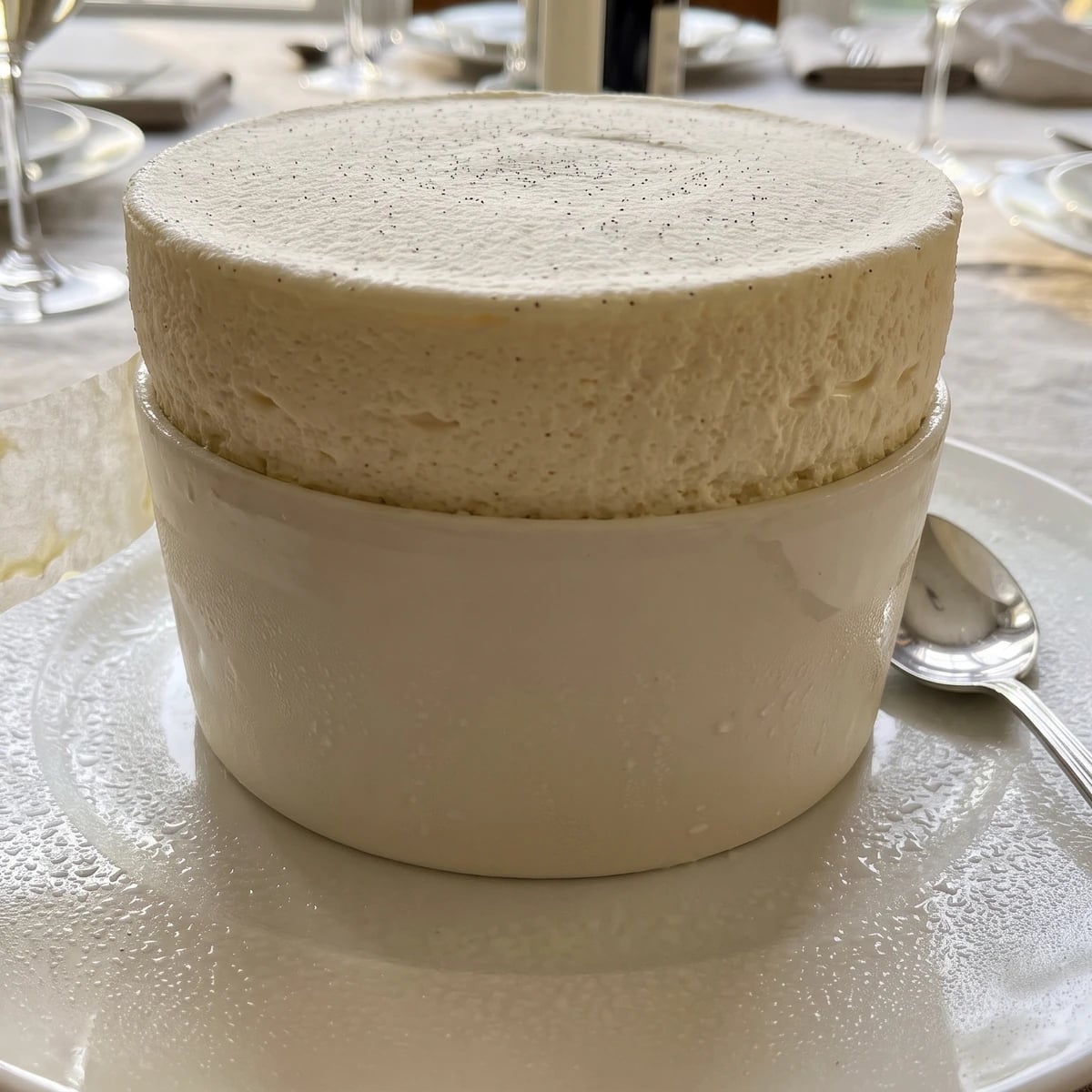
The Moulding of Large and Small Iced Soufflés
Created by Chef Juliette
A buttered paper collar makes the frozen mousse stand above its timbale like a hot soufflé, while a vanilla pâte à bombe and softly whipped cream keep every spoonful light.
Moulage des grands et petits soufflés glacés (the moulding of large and small iced soufflés) teaches that the mould can be part of the recipe. The one true thing to know before touching a pan is this: a tight buttered-paper collar, standing two inches proud of the timbale, creates the whole illusion of a Soufflé caught at full rise. Without that collar, you still have fine frozen mousse, but you don't have this dish.
The original method assumed ordinary Soufflé timbales, small cases or silver cassolettes, a very cold professional refrigerator, and carved ice for carrying them to the table. Your equivalents are a straight-sided porcelain dish or ramekins, parchment secured outside the vessel, a level home freezer, and chilled plates. The source gives no fixed flavouring or base ratio because this entry teaches moulding and allows many variations, so a vanilla pâte à bombe and whipped-cream filling supplies one complete home-scale preparation. That is the only addition, made so one cook can carry the method from paper to table tonight.
Silver cassolettes and carved ice can go; they are service scaffolding. The upright collar and immediate freezing must stay, because they are the dish. Fit every collar before cooking the sugar, and make it tight enough to hold the mousse above the rim without leaning.
Ingredients
unsalted butter
Quantity
1 tablespoon (15 ml / 14 g)
melted
granulated sugar
Quantity
2/3 cup (160 ml / 135 g)
water
Quantity
1/4 cup (60 ml / 60 g)
| Ingredient | Quantity |
|---|---|
| unsalted buttermelted | 1 tablespoon (15 ml / 14 g) |
| granulated sugar | 2/3 cup (160 ml / 135 g) |
| water | 1/4 cup (60 ml / 60 g) |
Where cooking meets culture.
Culinary guides, cultural storytelling, and the editorial depth that makes cooking meaningful.
Discover Culinary Explorer