
Chef Juliette
Various Almond Preparations
Five almond preparations, one discipline: remove the skins cleanly, dry every kernel through, then cut, toast, or cloak it in pale caramel without letting its fragrant oils escape.
A cooking platform built around craft, culture, and the stories behind what we eat.
Created by Chef Juliette
Based on No. 2902, Bombe Skobeleff, from Le Guide Culinaire (1907) by Auguste Escoffier
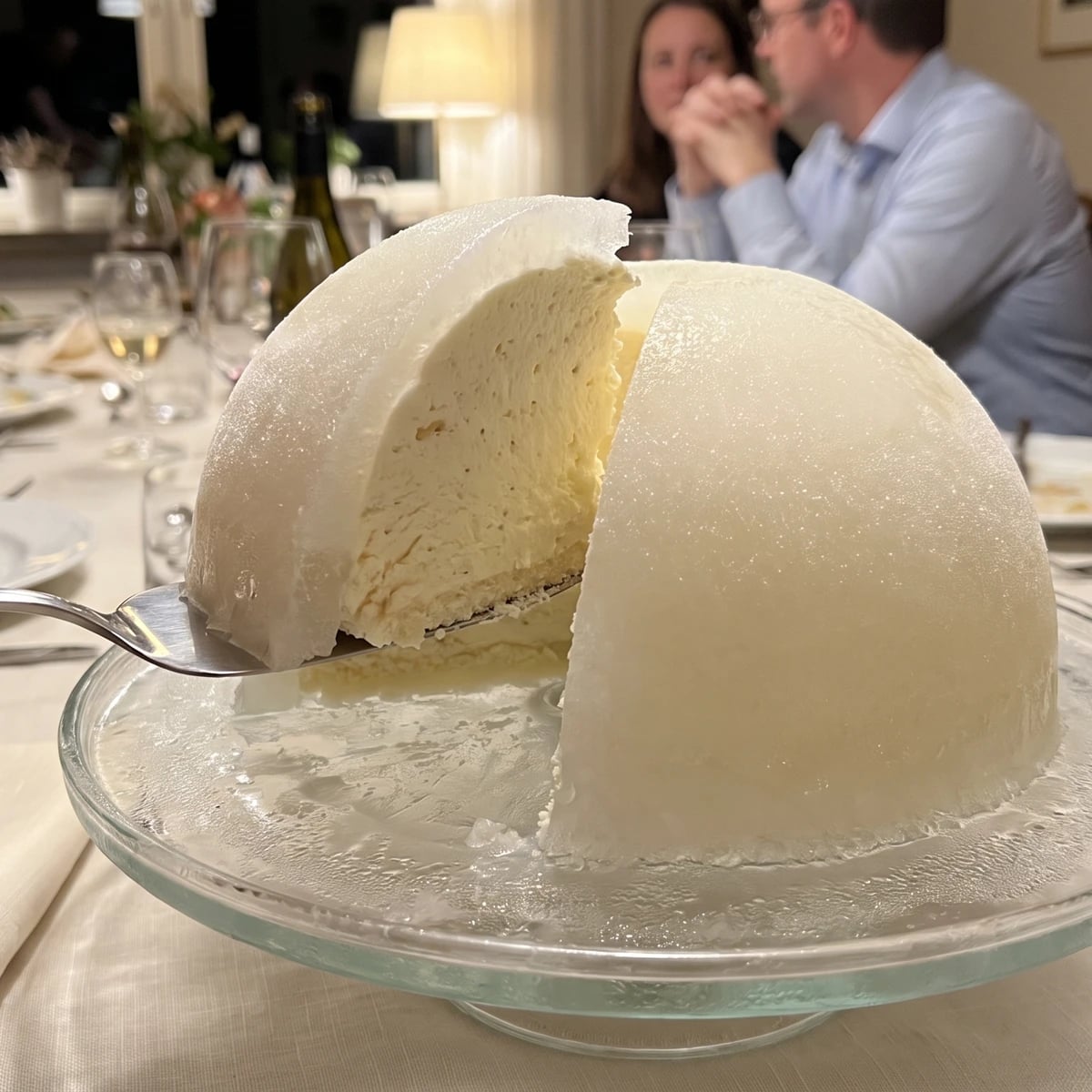
Vodka ice encloses Kümmel Chantilly in a frozen bombe where measurement is technique: pack the mould firmly, freeze it longer than seems necessary, and unmould a pale, spirit-scented celebration.
Bombe Skobeleff (a vodka-ice shell filled with Kümmel whipped cream) teaches one uncompromising principle: alcohol fights the freeze. Measure both spirits before you touch the saucepan, because an extra generous pour gives you a fragrant puddle where a cleanly cut bombe ought to stand.
The source entry assumed a glacier, the brigade's frozen-dessert specialist, with vodka ice already churned, a proper bombe mould banked in salted ice, and enough hands to coat it evenly. At home, a small metal mould, a domestic ice cream maker, and the coldest part of the freezer do the same work. The dedicated freezing station was scaffolding and can go. The measured spirits, tightly packed shell, Kümmel Chantilly, and long final freeze are the dish and must stay.
When it lands correctly, the outside is pale, firm, and faintly crystalline, while the centre cuts ivory and soft, carrying caraway perfume without losing the clean taste of cream. Pack the vodka ice without thin spots. That even shell is the one step that decides whether Bombe Skobeleff unmoulds as a celebration or collapses before the plates arrive.
Bombe Skobeleff belongs to the Parisian grand-kitchen repertory of moulded ices, where bombes were named for celebrated figures and this one saluted the Russian general Mikhail Skobelev through vodka and Kümmel. Its cross-reference to Another Method of Preparing Aspics de Filets de Soles (No. 916) is technical, not culinary: savoury aspic and frozen dessert share chemiser le moule, the practice of building an even outer coat before adding the centre. A bombe describes this moulded construction rather than any single flavour.
Quantity
1⅔ cups (400 ml / 400 g)
divided
Quantity
½ cup plus 1 tablespoon (135 ml / 120 g)
Quantity
⅓ cup (80 ml / 76 g)
40% ABV
Quantity
1 cup plus 2 tablespoons (270 ml / 268 g)
35% fat or higher and very cold
Quantity
1½ tablespoons (22 ml / 20 g)
Quantity
2 tablespoons (30 ml / 29 g)
very cold
Quantity
2 tablespoons (30 ml / 30 g)
very cold
Quantity
1 copy of Another Method of Preparing Aspics de Filets de Soles (No. 916)
consulted for chemiser le moule only; not an edible component
| Ingredient | Quantity |
|---|---|
| cold waterdivided | 1⅔ cups (400 ml / 400 g) |
| granulated sugar | ½ cup plus 1 tablespoon (135 ml / 120 g) |
| vodka40% ABV | ⅓ cup (80 ml / 76 g) |
| heavy cream35% fat or higher and very cold | 1 cup plus 2 tablespoons (270 ml / 268 g) |
| superfine sugar | 1½ tablespoons (22 ml / 20 g) |
| Kümmel liqueurvery cold | 2 tablespoons (30 ml / 29 g) |
| heavy cream for rescuing the Chantilly (optional)very cold | 2 tablespoons (30 ml / 30 g) |
| technique referenceconsulted for chemiser le moule only; not an edible component | 1 copy of Another Method of Preparing Aspics de Filets de Soles (No. 916) |
Set a 1 litre metal bombe mould or deep stainless-steel bowl in the coldest part of the freezer for at least 30 minutes. Chill the mixing bowl, beaters, and serving platter as well. Both spirits in this dessert resist freezing, so cold equipment and exact measures are part of the technique, not fuss.
Combine the sugar with half the water, ¾ cup plus 1 tablespoon (200 ml / 200 g), in a small saucepan. Bring it just to a simmer, stirring until every crystal disappears, then cook for one minute. Remove from the heat and add the remaining water. Cool completely before stirring in the measured vodka; adding it to hot syrup throws its aroma into the room instead of keeping it in the ice. Chill the mixture for one hour.
Churn the cold vodka mixture in an ice cream maker until it resembles a firm, fine-grained sorbet, usually 20 to 30 minutes. It must hold against a spatula without running. If it remains loose after churning, spread it in a shallow metal tray and freeze for 20 minutes, stir firmly, then repeat once if necessary. Ça se rattrape. Correctly measured spirit will firm; free-poured spirit may not.
Chemiser le moule, clothing the mould, is the construction that makes this a bombe. The book points to Another Method of Preparing Aspics de Filets de Soles (No. 916) for the operation; only its mould-coating technique crosses into this dessert. Press three quarters of the vodka ice firmly over the bottom and sides of the frozen mould in an even layer about 1 cm thick, then freeze for 15 minutes. Inspect it against the light, patch every thin spot with more ice, and freeze for another 15 minutes. Keep the remaining quarter frozen but spreadable for sealing the base.
Whip the 270 ml heavy cream with the superfine sugar in the chilled bowl until it holds soft peaks. Add the Kümmel one teaspoon at a time, whisking gently after each addition, and stop when the Chantilly holds a supple medium peak. Alcohol loosens whipped cream, so pouring it in at once is the likely failure. If the cream turns grainy, stop immediately and fold in the reserved cold cream a teaspoon at a time until smooth. Ça se rattrape.
Spoon the Kümmel Chantilly into the clothed mould, pressing it gently into the curve so no hollow pockets remain, but don't crush out all its air. Leave 1 cm clear at the top and freeze for 20 minutes to firm the surface. Spread the reserved vodka ice over the opening, packing it against the shell to make a complete seal. If the ice has hardened beyond spreading, leave it in the refrigerator for five minutes and work it firmly with a spatula.
Cover the surface closely and freeze the bombe at or below -18°C (0°F) for at least six hours, preferably eight. This long freeze is the dish: vodka outside and Kümmel inside both soften the set, and no flourish can replace the missing time. If the centre still yields when pressed after six hours, nothing has failed. Leave it in the cold. One cook, one stove, one evening of work, then the freezer finishes the service.
Set the chilled platter over the mould and invert both together. Wrap the mould for three to five seconds in a towel wrung out in warm water, then lift it straight away. If it holds, repeat for two seconds rather than prying at the shell. Return a softening bombe to the freezer on its platter for 20 minutes. Cut with a knife dipped in hot water and wiped dry between slices, revealing the ivory Kümmel Chantilly inside its pale vodka shell. À table!
1 serving (about 150g)
Culinary guides, cultural storytelling, and the editorial depth that makes cooking meaningful.
Discover Culinary Explorer
Chef Juliette
Five almond preparations, one discipline: remove the skins cleanly, dry every kernel through, then cut, toast, or cloak it in pale caramel without letting its fragrant oils escape.

Chef Juliette
A pastry pantry lesson in one tray: filberts warmed only until their red skins release, rubbed clean, cooled, and chopped into a fragrant mise-en-place for cakes, creams, pralines, and petits fours.

Chef Juliette
The smallest pâtisserie discipline decides whether a cake leaves its mould intact: clarified butter in every corner, followed by the lightest veil of dry flour or fécule.

Chef Juliette
Four whites, one spotless bowl, and a patient change of speed: whisk gently until loosened, then briskly to glossy stiffness, with powdered sugar waiting if the foam begins to granulate.