Culinary Explorer
A cooking platform built around craft, culture, and the stories behind what we eat.
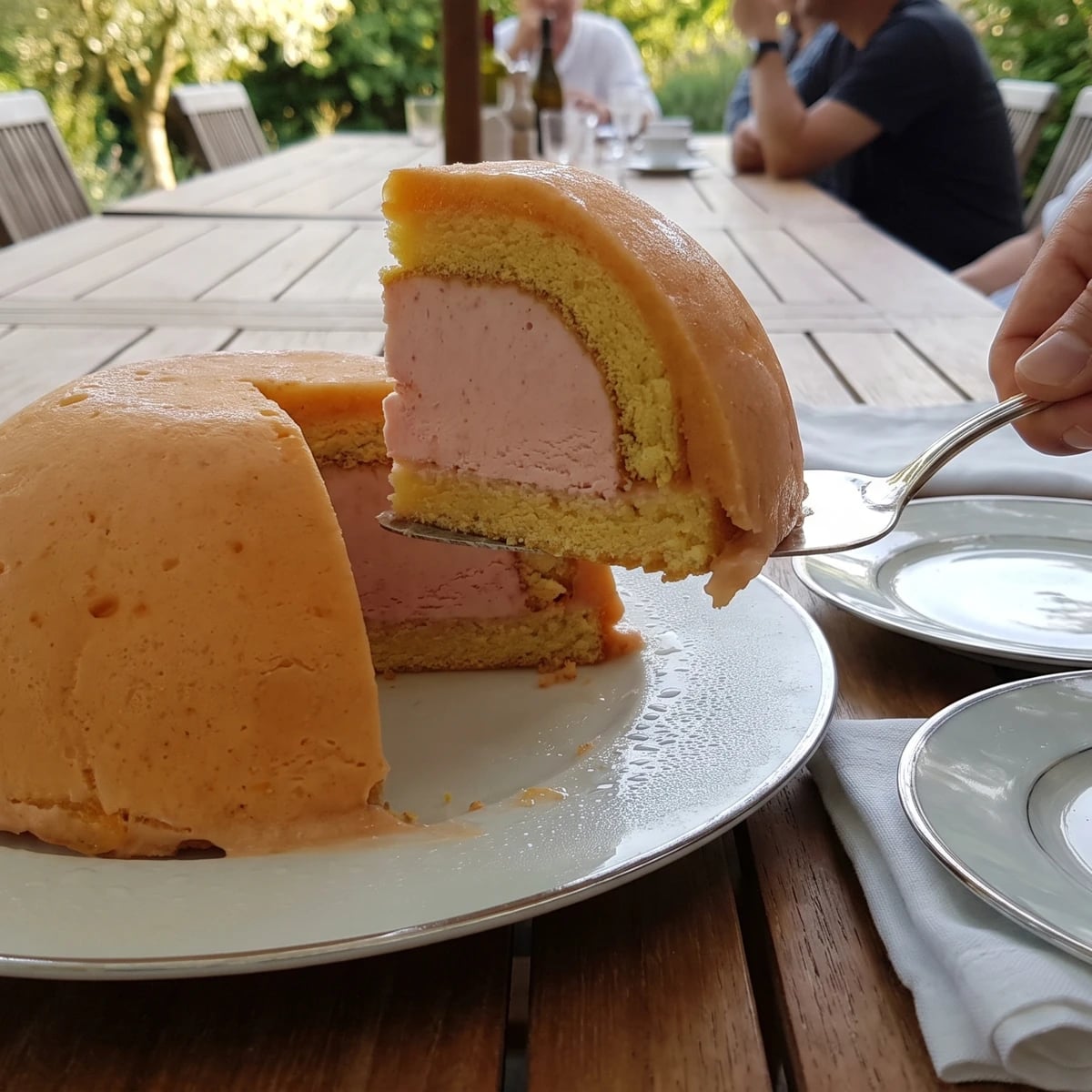
Bombe Odessa
Created by Chef Juliette
Apricot ice holds a pale strawberry pâte à bombe in a clean two-fruit contrast: bright shell, creamy heart, and no liqueur to blur either perfume. Sweeten boldly, freeze patiently, then turn it out.
Bombe Odessa (an apricot-lined strawberry frozen bombe) teaches the first law of frozen dessert: cold mutes sweetness and perfume together. Taste both mixtures a shade sweeter and more fragrant than seems polite at room temperature, because the freezer will bring them into balance. The dish is two clear voices, tart-gold apricot around a rose strawberry pâte à bombe, with no liqueur between them.
The original line is a command in brigade shorthand: clothe the mould with apricot ice, then fill it with strawberry Bombe-preparation. It assumes prepared fruit ice, a dedicated freezing station, a mould managed over broken ice, and hands free to build layers during service. At home, a small metal mould, an ice-cream machine, an electric mixer, and an ordinary freezer do the same work for eight. The broken-ice rocking described in Another Method of Preparing Aspics de Filets de Soles (No. 916) is scaffolding for a professional cold station; the even apricot shell and aerated pâte à bombe are the dish, and they stay. One cook, one stove, one evening of active work, then the freezer takes the night watch.
The one step that decides it is clothing the mould: the apricot ice must be soft enough to spread but firm enough to hold an even coat. If it slides, don't fight it. Freeze the mould for ten minutes, patch the bare place, and continue.
Ingredients
unsweetened apricot purée
Quantity
2 cups (475 ml / 500 g)
from ripe or drained canned apricots
granulated sugar for the apricot ice
Quantity
⅔ cup (160 ml / 135 g)
water for the apricot ice
Quantity
¼ cup (60 ml / 60 g)
| Ingredient | Quantity |
|---|---|
| unsweetened apricot puréefrom ripe or drained canned apricots | 2 cups (475 ml / 500 g) |
| granulated sugar for the apricot ice | ⅔ cup (160 ml / 135 g) |
| water for the apricot ice | ¼ cup (60 ml / 60 g) |
Where cooking meets culture.
Culinary guides, cultural storytelling, and the editorial depth that makes cooking meaningful.
Discover Culinary Explorer