Culinary Explorer
A cooking platform built around craft, culture, and the stories behind what we eat.
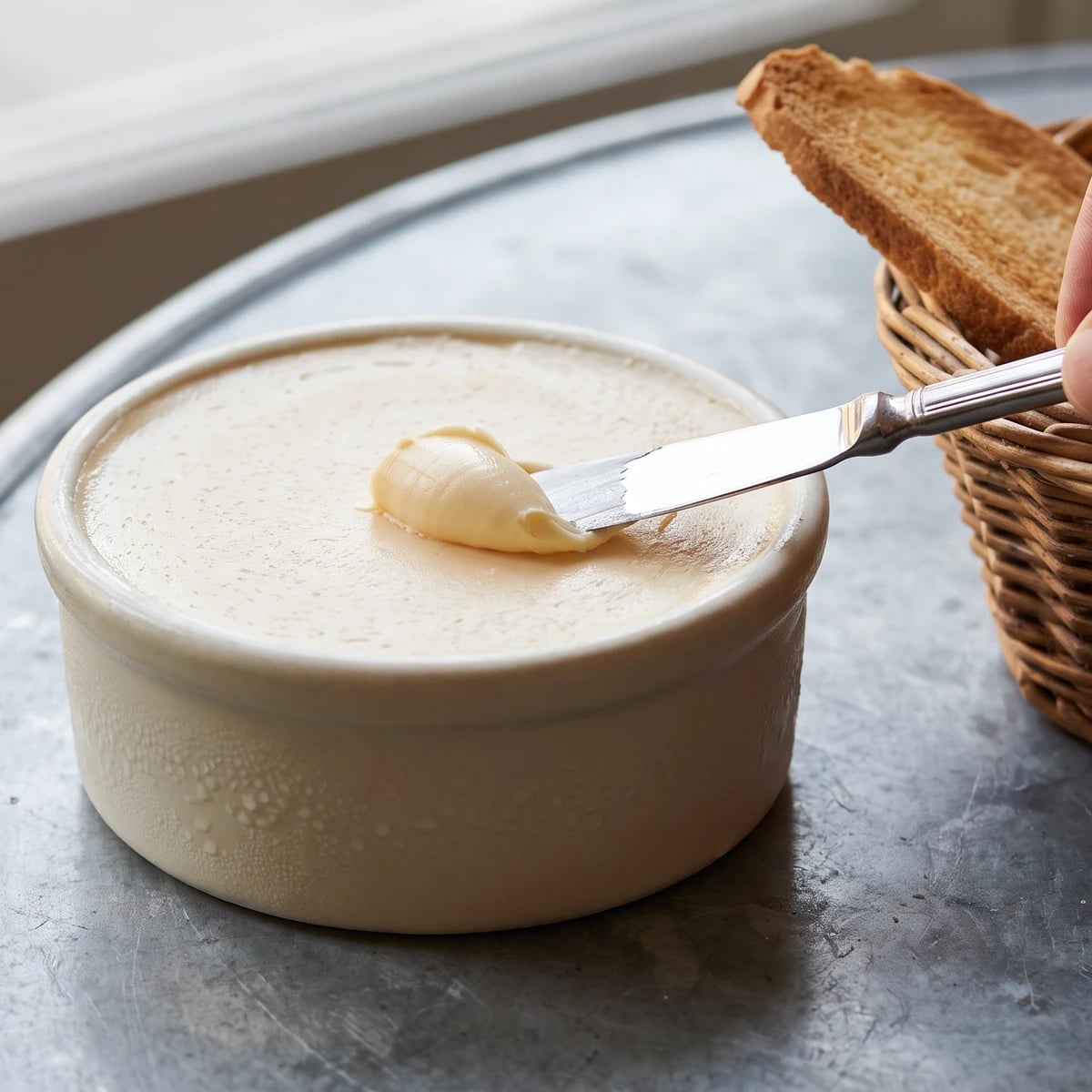
Milt Butter
Created by Chef Juliette
Beurre de laitances turns mild herring milt, lemon, mustard, and its own weight in butter into a pale, silken spread. Gentle poaching preserves tenderness; the fine sieve makes the dish.
Beurre de laitances (milt butter) teaches the discipline of refinement. Soft herring roe needs barely enough heat to set, then its own weight in butter to become supple. The one true thing to know before touching the pan is that browning has no place here: keep the milt pale and tender so the lemon and mustard can lift its mild, milky character.
The original formula assumed a covered buttered sauté pan, a mortar, and a fine tamis always within reach. A small lidded skillet, a sturdy bowl and fork, and a fine-mesh sieve do the same work at home. No brigade reduction is needed because four ounces of milt already makes one generous crock for an appetizer table. What changed is the equipment, not the sequence or proportions. The mortar is scaffolding and may go; the fine sieving is the dish and must stay.
Poach gently, pound the roe while warm, then let it cool enough that it won't melt the softened butter. If the mixture turns oily, ça se rattrape, and the method will show you where to pause. Before you begin, set out the fine sieve: rubbing every spoonful through it is the step that decides whether this becomes a coarse fish paste or true beurre de laitances.
Ingredients
fresh soft herring roe (milt)
Quantity
1/2 cup (120 ml / 113 g)
rinsed and patted dry
unsalted butter for the pan
Quantity
1 teaspoon (5 ml / 5 g)
fresh lemon juice
Quantity
1 1/2 tablespoons (22 ml / 22 g), from 1/2 medium lemon
| Ingredient | Quantity |
|---|---|
| fresh soft herring roe (milt)rinsed and patted dry | 1/2 cup (120 ml / 113 g) |
| unsalted butter for the pan | 1 teaspoon (5 ml / 5 g) |
| fresh lemon juice | 1 1/2 tablespoons (22 ml / 22 g), from 1/2 medium lemon |
Where cooking meets culture.
Culinary guides, cultural storytelling, and the editorial depth that makes cooking meaningful.
Discover Culinary Explorer