
Chef Juliette
Smelt (Éperlans)
Tiny éperlans, lightly floured and fried until their tails stand crisp, arrive in a generous heap on a napkin with fried parsley and grooved lemon, a weeknight lesson in heat and restraint.
A cooking platform built around craft, culture, and the stories behind what we eat.

Created by Chef Juliette
Based on No. 286, Red-herring Butter, from Le Guide Culinaire (1907) by Auguste Escoffier
Beurre de hareng saur is smoke, salt, and butter made silken: pound the skinned fillets, force them through a fine sieve, and spread the sharp paste thickly on brown-bread toast.
Beurre de hareng saur (red-herring butter) teaches the discipline of a beurre composé, a compound butter: the fish must disappear into the butter without losing its smoke, salt, or edge. One truth governs it. The fine sieve is not polish after the work; the sieve is the work, removing the last skin, bone, and tough fibre while giving the spread its close, silken body.
The source formula assumed a heavy mortar, a tamis (fine sieve), and hands willing to pound three herrings smooth. Its quantity is already right for a home table, about one generous crock, so the proportion of three herrings to three ounces of butter stays exactly as written. A mini processor may replace the mortar's labour. That is brigade scaffolding and may go. Passing every spoonful through the sieve is the dish and must stay. One cook, one stove, one evening.
When it is right, the butter is tawny and dense, smoky before it is rich, with no thread of skin catching against the tongue. Keep the butter softened but cool, and whatever tool does the pounding, do not surrender the final pass through the fine sieve.
Beurre de hareng saur belongs to the northern French coastal larder, from Boulogne-sur-Mer along the Channel ports, where herring was salted and smoked before traveling inland. Classical kitchens brought that durable everyday fish into the family of beurres composés and served the resulting paste as an hors-d'œuvre with toast. Its refinement comes not from added seasoning but from the tamis, which turns a fibrous, bony fish into a smooth spread while preserving its smoke.
Quantity
3 whole fish (6 fillets)
filleted, with skins and bones removed
Quantity
3 ounces (6 tablespoons / 90 ml / 85 g)
softened but still cool
| Ingredient | Quantity |
|---|---|
| red herrings, salt-cured and smokedfilleted, with skins and bones removed | 3 whole fish (6 fillets) |
| unsalted buttersoftened but still cool | 3 ounces (6 tablespoons / 90 ml / 85 g) |
Lay each fillet skin-side down and peel away the skin, using the tip of a small knife to begin if necessary. Run your fingertips slowly over the flesh and pull out every pinbone with fish tweezers, then blot the fillets dry. If the flesh tears while the skin comes away, pay it no mind; everything will be pounded. Skin and bones left now make needless work at the sieve.
Cut the cleaned fillets into small pieces and pound them alone in a mortar until they form a close paste. For the honest home equivalent, use a mini food processor in short pulses, stopping often to scrape the bowl so the fish is reduced evenly without becoming warm. Do not add water, cream, lemon, or oil. The herring supplies all the salt and sharpness this formula asks for.
Add the softened but cool butter a little at a time, pounding or pulsing after each addition until no pale streaks remain. The mixture should be dense and unified, not melted or glossy with loose fat. If it becomes oily, stop immediately and chill it for 10 minutes, then work it together again with a few firm strokes. Ça se rattrape.
Set a fine-mesh sieve over a cool bowl and press the mixture through in small spoonfuls with a flexible scraper, working in short, firm arcs. Scrape the smooth butter frequently from the underside of the mesh. If the mixture is too firm to pass, leave it for 5 minutes; if it smears and releases fat, chill it briefly before continuing. Stop when only dry fibres, skin flecks, and any missed bone fragments remain in the sieve, and discard that residue. This final pass is what makes beurre de hareng saur rather than merely mashed fish and butter.
Beat the sieved butter with two or three strokes of the scraper to make it even, then pack it into a small crock without trapping air pockets. Serve at cool room temperature, spread generously on crisp brown-bread toasts. If it has been chilled, give it 15 to 20 minutes out of the refrigerator so the butter yields cleanly beneath the knife. À table!
1 serving (about 39g)
Culinary guides, cultural storytelling, and the editorial depth that makes cooking meaningful.
Discover Culinary ExplorerChef Juliette
Tiny éperlans, lightly floured and fried until their tails stand crisp, arrive in a generous heap on a napkin with fried parsley and grooved lemon, a weeknight lesson in heat and restraint.

Chef Juliette
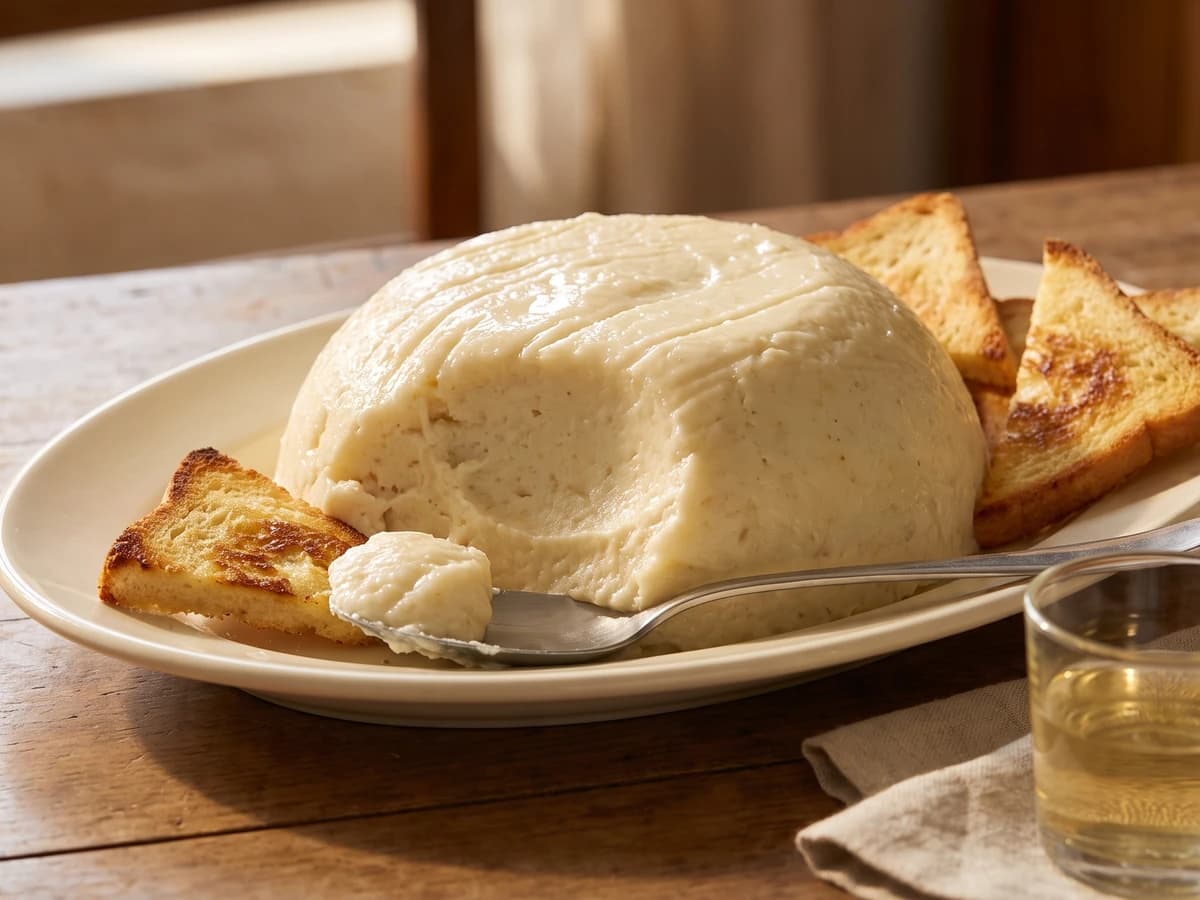
Brandade de Morue turns salt cod, warm olive oil, and milk into a pale, silky emulsion: keep everything warm and add the oil slowly, then crown the generous dome with butter-fried bread.
Chef Juliette
Salt cod worked warm with cream, one patient spoonful at a time, until the rough flakes become a glossy Nîmes paste, domed generously and ringed with butter-fried croutons for the table.

Chef Juliette
Wine-poached char packed in its earthenware crock beneath butter gold: a make-ahead first course that turns careful cooling, thorough boning, and one unbroken seal into quiet abundance.