Culinary Explorer
A cooking platform built around craft, culture, and the stories behind what we eat.
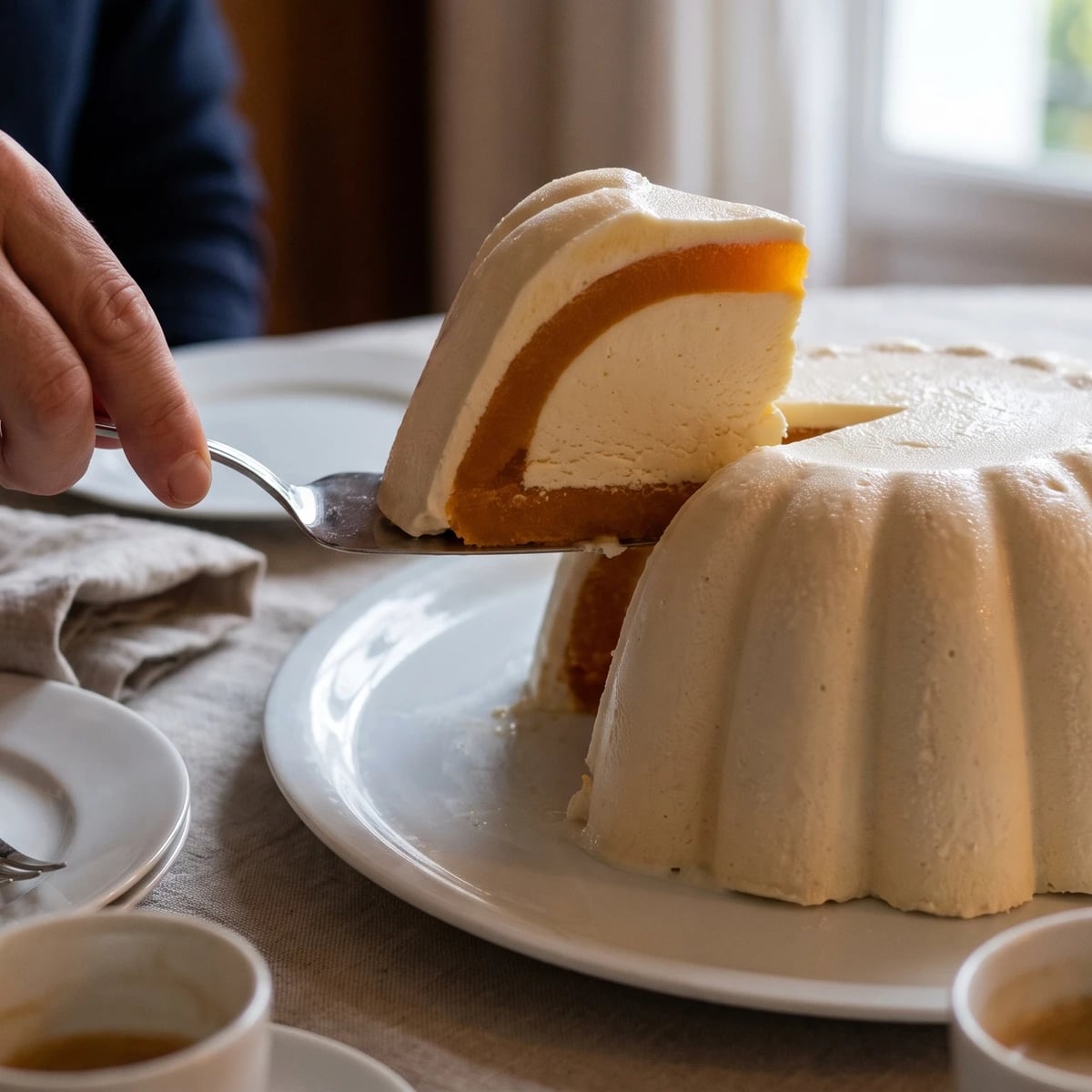
Bombe Châteaubriand
Created by Chef Juliette
Apricot ice, cooked until vivid and smooth, forms the bright shell around a vanilla pâte à bombe, a frozen centerpiece whose clean slice depends on patient layering and a truly cold mould.
Bombe Châteaubriand (an apricot-ice shell around a vanilla frozen cream) teaches the governing principle of frozen desserts: manage the water before it freezes. Raw apricot purée turns icy, pale, and curiously mute. Cook the fruit down first and its water concentrates with its perfume, giving you a bright shell that cuts cleanly instead of splintering from the spoon.
The original assumed a glacier, a frozen-dessert specialist, with churned ices ready, a metal bombe mould held over broken ice, and a vanilla bombe-preparation made by another pair of hands. Your honest equivalents are an ice cream maker, a cold metal mould or bowl, a thermometer, and a mixer acting as the spare hand while the syrup pours. The separate staff and waiting vessels were scaffolding. The cooked apricot ice, the vanilla pâte à bombe, and the careful clothing of the mould are the dish. One cook, one stove, one evening of active work, then the freezer keeps watch.
Turned out, the bombe should be a clean apricot-orange dome with an ivory vanilla heart, firm enough to slice and soft enough to yield under the fork. The one step that decides it comes before the churner: cook the apricots until glossy and concentrated, because the freezer preserves every good decision and every watery one.
Ingredients
ripe apricots
Quantity
6 cups (1.4 liters / 900 g)
halved and pitted, fresh or frozen unsweetened
granulated sugar for the apricot ice
Quantity
¾ cup (180 ml / 150 g)
water for the apricot ice
Quantity
½ cup (120 ml / 120 g)
| Ingredient | Quantity |
|---|---|
| ripe apricotshalved and pitted, fresh or frozen unsweetened | 6 cups (1.4 liters / 900 g) |
| granulated sugar for the apricot ice | ¾ cup (180 ml / 150 g) |
| water for the apricot ice | ½ cup (120 ml / 120 g) |
Where cooking meets culture.
Culinary guides, cultural storytelling, and the editorial depth that makes cooking meaningful.
Discover Culinary Explorer