
Chef Juliette
Smelt (Éperlans)
Tiny éperlans, lightly floured and fried until their tails stand crisp, arrive in a generous heap on a napkin with fried parsley and grooved lemon, a weeknight lesson in heat and restraint.
A cooking platform built around craft, culture, and the stories behind what we eat.
Created by Chef Juliette
Based on No. 282, Caviare Butter, from Le Guide Culinaire (1907) by Auguste Escoffier
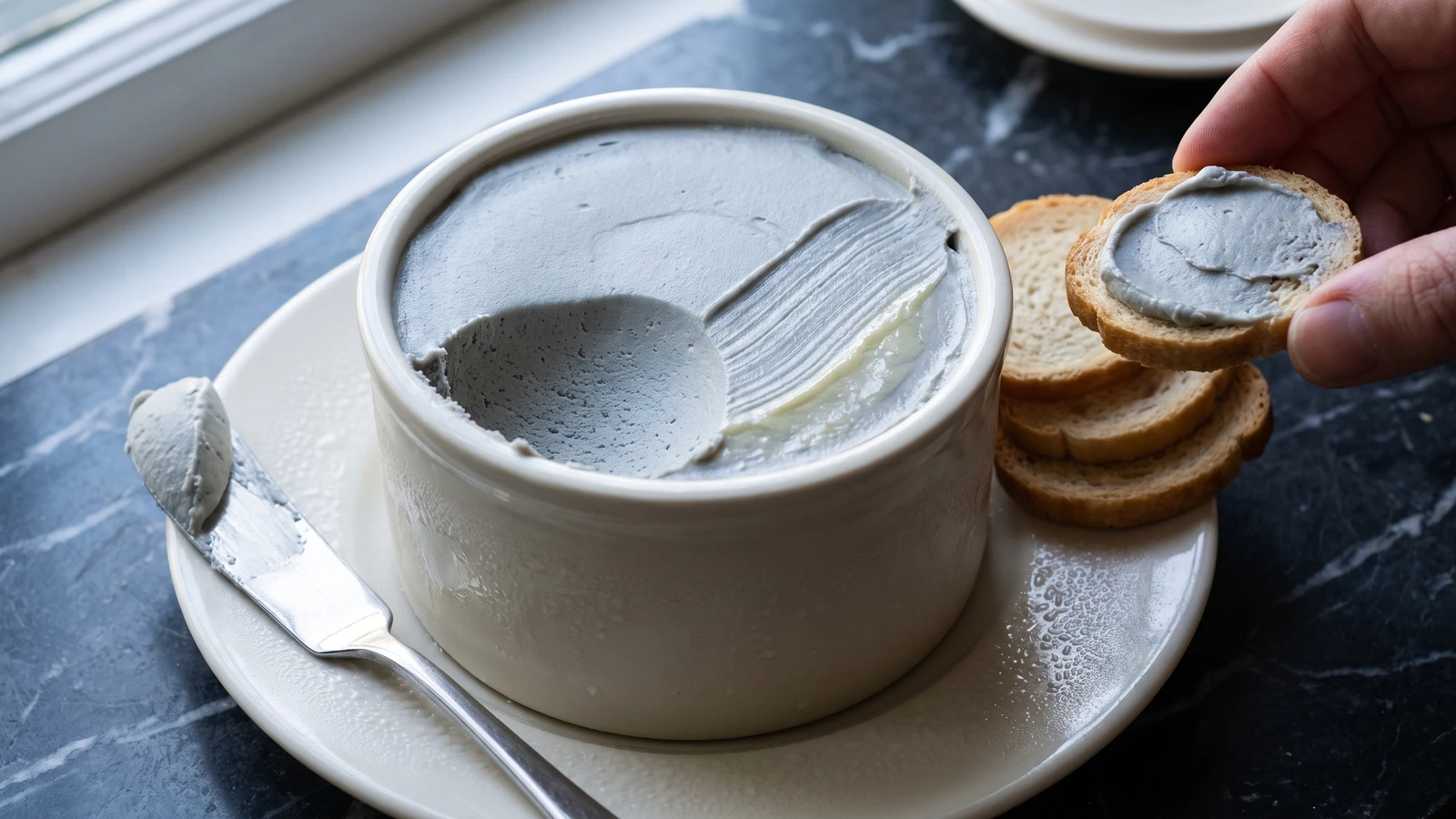
Beurre de caviar turns two ingredients into a polished cold-table spread: keep the butter cool, pound until completely uniform, then pass it fine so every bite carries the roe's full salt-brine.
Beurre de caviar (caviare butter) teaches the discipline of a beurre composé, a compound butter: the butter is not padding, it is the carrier. Keep it cool enough to hold a matte body and pliable enough to accept the roe, and the salt-brine of pressed caviare travels through every bite. Warm butter turns greasy; hard butter leaves streaks. Temperature is the one true thing to settle before you begin.
The book's formula assumed a mortar, a fine sieve, and an extra pair of brigade hands; it needed no saucier, stock never off the fire, or salamander. At home, a shallow bowl with a rigid spoon does the pounding, and a small stainless-steel sieve does the passing. The source's three-to-four ratio by weight remains exact, and its seven-ounce batch is already right for eight appetizer portions, so I have not reduced it. The spare hands are scaffolding. Pounding and sieving are the dish.
The finished beurre de caviar should be pale slate, dense but satin-smooth, with no separate streaks of yellow butter or dark roe. If it goes shiny while you work, chill it briefly and continue. Ça se rattrape. Before the caviare leaves the cold, press the butter with a thumb: it must yield cleanly without looking oily.
Beurre de caviar belongs to the Parisian cold-table repertoire of beurres composés, concentrated butters used to season canapés, hors-d'oeuvre, and cold fish. Pressed caviare, known through Russian trade as payusnaya, is a distinct salted and compressed preparation rather than loose pearls crushed by accident; French kitchens valued its intensity and keeping power. Pounded with butter and sieved, it moved from the grand kitchen to private dining rooms as a small make-ahead luxury meant to be spread, not displayed bead by bead.
Quantity
1/3 cup (3 oz / 85 g)
chilled
Quantity
1/2 cup (4 oz / 113 g)
cool and pliable
| Ingredient | Quantity |
|---|---|
| pressed caviarechilled | 1/3 cup (3 oz / 85 g) |
| unsalted buttercool and pliable | 1/2 cup (4 oz / 113 g) |
Leave the butter at room temperature for 15 to 20 minutes, keeping the caviare refrigerated. Press the butter with a thumb: it should dent easily while remaining cool, matte, and firm around the impression. If it looks glossy or leaves oil on your finger, return it to the cold for 5 minutes. Butter at this exact stage accepts the caviare without melting around it.
Put the pressed caviare in a small mortar or shallow bowl and mash it into a dense paste. Add the butter in four portions, pounding and smearing each addition completely into the caviare before adding the next. Work against the sides of the vessel rather than beating air into it. Stop when the mixture is evenly pale gray with no yellow streaks. If hard butter lumps refuse to disappear, rest the bowl for 3 minutes and continue; if an oily ring appears, chill it for 5 to 10 minutes, then resume. Ça se rattrape.
Set a fine-mesh stainless-steel sieve over a cool bowl. Working in small portions, rub the mixture firmly through the mesh with a rigid spoon or flexible scraper, then scrape every ribbon of beurre de caviar from the underside. Only tiny pieces of roe membrane should remain behind. If the butter stiffens and clogs the mesh, let the sieve stand for 2 minutes before continuing. Do not skip this passing: pounding combines the ingredients, but sieving gives the butter its close, satin texture.
Scrape the beurre de caviar into a low porcelain crock, pressing out air pockets and smoothing the top. Cover directly against the surface and chill for 1 hour so the butter firms and the briny flavor settles evenly through it. Remove it from the cold 15 minutes before serving; it should spread without cracking but still hold a clean groove from the knife. Offer it with thin, dry toast points or small rounds of pain de mie. À table!
1 serving (about 25g)
Culinary guides, cultural storytelling, and the editorial depth that makes cooking meaningful.
Discover Culinary ExplorerChef Juliette
Tiny éperlans, lightly floured and fried until their tails stand crisp, arrive in a generous heap on a napkin with fried parsley and grooved lemon, a weeknight lesson in heat and restraint.

Chef Juliette
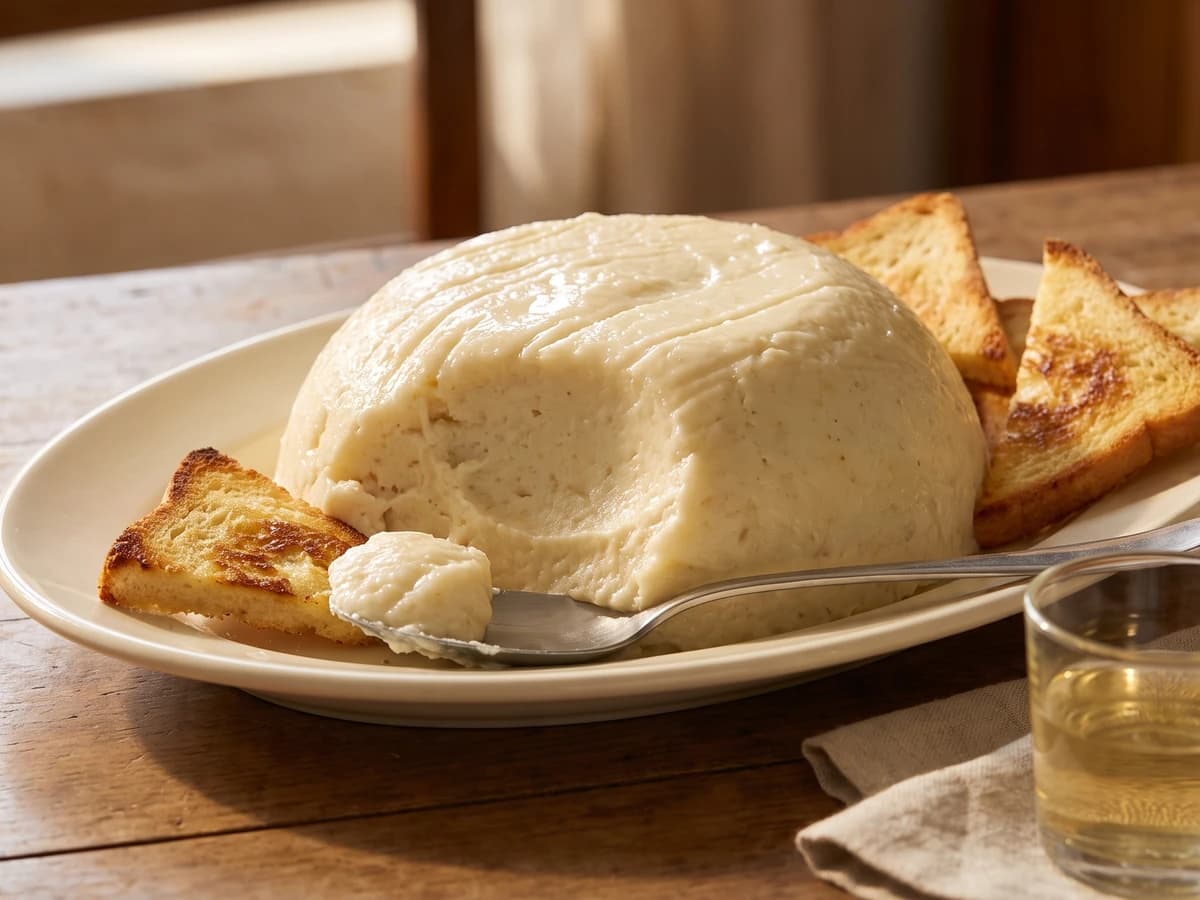
Brandade de Morue turns salt cod, warm olive oil, and milk into a pale, silky emulsion: keep everything warm and add the oil slowly, then crown the generous dome with butter-fried bread.
Chef Juliette
Salt cod worked warm with cream, one patient spoonful at a time, until the rough flakes become a glossy Nîmes paste, domed generously and ringed with butter-fried croutons for the table.

Chef Juliette
Wine-poached char packed in its earthenware crock beneath butter gold: a make-ahead first course that turns careful cooling, thorough boning, and one unbroken seal into quiet abundance.