
Chef Juliette
Smelt (Éperlans)
Tiny éperlans, lightly floured and fried until their tails stand crisp, arrive in a generous heap on a napkin with fried parsley and grooved lemon, a weeknight lesson in heat and restraint.
A cooking platform built around craft, culture, and the stories behind what we eat.
Created by Chef Juliette
Based on No. 281, Anchovy Butter, from Le Guide Culinaire (1907) by Auguste Escoffier
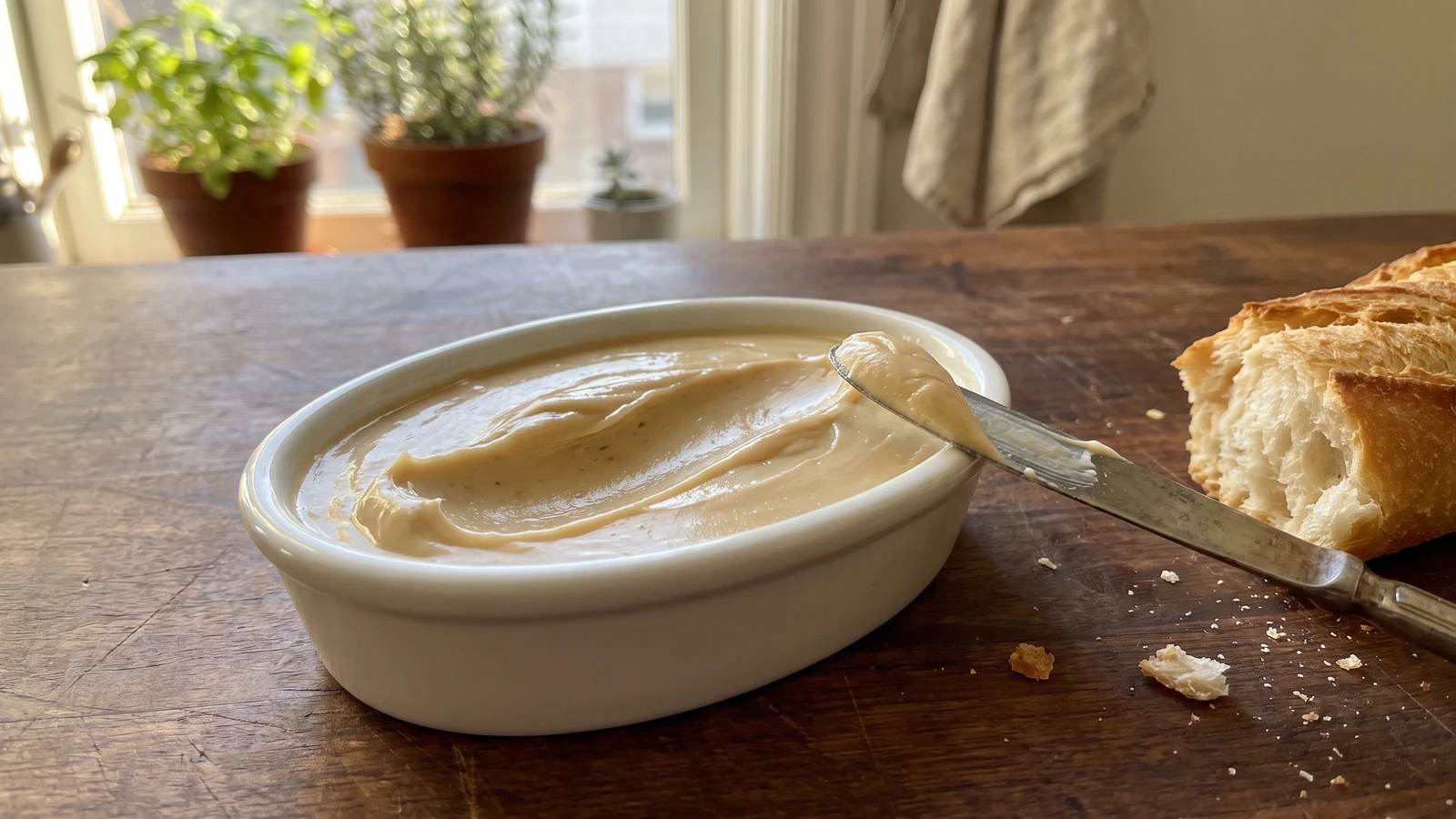
Beurre d’Anchois turns two ingredients into a silky, deeply savoury spread. Pounding makes them one, but the fine sieve finishes the work, removing every fibre and pin bone before the butter reaches bread.
Beurre d’Anchois (anchovy butter) teaches a blunt classical truth: refinement often comes from removing, not adding. Before you touch the butter, know this: the fine sieve is the dish. Pounding unites anchovy and butter; sieving removes every stubborn fibre and pin bone, leaving a spread that tastes clean, saline, and astonishingly smooth.
The original assumes whole salt-cured anchovies, a heavy mortar, and a fine tamis (drum sieve) within easy reach. It needs neither a saucier nor a stockpot. At home, a mini processor may do the brigade’s pounding, and a sturdy fine-mesh metal sieve replaces the tamis honestly. The pounding is scaffolding and may be mechanized; the final sieving must stay. The book’s four-ounce butter batch is already right for a home table, so I haven’t cut it or disturbed its twelve-to-fifteen anchovy ratio.
Keep the butter cool and pliable. If it melts into an oily paste while you pound, chill it briefly; ça se rattrape. Then press every spoonful through the mesh and scrape the silk from underneath. That last passage through the sieve matters more than any garnish. One cook, no stove required, one evening.
Beurre d’Anchois belongs to the Paris-centered classical repertory of beurres composés, compound butters made to season grilled fish, meats, canapés, and small savouries at the moment of serving. Its salt-cured anchovies connect that national kitchen to the preserving traditions of Provence and Languedoc, where anchovies have long supplied concentrated savour to sauces and spreads. The canonical preparation is not a rough mash: passing it through a fine sieve is what turns preserved fish and butter into one polished seasoning.
Quantity
12 to 15
rinsed, dried, filleted, and boned
Quantity
½ cup (120 ml / 113 g)
cool and pliable
| Ingredient | Quantity |
|---|---|
| whole salt-cured anchoviesrinsed, dried, filleted, and boned | 12 to 15 |
| unsalted buttercool and pliable | ½ cup (120 ml / 113 g) |
Rinse each anchovy quickly under cold running water, rubbing away the packed salt. Don’t soak them; a long bath draws out the savoury backbone the butter needs. Dry them thoroughly, split each fish, lift away the central bone and tail, and separate the fillets. Feel along the flesh for any stout pin bones, remove them, then blot the fillets dry once more. Water left on the fish keeps butter and anchovy from becoming one smooth paste.
Put the anchovy fillets and about one-quarter of the butter in a mortar. Pound until the fish loses its shape, then work in the remaining butter a little at a time until the mixture is completely even. With a mini processor, pulse briefly and scrape the bowl often so friction doesn’t warm the butter. If the mixture turns shiny, loose, or oily, stop and chill it for 5 to 10 minutes before continuing. Ça se rattrape: cool butter will come back together under the pestle or blade.
Set a fine-mesh metal sieve over a bowl. Add the anchovy butter a spoonful at a time and rub it firmly through the mesh with the back of a spoon or a flexible spatula. Scrape the silky butter from the underside into the bowl and discard the dry fibres and bones left above. If the butter is too firm to pass, leave it for 2 or 3 minutes and try again; if it grows greasy, chill it briefly. Don’t dilute it. The sieving is the technique, not a decorative extra.
Beat the sieved butter for a few strokes with a spoon until its surface is satin-smooth, then pack it into a small serving dish and smooth the top as the original directs. Cover closely and chill for 30 minutes, or hold it longer for service. Let it stand at cool room temperature for 10 to 15 minutes before serving, just until a knife passes through without resistance. Spread it generously on crisp baguette toasts, or melt a slice over grilled fish. À table!
1 serving (about 20g)
Culinary guides, cultural storytelling, and the editorial depth that makes cooking meaningful.
Discover Culinary ExplorerChef Juliette
Tiny éperlans, lightly floured and fried until their tails stand crisp, arrive in a generous heap on a napkin with fried parsley and grooved lemon, a weeknight lesson in heat and restraint.

Chef Juliette
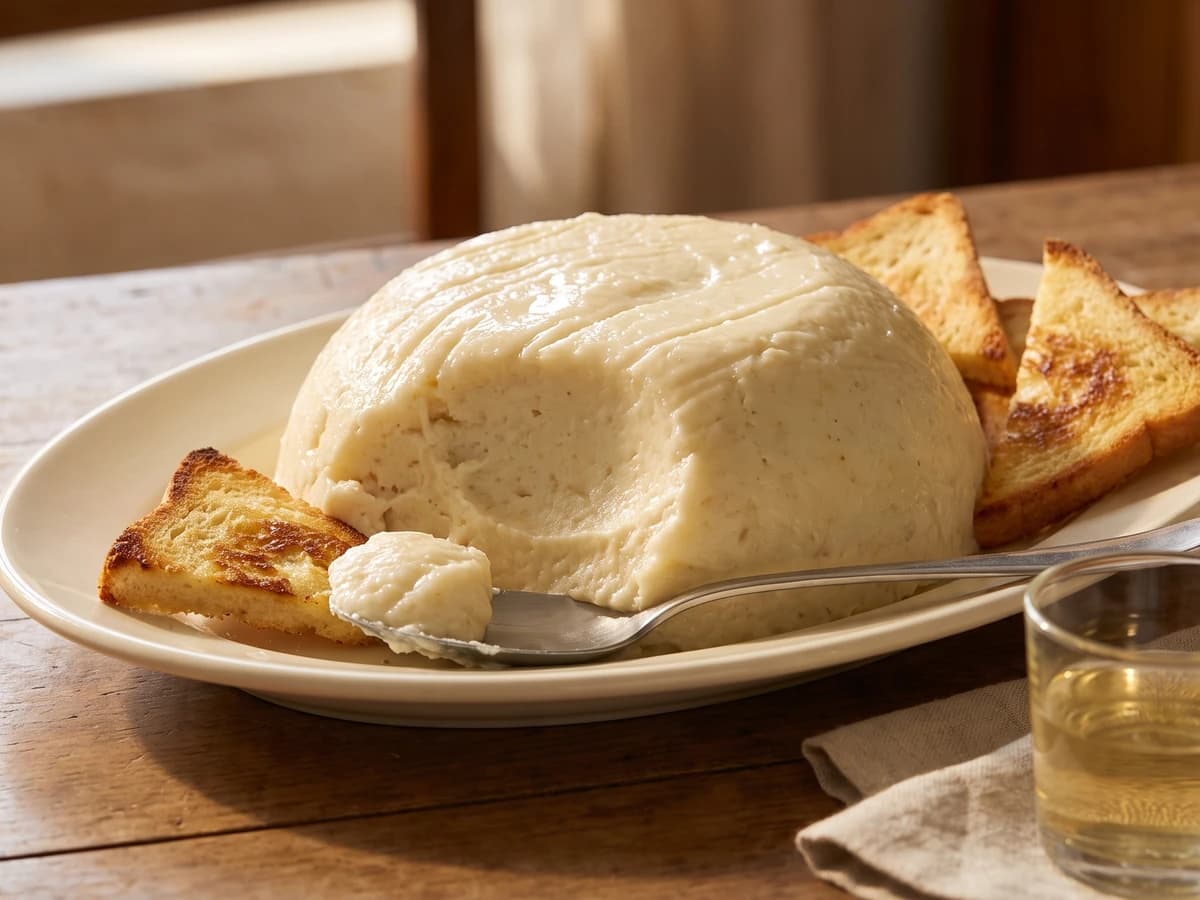
Brandade de Morue turns salt cod, warm olive oil, and milk into a pale, silky emulsion: keep everything warm and add the oil slowly, then crown the generous dome with butter-fried bread.
Chef Juliette
Salt cod worked warm with cream, one patient spoonful at a time, until the rough flakes become a glossy Nîmes paste, domed generously and ringed with butter-fried croutons for the table.

Chef Juliette
Wine-poached char packed in its earthenware crock beneath butter gold: a make-ahead first course that turns careful cooling, thorough boning, and one unbroken seal into quiet abundance.