Culinary Explorer
A cooking platform built around craft, culture, and the stories behind what we eat.
Glace Dora
Created by Chef Juliette
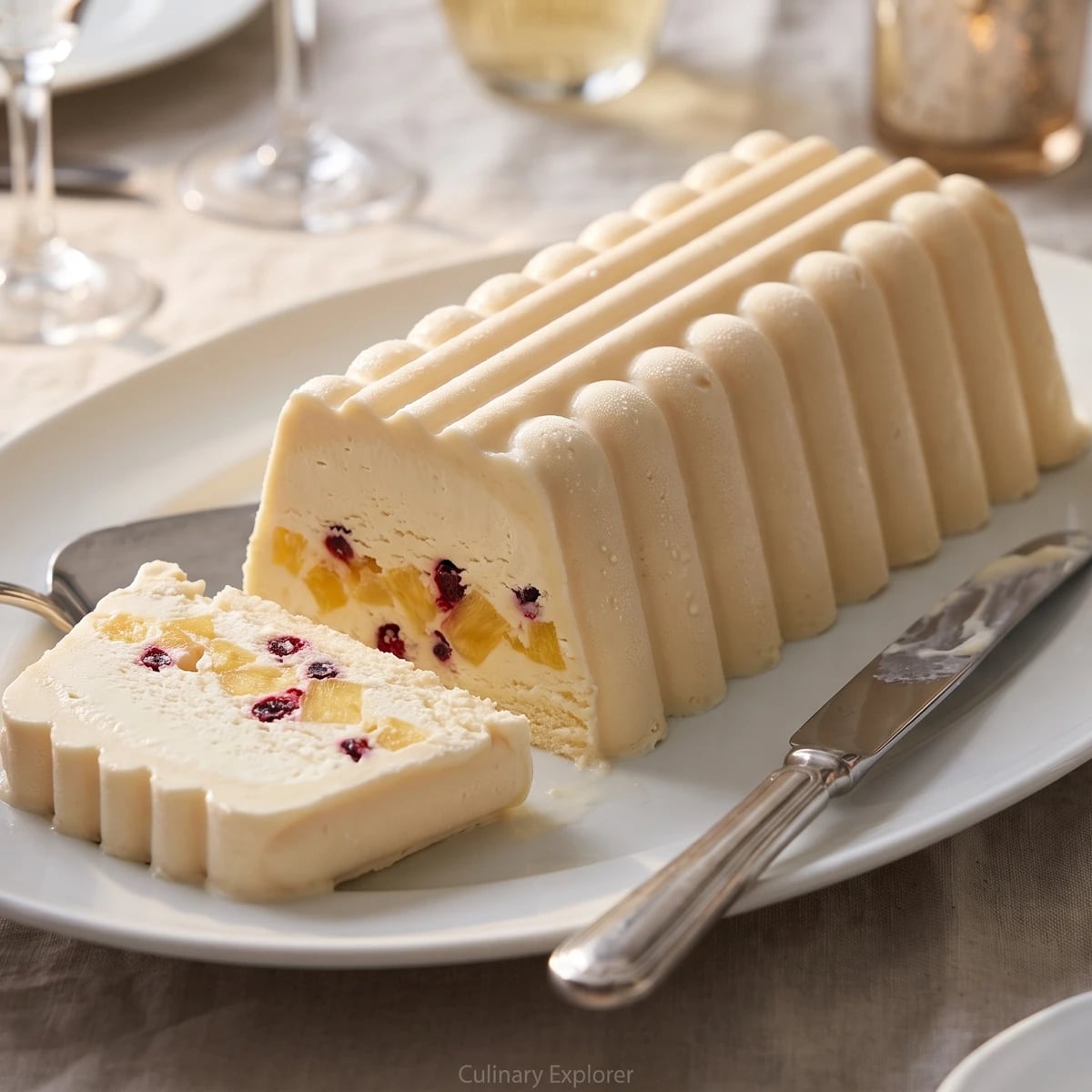
A scallop-shaped shell of vanilla ice cream holds kirsch Chantilly, neat pineapple dice, and jewel-bright Bar-le-Duc currants. Freeze each layer before asking it to support the next.
Glace Dora (moulded vanilla ice cream with kirsch whipped cream) teaches one true thing: a frozen dessert stands or collapses by the firmness of its layers. The vanilla shell must be frozen hard before the Chantilly enters. Rush that point and the filling presses through; wait, and the narrow scallop turns out cleanly with its ivory ridges intact.
The original assumed a pastry section with vanilla ice cream ready, a large metal Madeleine-mould, and freezing equipment close at hand. At home, use a dense prepared vanilla ice cream, because the source itself treats the ice cream as a finished component, and a 1.25-litre scalloped or fluted metal mould. A narrow metal loaf tin is the honest equivalent when the old mould can't be found; only the silhouette changes. Making the ice cream during assembly is brigade scaffolding and can go. Clothing the mould evenly, whipping a kirsch-scented Chantilly, and folding in pineapple and Bar-le-Duc preserve are the dish, and they stay.
This quantity gives six generous portions, manageable by one cook and a household freezer. Cut it open and the pale vanilla shell reveals cream-white Chantilly, gold pineapple dice, and garnet currants. Before you begin, clear a level freezer shelf and chill the mould thoroughly. That cold shell is the step that decides everything.
Ingredients
good vanilla ice cream
Quantity
3 cups (720 ml / about 430 g)
cold heavy cream
Quantity
1 cup plus 2 tablespoons (270 ml / 270 g)
icing sugar
Quantity
2 tablespoons (30 ml / 16 g)
| Ingredient | Quantity |
|---|---|
| good vanilla ice cream | 3 cups (720 ml / about 430 g) |
| cold heavy cream | 1 cup plus 2 tablespoons (270 ml / 270 g) |
| icing sugar | 2 tablespoons (30 ml / 16 g) |
Where cooking meets culture.
Culinary guides, cultural storytelling, and the editorial depth that makes cooking meaningful.
Discover Culinary Explorer