
Chef Juliette
Smelt (Éperlans)
Tiny éperlans, lightly floured and fried until their tails stand crisp, arrive in a generous heap on a napkin with fried parsley and grooved lemon, a weeknight lesson in heat and restraint.
A cooking platform built around craft, culture, and the stories behind what we eat.

Created by Chef Juliette
Based on No. 267, The Care of the Frying Medium, from Le Guide Culinaire (1907) by Auguste Escoffier
The quiet discipline behind every good friture: strain the fat while it is warm, before crumbs settle into black powder, and one clear, clean-tasting medium will serve batch after batch.
Entretien du bain de friture begins with one truth: the first enemy of frying fat is what the last batch left behind. Crumbs from panés (breaded foods) darken into black powder, flour sinks into muddy sediment, and both burn long before the fat itself is spent. Filter them out while the medium remains warm and fluid, and the next croquette tastes of itself rather than yesterday's debris.
The original direction assumed a large frying kettle kept in service, a cloth always ready, and kitchen hands who tended the whole bain after each session. The honest home equivalent is four cups of fat, a fine sieve lined with dry lint-free cotton, and a heatproof jug. The dedicated fat room and its towel laundry were brigade scaffolding; straining after every use is the technique itself and stays. Only the quantity and receiving vessel have changed. One cook, one stove, one evening.
Let the fat cool below frying heat without allowing it to set, then pour slowly and leave the bottom sediment behind. That warm filtration is the step that decides everything.
Entretien du bain de friture belongs to the friturier's station in the French classical brigade rather than to any single region, and the same discipline passed naturally into cuisine bourgeoise through the household fat pot. Its purpose was never thrift alone: crumbs and flour left in the medium hasten scorching and carry bitter flavours into whatever follows. Straining preserves clarity and usefulness, though it cannot restore fat already damaged by excessive heat or age.
Quantity
4 cups (950 ml / approximately 850 to 900 g)
cooled slightly but still fully fluid
| Ingredient | Quantity |
|---|---|
| used frying oil or melted frying fatcooled slightly but still fully fluid | 4 cups (950 ml / approximately 850 to 900 g) |
Examine and smell the frying medium before saving it. Fat that smells acrid, rancid, strongly of old fish, or oddly paint-like is finished; so is fat that feels gummy, foams persistently, or smokes far below its usual frying temperature. Filtering removes debris, not damage. Cool unusable fat completely and dispose of it according to local guidance, never through the sink.
Take freshly used fat off the heat and leave it undisturbed for 10 to 15 minutes, until it falls to about 140 to 160°F (60 to 70°C). It should remain fluid but no longer carry the violence of frying heat. If the fat has already set, melt it over the lowest heat only until it flows freely; warm is sufficient.
Set a fine-mesh sieve securely over a completely dry heatproof jug or metal bowl, then line it with a clean, dry, tightly woven cotton cloth or two layers of fine muslin. The cloth is the home equivalent of the original filtering towel, supported by the sieve so one pair of hands can pour safely. Keep every tool dry, since even a little water makes warm fat spit.
Pour the warm fat through the lined sieve in two or three slow additions. Stop before the muddy flour sediment on the pan floor reaches the lip, and do not scrape that sediment into the filter. Let gravity carry the clear fat through. If the cloth clogs, replace it rather than squeezing burnt particles through; if the fat cools and thickens, return the unfiltered portion to the dry saucepan and warm it gently. Ça se rattrape.
Transfer the filtered medium to a clean, dry lidded container. Let it cool completely with the lid resting loosely on top, then seal, label it with what was fried, and refrigerate it. Keep fat used for fish, sweet foods, and savoury foods in separate containers because filtering removes particles but not every aroma or allergen. Before the next frying session, judge the medium again.
1 serving (about 14g)
Culinary guides, cultural storytelling, and the editorial depth that makes cooking meaningful.
Discover Culinary ExplorerChef Juliette
Tiny éperlans, lightly floured and fried until their tails stand crisp, arrive in a generous heap on a napkin with fried parsley and grooved lemon, a weeknight lesson in heat and restraint.

Chef Juliette
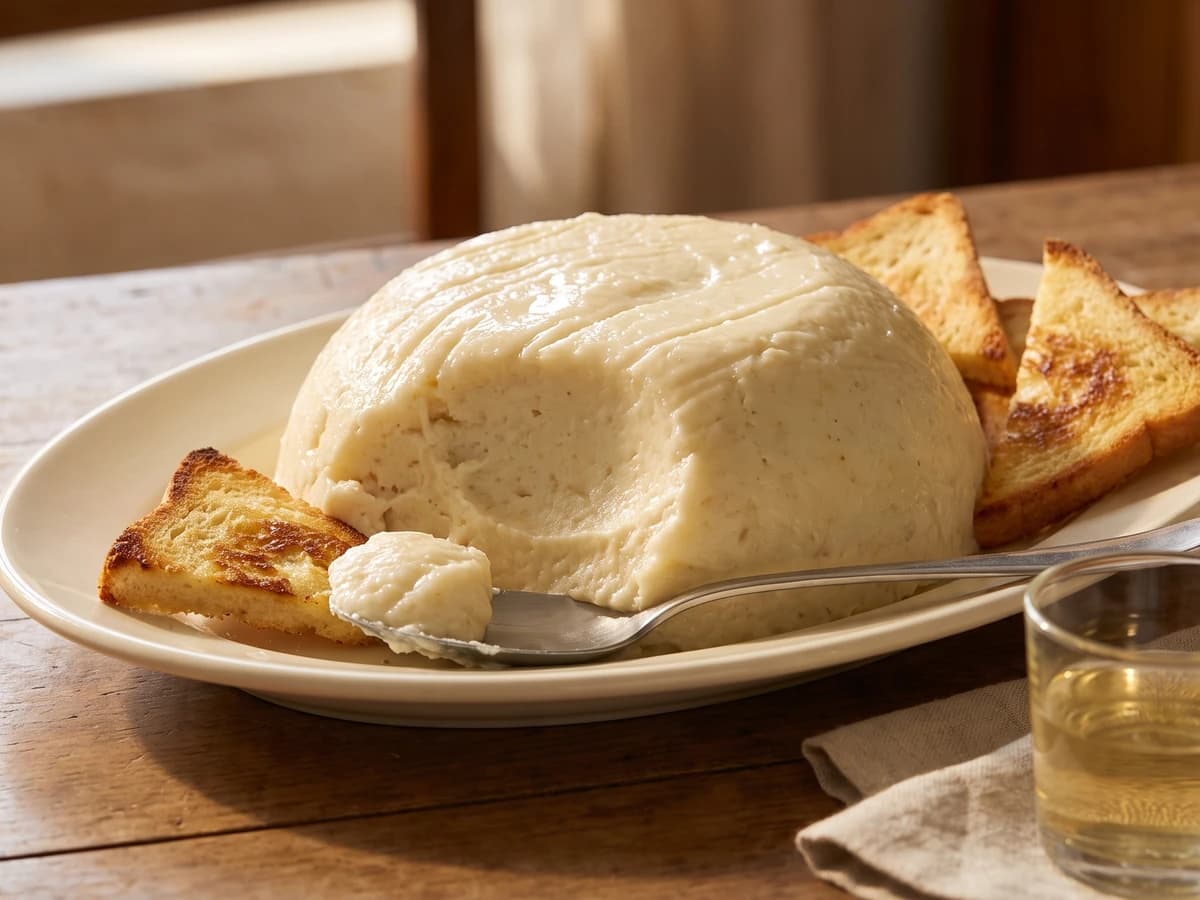
Brandade de Morue turns salt cod, warm olive oil, and milk into a pale, silky emulsion: keep everything warm and add the oil slowly, then crown the generous dome with butter-fried bread.
Chef Juliette
Salt cod worked warm with cream, one patient spoonful at a time, until the rough flakes become a glossy Nîmes paste, domed generously and ringed with butter-fried croutons for the table.

Chef Juliette
Wine-poached char packed in its earthenware crock beneath butter gold: a make-ahead first course that turns careful cooling, thorough boning, and one unbroken seal into quiet abundance.