
Chef Juliette
Various Almond Preparations
Five almond preparations, one discipline: remove the skins cleanly, dry every kernel through, then cut, toast, or cloak it in pale caramel without letting its fragrant oils escape.
A cooking platform built around craft, culture, and the stories behind what we eat.
Created by Chef Juliette
Based on No. 2658, Cold Puddings, from Le Guide Culinaire (1907) by Auguste Escoffier
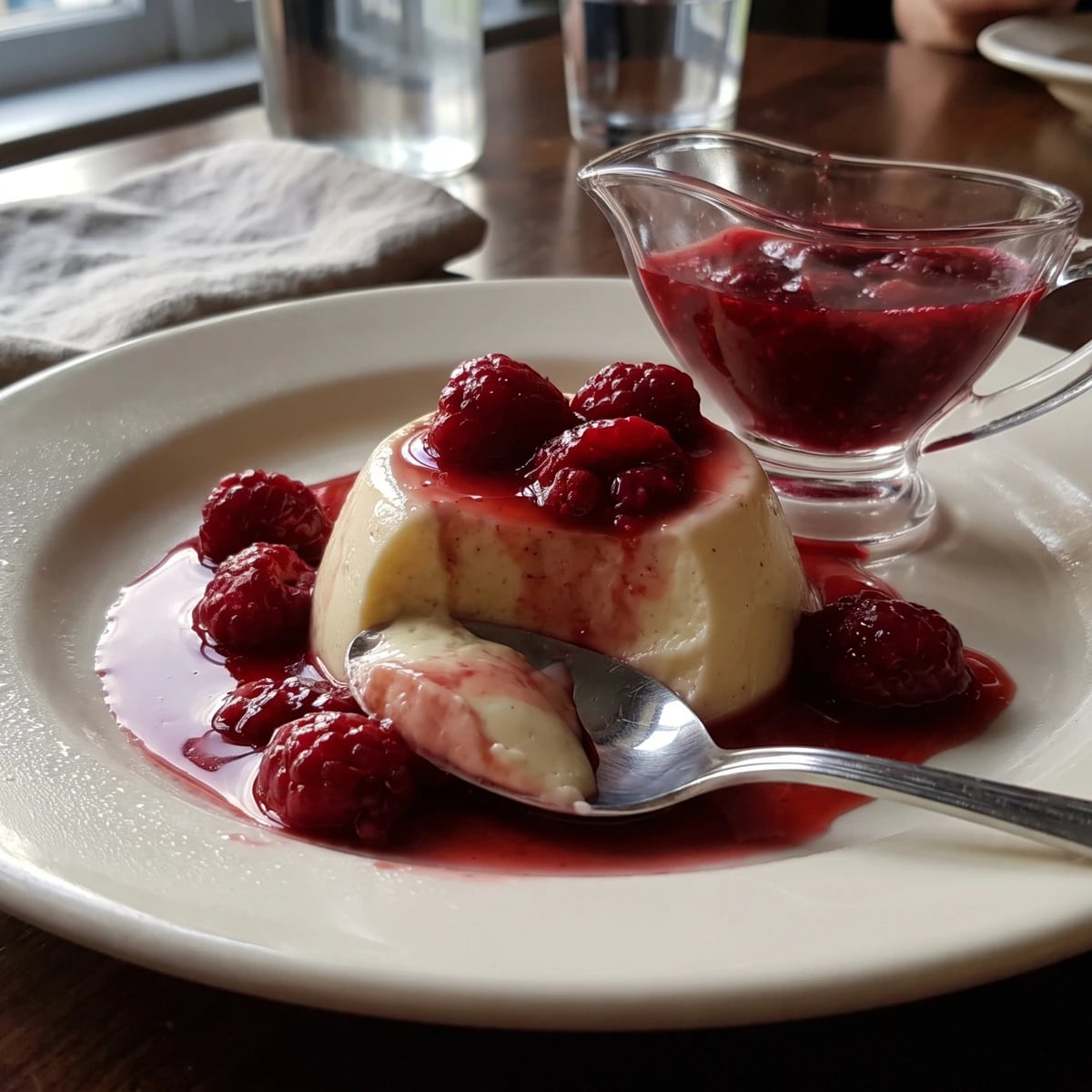
A vanilla bavarois base, cooled at exactly the right moment, becomes pouding froid under stewed raspberries: the sauce and fruit are not decoration, but the dish's defining finish.
Poudings froids (cold puddings) teach a precise distinction: the base may be bavarois, but service completes the dish. A bavarois can leave the kitchen plain. A pouding froid must carry a sauce, a fruit garnish, or both. Here, a cold vanilla cream meets framboises compotées, gently stewed raspberries whose ruby syrup pools around each trembling mold.
The original entry assumed a pastry department with bavarois ready, dessert sauces on hand, and molds filled in brigade numbers. For one cook, one stove, one evening, we make a single vanilla crème anglaise (pouring custard), set it with reliably measured powdered gelatin, and stew one pan of berries that supplies both garnish and sauce. Separate production by several cooks was scaffolding and can go. The custard, gelatin, whipped cream, and fruit at service are the dish, so they stay.
The one true thing is temperature. Fold whipped cream into a warm custard and it melts; wait until the custard has set and the mixture turns lumpy. Cool the crème anglaise until it thickens slightly but still flows from the spatula. That narrow window is the step that decides the pudding.
Poudings froids belong to the formal French entremets repertoire, particularly the pastry kitchens of Paris, where bavarois bases, fruit garnishes, and dessert sauces were prepared as separate components before service. Their identity lies not in a unique mold or custard but in the finish: a bavarois generally goes out plain, while a pouding froid always carries stewed fruit, candied fruit folded into its base, a sauce, or both. The form traveled easily to bourgeois dining rooms because all the work could be completed before guests reached the table.
Quantity
1 cup (240 ml / 245 g)
Quantity
1
Quantity
4 (about 72 g)
Quantity
⅓ cup (80 ml / 65 g)
for the custard
Quantity
⅛ teaspoon (0.6 ml / 0.8 g)
Quantity
2¼ teaspoons (11 ml / 7 g)
Quantity
3 tablespoons (45 ml / 45 g)
for blooming the gelatin
Quantity
1 cup (240 ml / 240 g)
well chilled
Quantity
2¾ cups (660 ml / 340 g)
fresh or frozen
Quantity
¼ cup (60 ml / 50 g)
for the raspberries
Quantity
2 tablespoons (30 ml / 30 g)
for the raspberries
Quantity
1 tablespoon (15 ml / 15 g)
| Ingredient | Quantity |
|---|---|
| whole milk | 1 cup (240 ml / 245 g) |
| vanilla bean | 1 |
| large egg yolks | 4 (about 72 g) |
| granulated sugarfor the custard | ⅓ cup (80 ml / 65 g) |
| fine sea salt | ⅛ teaspoon (0.6 ml / 0.8 g) |
| powdered gelatin | 2¼ teaspoons (11 ml / 7 g) |
| cold waterfor blooming the gelatin | 3 tablespoons (45 ml / 45 g) |
| heavy creamwell chilled | 1 cup (240 ml / 240 g) |
| raspberriesfresh or frozen | 2¾ cups (660 ml / 340 g) |
| granulated sugarfor the raspberries | ¼ cup (60 ml / 50 g) |
| waterfor the raspberries | 2 tablespoons (30 ml / 30 g) |
| fresh lemon juice | 1 tablespoon (15 ml / 15 g) |
Put the 3 tablespoons of cold water in a small bowl and sprinkle the powdered gelatin evenly over its surface. Leave it untouched for 5 to 10 minutes, until every grain has absorbed water and the mixture resembles a firm, translucent sponge. Dry patches become stubborn lumps later, so sprinkle broadly rather than tipping the gelatin into one heap.
Split the vanilla bean lengthwise and scrape its seeds into the milk. Add the pod, bring the milk just to the edge of a simmer, then remove the pan from the heat, cover, and infuse for 10 minutes. Lift out the pod and return the milk to gentle heat until it is hot but not boiling.
Whisk the yolks with the custard sugar and salt until smooth and slightly pale, without beating in a great foam. Pour in one-third of the hot vanilla milk while whisking, then whisk this tempered mixture back into the remaining milk. Cook over low heat, stirring constantly and reaching into every corner, until the crème anglaise reaches 82 to 84°C (180 to 183°F) and cooks à la nappe, coating the back of a spoon so a drawn finger leaves a clean path. Do not let it boil. If the first fine curds appear, pull the pan from the heat, whisk in 1 tablespoon of the measured cold cream, and pass the custard immediately through a fine sieve. Ça se rattrape, provided you act before the eggs become scrambled. Stir in the bloomed gelatin until completely dissolved, then strain the custard into a clean bowl.
Set the custard bowl over ice water and stir gently until it cools to about 22°C (72°F), loses its warmth, and begins to thicken to the consistency of light cream. While it cools, whip the remaining cold heavy cream to soft peaks that bend when the whisk is lifted. Fold one-third of the cream into the custard to lighten it, then fold in the rest with broad strokes. If the custard starts setting around the bowl before the cream goes in, stand it briefly over lukewarm water and stir just until smooth again. If it still feels warm, keep cooling it. Warm custard melts the cream, while set custard leaves rubbery flecks.
Rinse six 120 ml molds with cold water and shake out the excess without drying them; the faint film helps at unmolding. Divide the bavarois mixture among the molds, tap each lightly to release large air pockets, and smooth the tops. Cover and refrigerate for at least 6 hours, until the centers feel softly firm. Do not freeze them to hurry matters. Freezing coarsens the cream and makes the puddings shed water as they thaw.
Combine the raspberry sugar and 2 tablespoons of water in a small saucepan. Bring to a simmer and cook for 1 minute, just until the sugar dissolves. Add half the raspberries and simmer gently for 2 minutes, crushing only two or three berries to color the syrup. Fold in the remaining berries and cook for 30 seconds, then remove from the heat and add the lemon juice. Cool and refrigerate. If the syrup remains watery, lift out the fruit and reduce the liquid alone until it lightly coats a spoon, then cool it before returning the berries. If it tightens too far, loosen it with a teaspoon of cold water.
Dip each mold into warm water for 4 to 5 seconds, run a thin knife only around the top edge, and invert onto a chilled plate. If a pudding refuses to release, give the mold another 2 seconds in the water. Too much heat melts the outside before the center moves. Spoon the cold framboises compotées and their ruby syrup around each pudding, allowing the sauce to pool against the base. The fruit and sauce complete the definition of the dish. À table!
1 serving (about 175g)
Culinary guides, cultural storytelling, and the editorial depth that makes cooking meaningful.
Discover Culinary Explorer
Chef Juliette
Five almond preparations, one discipline: remove the skins cleanly, dry every kernel through, then cut, toast, or cloak it in pale caramel without letting its fragrant oils escape.

Chef Juliette
A pastry pantry lesson in one tray: filberts warmed only until their red skins release, rubbed clean, cooled, and chopped into a fragrant mise-en-place for cakes, creams, pralines, and petits fours.

Chef Juliette
The smallest pâtisserie discipline decides whether a cake leaves its mould intact: clarified butter in every corner, followed by the lightest veil of dry flour or fécule.

Chef Juliette
Four whites, one spotless bowl, and a patient change of speed: whisk gently until loosened, then briskly to glossy stiffness, with powdered sugar waiting if the foam begins to granulate.